Environment Agency No Objection Secured for Non-Domestic Extension in Tidal Flood Zone 3
The Project:
A community building in a coastal town in the South East needed more internal space. The proposal was straightforward: a first-floor extension and internal reconfiguration to introduce a small café and improved facilities.
The footprint stayed exactly as it was. Nothing new was introduced at ground level. This project serves as an example of how a non-domestic extension in tidal flood zone 3 can be developed while maintaining the original site conditions.
The site sits within Flood Zone 3 and is affected by tidal flooding from the River Ouse. That meant the scheme would be reviewed by the Environment Agency as part of the planning process. Importantly, a non-domestic extension in tidal flood zone 3 brings specific requirements to the review process.
The question was not whether the site flooded. It was whether the extension made anything worse, especially with regard to a non-domestic extension in tidal flood zone 3.
The Challenge:
Flood Zone 3 tends to drive early assumptions. Schemes are often treated as high risk before anyone looks closely at what is actually being proposed.
Here, the building remained “less vulnerable” and the use did not change. Even so, there were a few clear risks:
- the extension being interpreted as increasing exposure
- unnecessary mitigation being introduced
- a default objection based on standing advice rather than site specifics
This is where smaller projects can lose time. The label of Flood Zone 3 can push a scheme into a more complex route than it needs.
The real issue was simpler: did the proposal change the site’s flood risk profile for a non-domestic extension in tidal flood zone 3?
The starting point was to establish what actually controlled the flood risk.
What We Did:
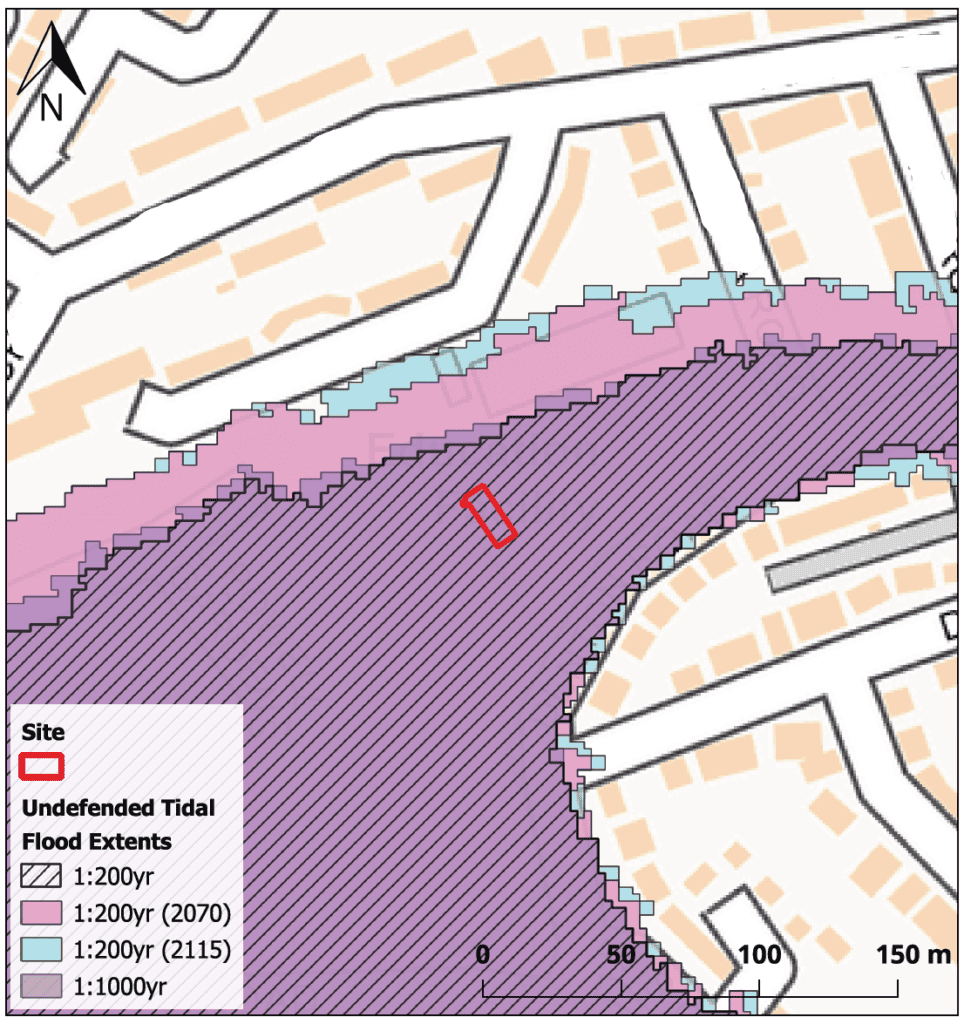
Environment Agency mapping and modelled data showed that tidal flooding governed the site. The relevant benchmark was the undefended tidal scenario, interpreted using Environment Agency flood data products for planning.
Once that was clear, the focus shifted from describing flood risk to testing change.
A direct comparison between the existing site and the proposal showed:
- no increase in footprint
- no increase in impermeable area
- no change in vulnerability classification
- no loss of floodplain storage
- no change to flow paths
That combination matters. It means the building interacts with floodwater in exactly the same way as before.
The extension itself was at first-floor level. Ground level behaviour, which is what drives flood impact, remained unchanged. Moreover, this is a typical approach for a non-domestic extension in tidal flood zone 3.
Tidal conditions were still considered in full, including present-day and future scenarios, consistent with how tidal flood risk is assessed in planning. But the conclusion did not change: the proposal did not increase exposure or hazard.
The assessment was structured in line with expectations for flood risk assessments supporting planning applications and aligned with the Environment Agency’s approach to minor development set out in flood risk standing advice.
No additional modelling was needed. The available data already answered the question being asked.
The Outcome:
The Environment Agency confirmed it had no objection.
The application progressed without redesign, additional mitigation, or extended technical discussion. The scheme was assessed on what it actually did, rather than where it sat on a map. In summary, navigating a non-domestic extension in tidal flood zone 3 requires careful attention to both technical details and planning requirements.
The project moved forward without delay. Flood Zone 3 did not make this extension unacceptable. The issue was whether the works changed the site’s flood risk profile. They did not.
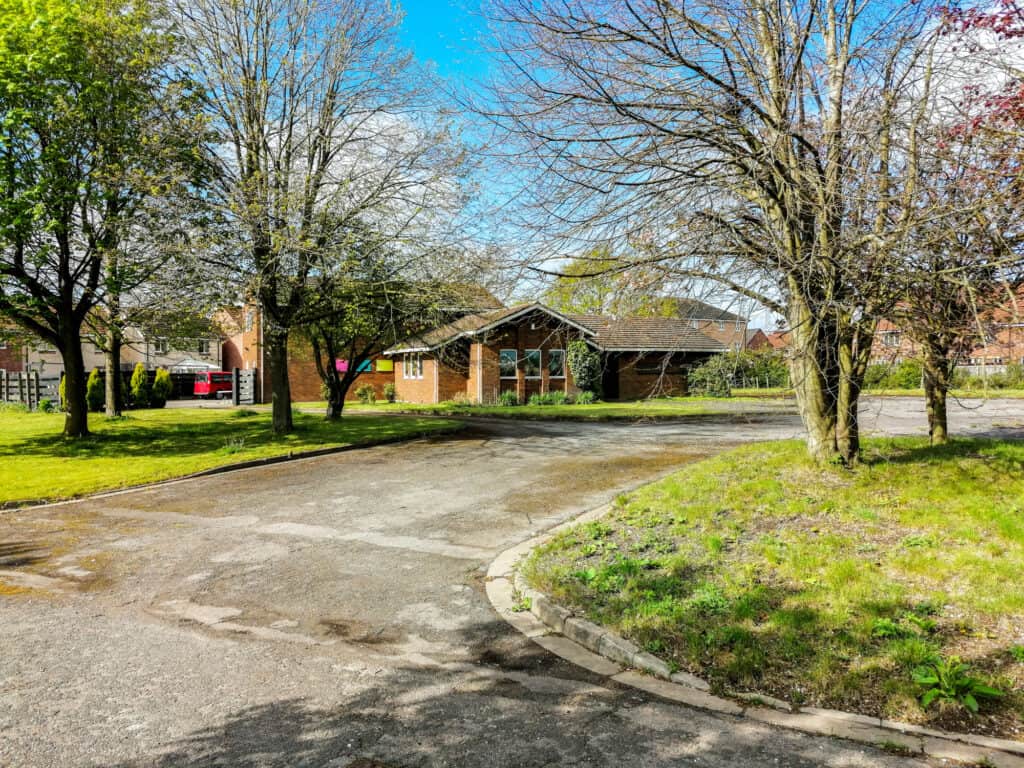 Residential building in a suburban area with trees and a clear blue sky.
Flood risk map showing tidal flood extents in Tidal Flood Zone 3 with site location marked in red.
Residential building in a suburban area with trees and a clear blue sky.
Flood risk map showing tidal flood extents in Tidal Flood Zone 3 with site location marked in red. 