Coordinated Flood Risk Evidence for a Constrained Infill Dwelling
The Project:
A developer proposed replacing a group of existing lock-up garages with a detached two-storey dwelling with a basement in Chiswick, west London.
The site sat within an established residential area and had good public transport accessibility, but it was also located in Flood Zone 3a. The proposal therefore needed more than a standard planning submission. Because the development would create a new residential unit, flood risk policy required a clear assessment of whether the site was appropriate, whether lower-risk alternatives were reasonably available, and whether the dwelling could be made safe for its lifetime.
Unda was instructed to prepare both the Flood Risk Assessment and Surface Water Drainage Strategy, and the supporting Sequential and Exception Test.
The Challenge:
The main planning risk was that the site was mapped within Flood Zone 3a, where residential development is classed as more vulnerable. That meant the application had to address several issues at once.
First, the Flood Risk Assessment needed to establish the actual sources and severity of flood risk, rather than relying only on the mapped Flood Zone. The site lay within the defended tidal floodplain of the River Thames, around 555m to the south, so residual risk from flood defences also had to be considered.
Second, the Sequential Test had to explain why the development could not reasonably be directed to a lower-risk site. That was not straightforward for a single dwelling on a small infill plot, because theoretical alternatives across the wider borough would not necessarily be comparable or deliverable.
Third, the scheme included a basement. That introduced additional scrutiny around safe refuge, internal layout, property-level resilience and surface water management.
Without coordinated flood risk evidence, flood risk or drainage could have become a reason for objection, delay or redesign.
What We Did:
Unda prepared a Flood Risk Assessment and Surface Water Drainage Strategy to test the site’s actual flood risk position. The assessment confirmed that the site was within Flood Zone 3, but that the risk was predominantly tidal and associated with the River Thames. It also confirmed that the site benefited from formal flood defences, defended to a high standard.
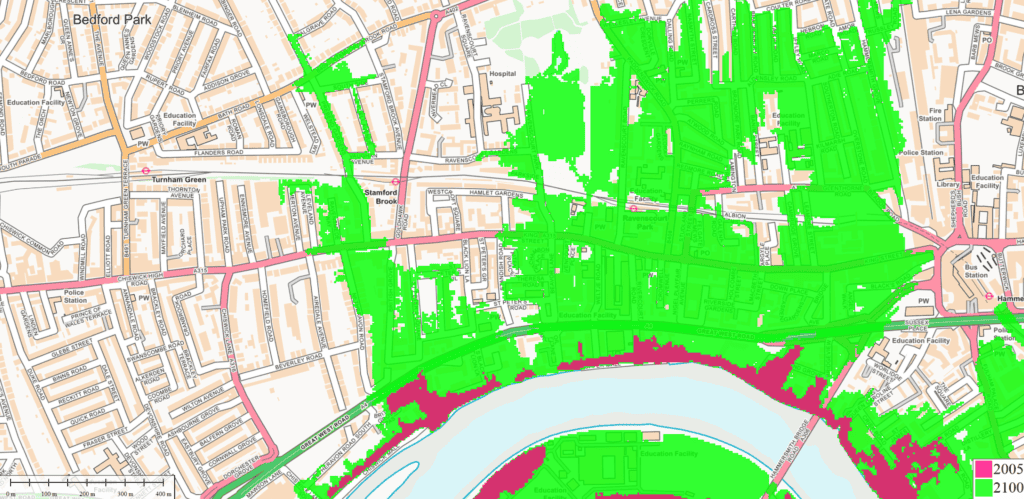
Environment Agency breach modelling was reviewed as part of the assessment. This showed that the site was outside the maximum modelled breach extents for both the present-day and 2100 scenarios. That finding was important because the mapped Flood Zone position did not tell the whole story. The site remained within Flood Zone 3 for planning purposes, but the residual risk position was materially more nuanced.
The assessment also considered surface water, groundwater, sewer and reservoir flood risk. Surface water mapping showed some local risk categories around the site, but the more detailed review found no surface water depths on site for the key 1 in 100 year event with climate change. The drainage strategy then proposed betterment over the existing impermeable garage court through permeable surfacing and a water butt, with runoff continuing to use the site’s existing drainage arrangements.
In parallel, Unda prepared the Sequential and Exception Test. This considered the realistic search area for a small windfall dwelling in Chiswick, rather than applying an artificial borough-wide comparison. Candidate sites were reviewed against flood risk, suitability, availability and deliverability. The assessment concluded that there were no reasonably available lower-risk alternatives capable of accommodating a comparable single dwelling.
The Exception Test then set out why the development could be made safe, including no sleeping accommodation at basement or ground floor level, internal access to upper-floor refuge, flood-resilient construction, flood warnings and a site-specific evacuation plan.
The Outcome:
The Council accepted the submitted flood risk evidence.
The delegated officer report recorded that the Flood Risk Assessment, including the Sequential and Exception Test, demonstrated that flood risk had been considered at the design stage, with appropriate measures adopted. It concluded that the assessment was acceptable for the scale of development proposed and that there was no objection on flood risk grounds.
This meant flood risk and drainage were not treated as barriers to the proposed development. For a small residential site in Flood Zone 3a, that was a meaningful planning outcome: the coordinated FRA, drainage strategy and Sequential and Exception Test provided the evidence needed to address national and local flood risk policy in a proportionate way.
This project shows how coordinated flood risk evidence can narrow planning risk for constrained small-site development.
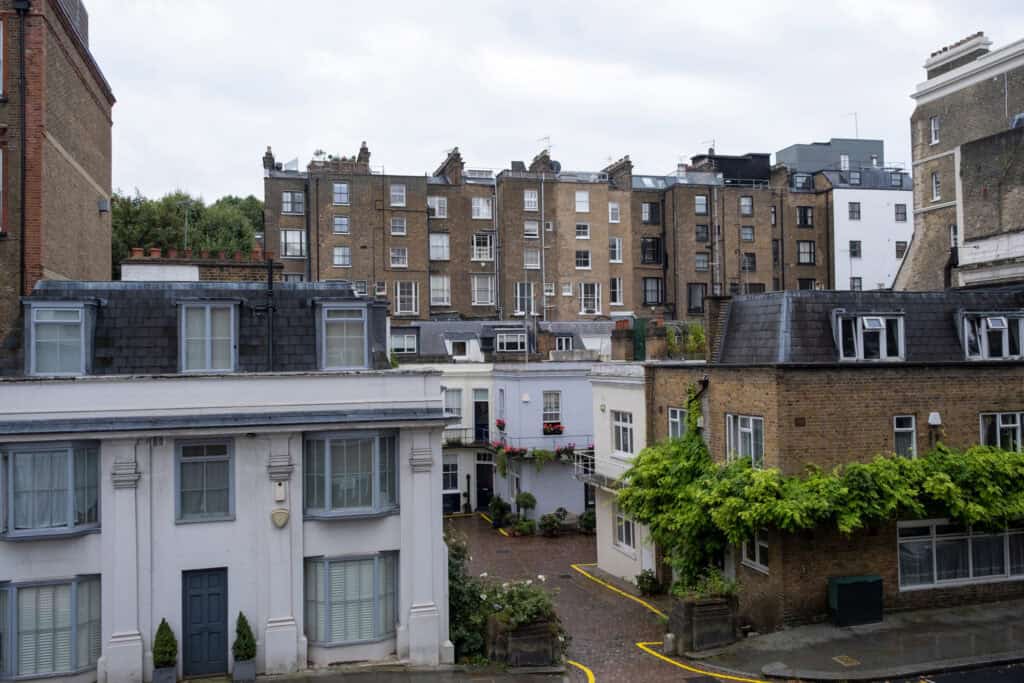 Urban residential buildings with a mix of modern and traditional architecture.
Flood risk map highlighting areas at risk in green and critical zones in purple.
Urban residential buildings with a mix of modern and traditional architecture.
Flood risk map highlighting areas at risk in green and critical zones in purple.