Section 104 and Section 102 Agreements: A Developer’s Guide to Sewer Adoption
Estimated reading time 13 minutes
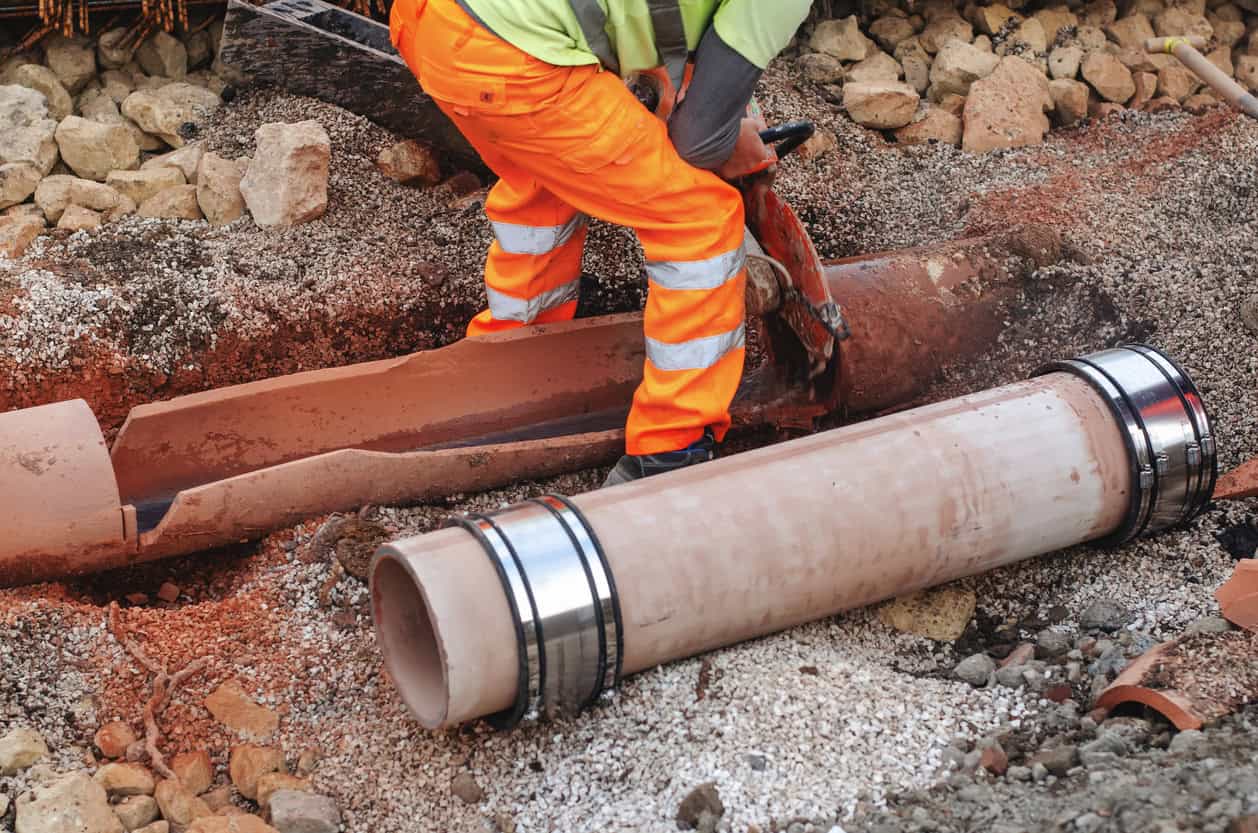
A Section 104 agreement is the contract that gets a development's new sewers taken over and maintained by the water company; a Section 102 agreement does the same job for sewers that are already in the ground. Both sit in the Water Industry Act 1991, and for anyone building more than a single house in England they settle something that outlives the build: who owns and maintains the drainage once the diggers have gone. Secure adoption and the sewerage undertaker inherits the pipes, the liability and the maintenance bill. Miss it, and that responsibility stays with the site, its owners or a private management company for good. It is why the surface water drainage strategy and foul drainage design behind an application should be built for adoption from the start, not retrofitted once the layout is fixed.
Adoption decides who is responsible for a development's sewers for the rest of their working life, and whether that cost lands on the water company or on the people who buy your homes.
The two sections answer the same question from opposite ends. Section 104 is arranged in advance, before the sewers are built. Section 102 is used afterwards, for pipes that already exist. This guide explains what each one is, how the process runs, what it costs, and the part that catches most developers out: the sustainable drainage the water company will not adopt at all.
What are Section 104 and Section 102 agreements?
Both are routes to sewer adoption: the point at which a private sewer becomes a public one and passes to the regional water and sewerage company. The difference is timing. A Section 104 agreement is a forward-looking contract: a developer agrees to build new sewers to an adoptable standard, and the undertaker agrees to adopt them once they are finished and signed off. A Section 102 application deals with sewers that are already built and running, asking the undertaker to take on infrastructure that was never adopted at the time.
The distinction changes the evidence, the cost and the risk. Under Section 104 the standard is fixed up front and the work is inspected as it goes in, so it pays to design the drainage for adoption before the layout is set. Under Section 102 the undertaker is asked to adopt something it never watched being built, so it will want proof the pipe is sound and may require remedial work first.
| Feature | Section 104 agreement | Section 102 application |
|---|---|---|
| What it covers | New sewers built as part of a development | Existing private sewers already in the ground |
| When it is arranged | Before construction begins | After the sewer is built and operating |
| Who starts it | The developer (or the person funding the works) | The owner of the sewer, or the undertaker |
| Design standard | Agreed to the Code for Adoption up front, inspected during build | Assessed as-built; remedial works often needed |
| Typical use | The default route for new estates and multi-plot schemes | The fallback where a Section 104 was never secured |
What does a Section 104 agreement cover, and how does adoption work?
A Section 104 agreement is a written contract, under section 104 of the Water Industry Act 1991, between the person building the sewers and the sewerage undertaker. The undertaker commits to adopt those sewers once they are completed to the agreed standard. The Act lets the developer, or a person funding the construction, ask the undertaker to enter into it, and it makes the promise binding:
Any agreement made under this section by a sewerage undertaker shall be enforceable against the undertaker by the owner or occupier for the time being of any premises served by the sewer.
Water Industry Act 1991, section 104
In practice it is the standard route for any scheme that builds shared foul or surface water sewers meant for the public network. The agreement is signed, and a bond or other security lodged, before construction starts, because the undertaker is agreeing to inherit assets built to its own specification. The Code for Adoption is clear that no adoptable sewer should be built until every party has signed. The process runs in a set sequence:
- Pre-application discussion. Talk to the water company early, confirm capacity and the point of connection, and agree the design principles before the layout is fixed.
- Design submission. Submit the drainage design and supporting calculations for a technical check against the Design and Construction Guidance.
- Agreement and bond. Sign the Section 104 agreement and lodge the security bond before any adoptable sewer is built.
- Construction and inspection. Build the sewers to the agreed standard, with the undertaker inspecting the work as it goes in.
- Provisional certificate. Receive a provisional certificate of adoption once construction passes inspection.
- Maintenance period. Maintain the sewers through a rectification period, commonly around twelve months, during which defects are your responsibility.
- Vesting. On satisfactory final inspection the undertaker issues a declaration of vesting and the sewers become public.
Adoption is a separate question from the right to connect. A scheme's right to connect to the public sewer under Section 106 confirms it may discharge into the network; the Section 104 agreement decides who maintains the pipes that carry it. It also helps to be clear on the difference between foul, surface water and combined sewers, because a Section 104 agreement can cover the foul and surface water systems but treats them to different standards.
What is a Section 102 agreement, and when is it used?
Section 102 of the Water Industry Act 1991 lets a sewerage undertaker declare that an existing sewer, lateral drain or sewage disposal works vests in it, moving ownership from private hands to the public network. The owner of the pipe can apply for that declaration, or the undertaker can propose it. It is the route used when a sewer is already built and running but was never brought into an adoption agreement, usually because a Section 104 was never put in place, or a scheme was built out before adoption was settled.
The undertaker does not have to agree. Before it declares a sewer vested, the Act requires it to weigh a defined set of considerations:
- Adaptability to the wider system. Whether the sewer is adaptable to the general sewerage of the area.
- Where and how it was built. The location and manner of construction of the sewer.
- How much it serves. The number of buildings the sewer serves or is likely to serve.
- Construction quality. Whether the sewer was built to a sound and adoptable standard.
- Detriment to the owner. Whether adoption would be seriously detrimental to the owner.
A Section 102 declaration cannot be made for a sewer completed before 1 October 1937, and the undertaker must give at least two months' notice before a declaration takes effect. An owner who disagrees has a right of appeal to Ofwat, the economic regulator. Because the undertaker is adopting a pipe it never watched being built, a Section 102 application usually turns on condition surveys, and the applicant normally pays for any remedial work needed before it is accepted.
Most private sewers and lateral drains connected to the public network transferred to the water companies automatically on 1 October 2011, so Section 102 today tends to deal with newer or isolated private infrastructure built since that transfer.
What standard must an adoptable sewer meet?
Since 1 April 2020, sewer adoption across England has run to a single national framework: Ofwat's Code for Adoption Agreements, and the Sewerage Sector Guidance beneath it, including the Design and Construction Guidance. Together they replaced the long-standing Sewers for Adoption 7th edition, and they set out the model Section 104 agreement, the application process and the technical standard a sewer must meet to be adoptable. The Design and Construction Guidance has since been updated, with version 2.2 in effect from 1 July 2022; the current codes for adoption are published by Water UK.
The Code standardised a process that used to differ from one water company to the next, but it did not widen the range of drainage the undertakers will adopt.
That second point is where sustainable drainage runs into trouble. The framework brought in common documents, service levels and an industry adoption panel, so a developer working across several undertakers meets broadly the same requirements each time. What it left untouched was the line between the piped systems a water company will take on and the surface features it will not.
What does sewer adoption cost, and how long does it take?
There is no national price list for adoption; each water company sets its own fees. A Section 104 agreement carries three main costs:
- Application and design-check fee. Charged for reviewing the drainage design against the adoptable standard.
- Security bond. Protects the undertaker if the developer fails to finish the works, usually a percentage of the estimated construction cost, sometimes with a fixed minimum. Thames Water, for example, requires a bond of £5,000 or 10% of the estimated construction cost.
- Building to the adoptable standard. The cost of constructing the sewers to the specification the undertaker will accept in the first place.
Timescales are the part most often underestimated. The maintenance or rectification period runs after construction, not before, and vesting only follows a satisfactory final inspection at the end of it. Add the pre-application discussions, the design check and the agreement itself, and adoption is measured in months, running on its own timetable alongside the planning application rather than inside it.
Build the adoption timetable into your programme from the start, because the maintenance period alone commonly adds around twelve months between finishing the sewers and the water company taking them over.
Why won't the water company adopt your SuDS?
This is the trap. A Section 104 agreement adopts piped sewers, but it does not adopt most of the sustainable drainage a modern scheme must now build to the 2025 National Standards for sustainable drainage. Above-ground SuDS features such as swales, detention basins, ponds and permeable paving generally fall outside what water companies will take on under the Design and Construction Guidance, and there is no automatic public body waiting to adopt them instead. In England, Schedule 3 of the Flood and Water Management Act 2010, which would create SuDS Approving Bodies with a duty to adopt approved systems, remains uncommenced, so the adoption gap stays open. Wales commenced Schedule 3 back in 2019 and runs a statutory SuDS Approving Body. England has not followed, and a Planning and Infrastructure Bill amendment to commence it was withdrawn in 2025.
Of around 170 SuDS adoption applications made to the six largest water companies over three years, only about three succeeded, according to Home Builders Federation research published in October 2025.
The result is that surface water features on a new development frequently end up with a private management company, funded by an estate charge on the homeowners. That charge is now the norm. The Competition and Markets Authority found roughly 80% of new homes from the major builders carry estate management charges, averaging about £350 a year, largely because the SuDS, and sometimes the roads and sewers, are never adopted, a pattern set out in the Home Builders Federation's research on unadopted estates. The Independent Water Commission led by Sir Jon Cunliffe recommended in July 2025 that the government finally commence Schedule 3. Until it does, adoption has to be planned asset by asset, which is exactly where a drainage strategy that designs for biodiversity and adoption from the start earns its keep.
| Asset | Usual adoption route | Who ends up responsible |
|---|---|---|
| Foul and surface water sewers | Section 104 agreement | Water and sewerage company |
| Estate roads | Section 38 agreement (Highways Act 1980) | Highway authority |
| Above-ground SuDS (swales, ponds, basins) | Rarely adopted | Management company, or occasionally the local authority |
How sewer adoption fits your planning and drainage strategy
Adoption and planning are separate regimes, and a Section 104 or 102 agreement is not part of the planning application. Three things run in parallel. Planning permission establishes that a scheme is acceptable in principle. The right to connect to the public sewer sits in section 106 of the Water Industry Act 1991, confirmed by the courts in Barratt Homes Ltd v Welsh Water. Adoption then decides who maintains the pipes afterwards. Each has its own fees and timescales, and each involves the undertaker differently, which we set out in our guide to how water companies fit into the planning process.
A drainage strategy that quietly assumes adoption the water company will never grant just stores up a problem for later.
They are still linked in practice. The drainage strategy that supports a planning application should already anticipate how the finished system will be owned and maintained. Getting it right means two things: designing the drainage to an adoptable standard where adoption is the aim (the same standard Building Regulations Part H sets for foul water once the pipes are built), and being honest at the outset about the parts that will stay private. If you are working out how your scheme's drainage will be built, owned and maintained, Unda can prepare the surface water and foul drainage strategy that reflects the real adoption position, and align it with the flood risk assessment your application needs. Settle the maintenance and cost picture before homes are sold, not after.
Designing drainage that will actually be adopted?
Unda prepares surface water and foul drainage strategies that reflect the real adoption position and align with the flood risk assessment your application needs. Get a free, no-obligation quote within 60 minutes.
Start a QuoteFrequently asked questions
Is a Section 104 agreement the same as a Section 106 agreement?
No, and the numbers cause endless confusion. A Section 104 agreement is sewer adoption under the Water Industry Act 1991. A "Section 106 agreement" usually means a planning obligation under the Town and Country Planning Act 1990: developer contributions negotiated with the local authority. Confusingly, section 106 of the Water Industry Act is something different again, the right to connect to a public sewer. Three different section 106s, so always check which Act is meant.
Who is responsible for a development's sewers before adoption completes?
The developer. Until the declaration of vesting is issued, the new sewers are private assets, and the developer owns them, maintains them and carries the liability for them, including through the maintenance period after construction. That is why the security bond exists and why the timetable matters.
Do Section 104 and Section 102 apply in Wales?
Yes. The Water Industry Act 1991 covers England and Wales, so both sections operate in Wales through Dŵr Cymru Welsh Water. The bigger difference is above ground: Wales has commenced Schedule 3 of the Flood and Water Management Act 2010, so its SuDS are approved and adopted by a statutory SuDS Approving Body, the route England still lacks.
What happens if a Section 104 agreement was never put in place?
The sewers stay private by default. If they serve more than one property, the owner can apply for a Section 102 declaration to have them adopted after the fact, but the undertaker will assess the as-built condition and can require remedial work first. It is slower, less certain and often more expensive than arranging a Section 104 before construction.
About the author. Edward is a co-founder and Director of Unda with 20+ years in flood risk and drainage, and a national-press commentator on flooding. Unda has been trading since 2014, is a CIWEM Business Partner with CIWEM member and chartered (C.WEM MCIWEM) consultants, and has delivered 5,000+ flood risk assessments and drainage strategies across England and Wales.
Edward Bouët · BSc (Hons)
Latest news



One of our experienced Flood Risk Consultants will get back to you within 60 minutes
