Could UK Homes Become Uninsurable? Flood Risk and the Housing Market
Estimated reading time 13 minutes
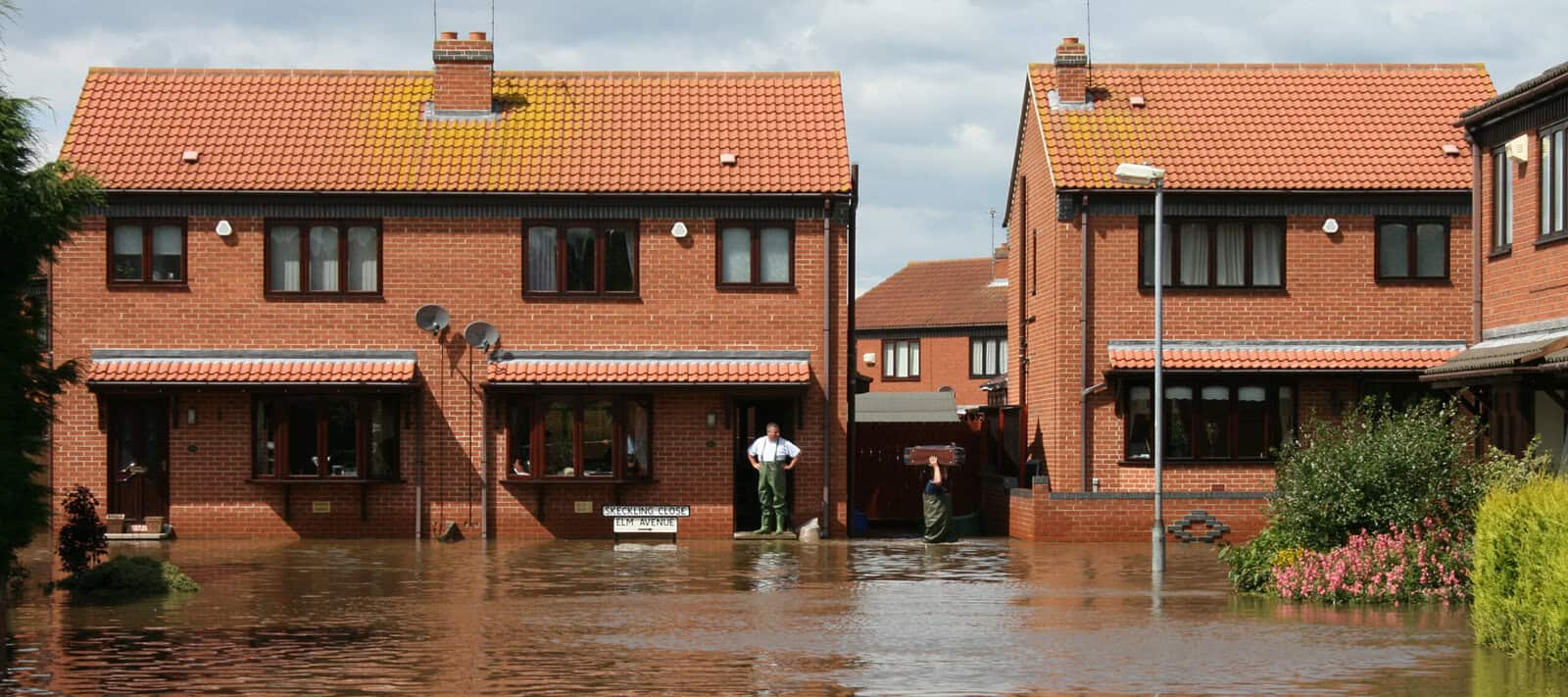
Uninsurable homes are a real but limited prospect in the UK: most homes will keep flood cover, and the change will come gradually rather than overnight. About 6.3 million properties in England sit in areas at risk of flooding, according to England's national flood risk assessment, and the Environment Agency expects that to reach around 8 million, roughly one in four, by the middle of the century. Bank of England staff modelling published in May 2026 puts about 5% of mortgagors without home insurance today, rising to as much as 10.2% by 2050 in a high-emissions scenario once Flood Re has ended. For the UK housing market, the risk sits with individual owners and buyers in the most exposed places rather than with the banking system.
Uninsurable homes are a household problem first: a home that cannot be insured is hard to remortgage and harder still to sell.
That is why the question for anyone buying now is about one address, not the national average. An independent flood risk survey before buying a home measures the thresholds and floor levels that decide whether that particular property can be insured at a sensible price for the length of a mortgage.
Will homes become uninsurable when Flood Re ends?
Most homes will stay insurable after Flood Re ends, but cover for the highest-risk older homes will cost more, and some may be priced out. Flood Re is the reinsurance scheme that lets insurers pass the flood part of an eligible home policy into a central pool, so the premium is set by Council Tax band, not by the flood risk itself. It held about 353,000 policies at 31 March 2026.
Two limits shape what happens next. Only homes built before 1 January 2009 qualify, so newer homes are already priced on the insurer's own view of the risk. And the scheme is temporary: section 83 of the Water Act 2014 repeals it 25 years after the Act was passed, which falls in 2039, and allows ministers to bring that date forward by regulations. The guide to how the Flood Re scheme works covers eligibility and premiums.
The Government's most recent position points to reform, not early closure. In a Commons statement on 1 July 2026, the floods minister, Emma Hardy, announced that the contents premium for Council Tax bands A and B will fall to £25 from April 2027, that insurers will face a cap on the claims they can pass to the scheme, and that flood performance certificates will be piloted. She said the scheme must change to continue for the next ten years. No decision to end it early has been published.
A 40-year mortgage taken out in 2026 runs to 2066, which is 27 years past Flood Re's scheduled end.
What did the Bank of England staff research find?
The most detailed public estimate of this insurance gap comes from a Bank Underground post, Opening the floodgates?, published on 5 May 2026 by Will Banks and Kemal Erçevik of the Bank of England's Cross-cutting Strategy and Emerging Risks Division. The views are the authors', not the Bank's. They modelled how many mortgagors would go without insurance because cover is unavailable or costs too much for their income, using flood estimates for rivers, surface water and the sea.
Today
About 5%
Cover unavailable or unaffordable
2050, Flood Re ended
6.8% to 10.2%
RCP8.5 pathway, up to about 910,000 mortgagors
After a 1-in-100 flood year
15.7%
Around 1.39 million mortgagors
The model starts from about 5% of mortgagors uninsured, with an average modelled premium of about £430 a year. By 2050, on a high-emissions pathway (RCP8.5) with Flood Re ended and fully risk-reflective pricing, the share rises to between 6.8% and 10.2%, or up to about 910,000 mortgagors. After a simulated 1-in-100-year flood it reaches about 15.7%, or around 1.39 million, because premiums for the flooded homes jump.
| Measure | Result |
|---|---|
| House prices, central case, 2050 | Falls of about 1% to 3% |
| House prices after an extreme weather event | Falls of about 3% to 5% |
| Mortgaged homes losing more than 10% of value after a severe flood | Up to 18% |
| Mortgaged homes losing more than 30% of value after a severe flood | Almost 3% |
| Impacts in higher-risk regions | Nearly four times the average |
| For comparison: annual fall after the global financial crisis | 15.6% |
The authors conclude that protection gaps are unlikely to threaten the solvency of the banking system, because loan-to-value ratios are mostly low, cover is still widely held and the risk is concentrated in particular places. They flag two exceptions: smaller lenders with books concentrated in high-risk areas, and a severe flood that coincides with other stresses. The model covers existing homes and flooding only, stops at 2050 and treats its results as indicative.
The Bank's earlier 2021 climate stress test pointed the same way. In its scenario with no further climate action, which assumed Flood Re ends in 2039, around 7% of households insured today could be left without cover, and the modelled cost of flood cover rose almost fourfold in the worst-affected postcodes.
Are coastal homes harder to insure and mortgage?
Coastal homes face two different risks, and only one of them can be insured. Flooding from the sea is treated like any other flood: Flood Re's regulations define a flood as water entering from any source outside the building, so an eligible pre-2009 coastal home is covered. Coastal erosion is not. Standard home policies exclude it, Parliament's Erosion of trust report found no insurance product covers it, and the Government's June 2026 response ruled out a Flood Re-style scheme for erosion.
That split decides how coastal flood risk affects mortgages. A lender can see a home's sea flood risk priced into an insurance quote, but erosion removes the security itself, and no policy pays out. The Environment Agency's National Coastal Erosion Risk Map, published in January 2025 with its headline figures in NaFRA2, shows how much depends on whether coastal defences are kept up.
| Scenario | By 2055 | By 2105 |
|---|---|---|
| Shoreline management plans delivered, with climate change | 5,200 | 19,700 |
| Shoreline management plans not delivered, with climate change | 44,500 | 102,100 |
The difference between those rows is the policy in the local shoreline management plan, which may be to hold the line, realign it or let the coast behave naturally, and every option depends on funding being found. Lenders can take that policy into account. In one published case, the Financial Ombudsman Service found it reasonable for HSBC to refuse further borrowing on a home in an area at risk of coastal erosion where no intervention was planned. The owners had argued that government data showed no erosion risk for the foreseeable future, and they moved to another lender at the cost of an early repayment charge.
No home insurance policy pays out for coastal erosion, and the only public money is a demolition grant of up to £10,000 per home.
That grant rose from £6,000 in July 2026, and the guide to coastal erosion compensation sets out who qualifies. For the longer view of tidal risk, sea level rise and planning beyond 2100 explains the allowances councils now use.
How are mortgage lenders responding to flood risk?
Lenders are screening for flood risk earlier and limiting how much they lend in the highest-risk places. Even so, a flood flag rarely makes a home unmortgageable on its own. Approval turns on the lender's policy, on the home's insurability at a sensible cost, and on the quality of the evidence for the property. The lender-by-lender detail is in getting a mortgage on a flood-risk property.
- Nationwide began declining to lend on some homes it judged at high flood risk in 2024. The check happens before an offer is made, and no offers already issued were withdrawn.
- NatWest reported 3.4% of its UK mortgage book at high flood risk and 1.3% at very high risk at the end of 2025. Its 2025 climate transition plan report caps lending on high-risk homes that Flood Re cannot cover: buy-to-let, flats and homes built after 2009.
- The mortgage industry set out its position through UK Finance in October 2025: where insurance becomes unaffordable, lenders may build premiums and excesses into affordability checks and loan-to-value limits.
Borrowers who can no longer switch deals are sometimes called climate mortgage prisoners. A March 2026 report for UKSIF estimated that about 430,000 mortgaged homes in England could reach high flood risk by 2050, with cover becoming unaffordable or unavailable for many of them.
Is Tenbury Wells an uninsurable town?
Tenbury Wells in Worcestershire has been called Britain's first "uninsurable town", but the reported facts are narrower. In 2025 the town council's insurer withdrew flood cover from three council-owned buildings, including the Pump Rooms, after repeated flooding and a stalled defence scheme, and some local businesses reported the same problem, as the Guardian reported. No source reports homes in the town losing cover. Pre-2009 homes there remain eligible for Flood Re.
Commercial and public buildings sit outside Flood Re, so Tenbury shows what fully risk-reflective pricing looks like today. Eligible homes will not face it until the scheme ends. Figures from the Association of British Insurers show the cost pressure behind that pricing, and the guide to UK flood insurance claims explains how those payouts are settled.
Insurers paid £312 million on domestic flood claims in 2025, and the average flood payout rose 60% to about £30,000.
What does it mean for house prices and new homes?
The modelled effect on national property values is small. It is also concentrated. A national fall of 1% to 3% by 2050 hides a minority of homes that could lose far more after a flood, and independent research on whether flood risk affects house prices finds that flooded homes do not recover their value.
New homes carry a different exposure. Anything built from 2009 sits outside Flood Re, so its insurance is priced on the site's own risk from the day it is sold. Insurers have warned that some homes being built now may become uninsurable, and Aviva's analysis found that about one in nine new homes built in England from 2022 to 2024 sit in areas of medium or high flood risk, a figure set against the official numbers in new homes in flood risk areas. For a developer, the finished floor levels, safe access and flood resistance set out in a flood risk assessment for planning answer the insurer and the lender as well as the case officer. The August 2026 NPPF changes explain the planning tests that now apply.
What buyers, sellers and owners can do now
Owners and buyers cannot change where a home sits, but they can find out early how an insurer and a lender will see it.
- Check every source of flood risk. Use a flood risk map by postcode for rivers, the sea and surface water, and remember that flood zones cover only rivers and the sea.
- Get an insurance quote before exchange. Confirm the build date against the 1 January 2009 cut-off, and get the flood excess and any exclusions in writing.
- Ask the lender early. Policies differ between banks. Flats, buy-to-let and post-2009 homes in high-risk areas meet the tightest limits.
- Answer and read the flood questions carefully. The TA6 property information form now asks about flooding from any source; declaring flooding when selling a house and what a conveyancing solicitor does about flood risk explain where mismatches show up.
- Get property-level evidence where the mapping flags risk. Measured thresholds and floor levels can show a mapped risk overstates the exposure, or confirm that it does not.
Buying, selling or building in a flood-flagged area?
A flood risk assessment gives the lender, insurer or planning officer measured levels instead of a postcode flag. A tailored quote takes 60 minutes.
Get a quoteOwners can also cut the damage a flood would do. Property flood resilience measures such as flood doors, non-return valves and raised electrics reduce the loss and give an insurer something specific to weigh. Where an insurer or lender wants a formal report on an existing home, a flood risk assessment for insurance sets out the evidence at building level rather than postcode level.
Uninsurable homes and the UK housing market: frequently asked questions
What happens to a mortgage if a home becomes uninsurable?
Most mortgage terms require buildings insurance for the life of the loan, so losing cover can put the borrower in breach. In practice the pressure comes at the end of a fixed deal, when another lender may decline the home and the borrower stays on the existing lender's standard rate.
What is a climate mortgage prisoner?
It describes a homeowner who cannot remortgage onto a new deal or sell without a large loss, because the home's flood risk has made cover unaffordable or unavailable. The term is used in the UKSIF report, which defines unaffordable cover as more than £8,000 a year in 2025 prices.
Do homes built after 2009 face the same insurance risk?
The flood risk can be the same, but the safety net is not. Flood Re excludes homes built from 1 January 2009, so insurers price them on their own assessment of the site, including its floor levels, any defences and the design of the building.
Can a flood risk assessment change a lender's or insurer's view?
It can give them better evidence. Where measured levels show that a mapped risk overstates the exposure, the lender or insurer has something concrete to reconsider. It does not guarantee a different decision, because each firm applies its own policy.
Is the Government closing Flood Re early?
Flood Re is scheduled to end in 2039, and ministers have the legal power to bring that date forward. Press reports in October 2026 said early closure was being considered. No such decision has been published, and the most recent statement to Parliament was about reforming the scheme.
Will a home in Flood Zone 3 be uninsurable after 2039?
Not automatically. The flood zone describes river and sea risk to the area, not to the building, and flood maps are not always accurate at building level. Insurers price on their own models, so a raised floor, a defended location or resilience measures can keep cover available. A low-lying home that has flooded before is likely to pay much more.
Does selling a coastal home require disclosure of erosion risk?
The TA6 form's flooding question covers flooding from the sea, but erosion is a different risk, and the Government has said it will publish guidance on treating coastal erosion as material information in listings. A seller who knows of an erosion risk should still disclose it, because a buyer who finds out later may have grounds for a misrepresentation claim.
For a property-specific answer on an existing home or a purchase, contact Unda's consultants on 01293 214444 or at enquiries@unda.co.uk.
About the author. Jackie is a co-founder and Director of Unda with 30+ years in flood risk, and sits on CIWEM's South Eastern Branch committee. Unda has been trading since 2014, is a CIWEM Business Partner with CIWEM member and chartered (C.WEM MCIWEM) consultants, and has delivered 5,000+ flood risk assessments and drainage strategies across England and Wales.
Jackie Stone · MSci, BSc (Hons), DIC, CIWEM Environmental Partner
Latest news


One of our experienced Flood Risk Consultants will get back to you within 60 minutes
