Retrospective Stable Yard Drained Beside Ancient Woodland
The ancient woodland beside this Oxfordshire stable yard was taking its effluent, and it also decided where anything else could go. The yard had been built without planning permission, so nothing on it could be moved. For the retrospective application, Unda gave every flow on the site its own destination, and put the clean water into the only ground the woodland had left.
| Client | Planning consultant (for a landowner) |
| Location | Oxfordshire |
| Watercourse | None within about 5 km; no outfall available |
| Flood risk | Surface water |
| Development | Stable block, barns, yard and access, built without permission |
| Service | Surface water drainage strategy — soakage testing and a combined surface water and foul drainage strategy for the retrospective application |
| Outcome | Awaiting decision; effluent designed out of the woodland |
The woodland was taking the effluent
The yard was finished before Unda was instructed. A stable block, a storage barn and a hay barn had gone up, along with hardstanding and a new access, none of it with planning permission or Building Regulations approval. Nobody had looked at the drainage before it went in.
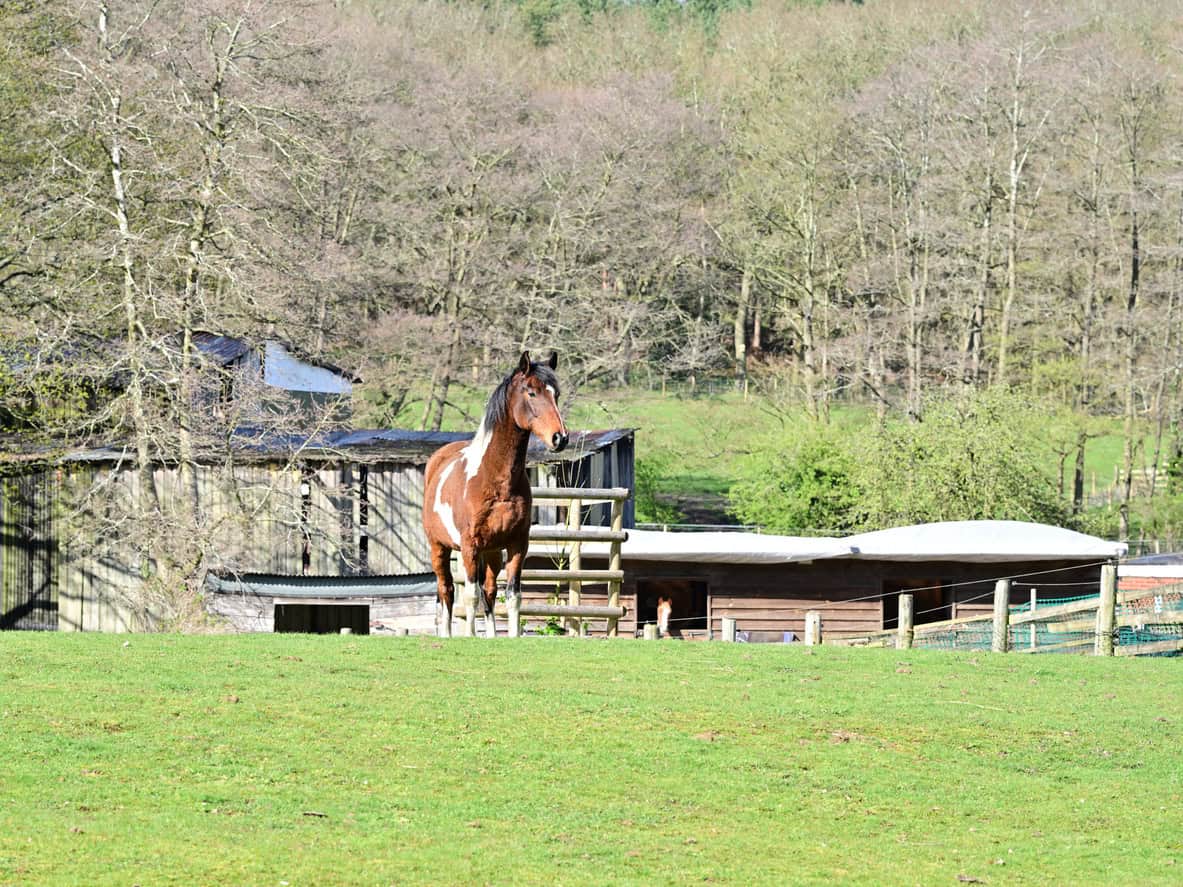
The washdown bays and the manure trailer pad were the worst of it. Their drainage was inadequate and it discharged into the protected ancient woodland next to the yard, which made this a pollution problem before it was a storm problem. A retrospective application is judged on the same evidence as any other. So the first task was working out what the finished yard actually did with its water, before anything could be said about making it acceptable.
It also fixed where water could go
Two soakaways were already in the ground beside the woodland, and digging them out to start again would have meant disturbing the very ground the application was trying to keep effluent out of, so both stayed where they were. The design worked around them.
There was nowhere else for the water to go in any case. The nearest watercourse is about 5 km away and there is no sewer to join. Rain on this chalk soaks in before the undeveloped field would have shed any, so there was no discharge rate to design to and nothing to discharge into. The discharge hierarchy in CIRIA C753 puts infiltration second only to collecting rain for reuse, and here it was the only route open.
A sealed destination for each flow
Unda traced every flow on the yard and gave each one somewhere of its own. The dirty water came first. The washdown bays and the manure trailer pad drain to a cesspool, a sealed tank with no outlet that is emptied as it fills, so none of that effluent reaches the woodland, and the utility room drains to a septic tank of its own. Runoff off the parking and the access road passes through an oil interceptor, which catches what washes off the vehicles, before it reaches a soakaway. The roof drainage gets sediment traps.

The clean water needed the ground tested rather than assumed. The geological map showed chalk with clay-with-flints over part of the site, which suggested soakaways would work but gave no rate to size them from, so Unda ran BRE 365 soakage tests in trial pits. The ground drained well enough to take everything the yard now sheds, about 1,059 m² of new roof and hard surface. The rest of the ground was left permeable. Both soakaways were then sized where they already sat, against the 1 in 100 year storm with a climate change allowance, rather than being put where the storage would have been easiest to build.
Effluent designed out, runoff to ground
The strategy takes the effluent out of the woodland. Every flow on the yard has a destination that suits what it carries. The clean water soaks away through the two soakaways where they already sat, and neither fills in the storm they were sized against. No outfall is needed. Nothing already standing has to be rebuilt.
What Unda issued was a combined surface water drainage strategy and foul drainage strategy for the retrospective application. It carried the soakage test results, the sizing for both soakaways, the destination for every flow, and a maintenance schedule the landowner can follow. The soakaways were the landowner's own work, put in before any of this, and the application itself was assembled by the planning consultant who instructed Unda. It had not been determined when the strategy was issued.
What this means for similar sites
On a yard built before permission, trace every flow before sizing anything, because here the effluent reaching the woodland mattered more than the storm calculations, and a strategy that only sized soakaways would have left it running. The as-built evidence a retrospective planning application needs is much harder to put right once the concrete is down.
Stable yards carry two kinds of water. The two do not mix. Roof and yard runoff can go to ground where chalk will take it, while washdown and manure pad runoff needs a sealed destination of its own, as Unda's guide to drainage for stables and ménages sets out. And where a protected feature fixes where a soakaway can sit, size the storage to the position instead of choosing the position to suit the storage.
About the author. Ellen is a Flood Risk and Drainage Consultant working across flood risk assessment and sustainable drainage design. Unda has been trading since 2014, is a CIWEM Business Partner with CIWEM member and chartered (C.WEM MCIWEM) consultants, and has delivered 5,000+ flood risk assessments and drainage strategies across England and Wales.
Ellen Webb · BSc (Hons), GradCIWEM
For a yard that is already built, a surface water drainage strategy turns what is in the ground into evidence a council can determine, with the ground tested rather than assumed.
Regularising a yard or barn that is already built?
Describe what has been built and what is already in the ground, and Unda's experienced consultants will send a tailored quote within 60 minutes on a working day.
Start a quoteRelated projects
- Drainage Conditions Discharged for 24 Homes on Clay: clay that would not drain, no usable sewer, and one ditch feeding a protected wetland to design around.
- Retrospective Dwelling Justified in Flood Zone 2: flood risk evidence for a house in the River Ems floodplain, prepared after it had been built.
 On a stable yard drained beside ancient woodland, runoff from the manure pad went to a sealed cesspool, separate from the roof water.
 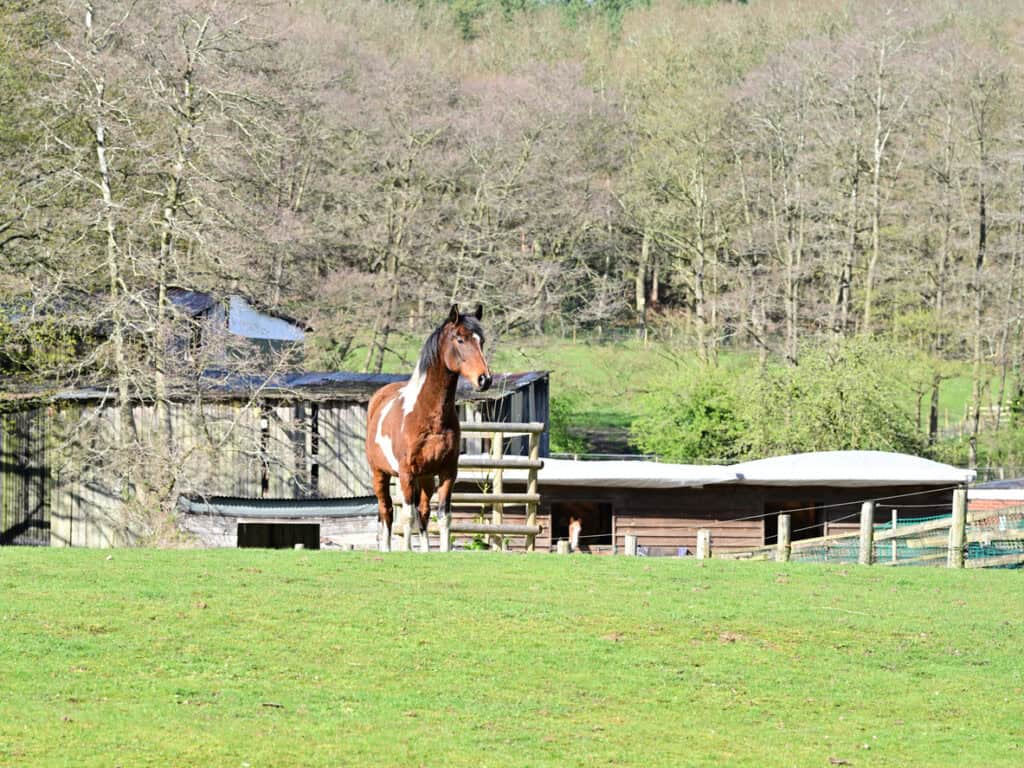 Where a yard backs onto woodland, the soakaways may have to stay where they are, so the drainage design has to work around them.