Do you need a flood risk assessment for a barn conversion (Class Q)?
Estimated reading time 15 minutes
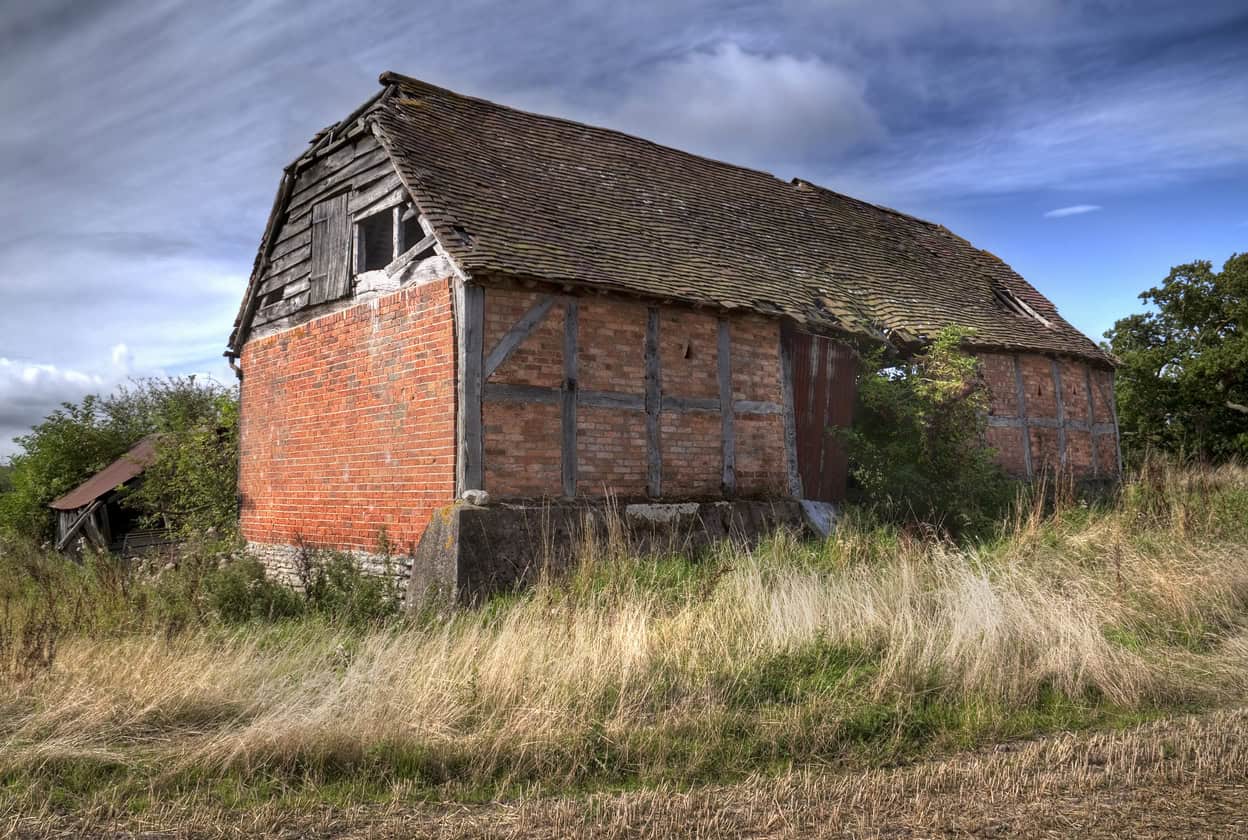
Yes — if the barn sits in a flood risk area, a flood risk assessment for a barn conversion is almost always required, even though the work is permitted development. Class Q lets you turn an agricultural building into a home without a full planning application, but it is not automatic. The conversion still needs the council's prior approval, and "flooding risks on the site" is one of the matters the council must sign off. Where the barn falls in Flood Zone 2 or 3, or is at surface water risk, a site-specific assessment is the evidence that discharges that matter. Without it, prior approval can be refused or simply run out of time.
This article explains when a barn conversion needs a flood risk assessment, why a barn becoming a home changes the flood picture, and what the assessment has to show to get a Class Q scheme through. It is updated throughout for the August 2026 National Planning Policy Framework, which now carries the flood rules in a dedicated Chapter 18.
Class Q is permitted development, but in a flood risk area a barn conversion still needs a site-specific flood risk assessment to win the council's prior approval.
What Class Q permitted development actually allows
Class Q is a permitted development right under Part 3 of Schedule 2 to the Town and Country Planning (General Permitted Development) (England) Order 2015. It permits two things: the change of use of an agricultural building to a dwelling (use class C3), and the building operations reasonably necessary to convert it. It applies in England only.
The right was widened on 21 May 2024. The current limits per agricultural unit are:
- Up to 10 homes. A single unit can now yield as many as ten dwellings, up from three under the old rules.
- 1,000 square metres in total. Cumulative floor space converted under Class Q must not exceed 1,000 m².
- 150 square metres per home. No individual dwelling may be larger than 150 m².
- Agricultural on the qualifying date. The building must have been in agricultural use on 20 March 2013, or, if built later, for at least ten years.
- Not on protected land. Class Q is unavailable on listed buildings, scheduled monuments, and Article 2(3) land such as National Parks, the Broads, Areas of Outstanding Natural Beauty and conservation areas.
Meeting those limits gets you into Class Q. It does not, on its own, get you a home. That depends on prior approval, and flood risk is where a surprising number of otherwise-eligible barns come unstuck.
Flooding is a prior approval matter you cannot skip
Permitted development under Class Q is not a free pass. Before the conversion can go ahead, the applicant must apply to the local planning authority for prior approval of a defined list of matters, and flood risk is on that list.
The Order requires the authority to consider, among other things, "flooding risks on the site". That short phrase is what brings a flood risk assessment into a barn conversion. It means the council has a duty to assess whether the site can safely accommodate people living there, and it can refuse prior approval on flood grounds alone. The national Planning Practice Guidance puts it plainly:
Such applications for prior approval in areas of flood risk must be accompanied by a site-specific flood risk assessment.
Planning Practice Guidance, flood risk and coastal change
Class Q has no blanket flood-zone exclusion. A barn in Flood Zone 3 is not automatically barred the way it would be for a listed building or a site in a National Park. Instead, the flood question is handed to the prior approval process, which is precisely why the assessment matters so much. The planning system's answer is not "you can't", but "prove it's safe", and the assessment is the proof. Since 17 August 2026, Policy F4 of the NPPF has made that site-specific report a national information requirement in Flood Zones 2, 3a and 3b. In a flood risk area, a flood risk assessment for planning is the document the decision turns on. It is not optional supporting material.
When exactly does a barn conversion need an FRA?
Whether your barn needs a flood risk assessment comes down to where it sits on the Environment Agency's Flood Map for Planning, plus a few other triggers. The table below sets out the position for a Class Q conversion under the current Policy F4 rules.
| Where the barn sits | Flood risk assessment needed? |
|---|---|
| Flood Zone 3 (high probability) or 3b (functional floodplain) | Yes, always (expect Environment Agency involvement) |
| Flood Zone 2 (medium probability) | Yes, always |
| Flood Zone 1 but 1 hectare or larger | Yes |
| Flood Zone 1 and shown at surface water risk, now or in future | Yes |
| Flood Zone 1 in a critical drainage area, or flagged by the local strategic assessment | Yes |
| Flood Zone 1, small site, no other flood source | Usually not, but confirm against the Flood Map for Planning and with the council |
One change worth flagging: Policy F4 dropped the old qualifier that a Flood Zone 1 site only needed an assessment where it introduced a "more vulnerable" use. A barn conversion clears that hurdle regardless, but the wider effect is that more Zone 1 sites now fall in scope, especially since the 28 May 2026 Flood Map for Planning update added surface water climate change extents. Many farm buildings sit in open, low-lying countryside beside rivers, ditches and land drains, so the assumption that a rural barn is "obviously" low risk is a dangerous one. Surface water is now the most widespread source of flooding in England, and it can affect a barn that the river-and-sea flood zones show as Zone 1. The starting point for any Class Q scheme is to check the map and read the result honestly.
Why a barn becoming a home raises the flood stakes
The reason flood risk bites harder on a conversion than it might on, say, a new farm shed is vulnerability. Planning policy sorts every use by how badly flooding would affect the people and property in it, and a home scores far higher than a barn.
A barn is classed as "less vulnerable" and a home as "more vulnerable" — the conversion moves the building up the scale, and that is what makes flood risk a live planning issue.
The flood risk vulnerability classification puts agricultural buildings in the "less vulnerable" band and dwelling houses in the "more vulnerable" one. The August 2026 NPPF moved that classification into Annex F, Table 2; it previously sat in Annex 3 of the old Framework. A Class Q conversion moves the building up the scale, from a use where a flood is an inconvenience to one where people sleep and a night-time escape becomes the real concern. It is why a barn that functioned perfectly well for decades can suddenly need a detailed flood case to become a home. This is the same shift that catches an office-to-residential conversion under Class MA, and our guide to the flood risk vulnerability classification explains where each use sits and what it means in the higher-risk zones.
Does the sequential test apply to a Class Q conversion?
This is where barn conversions differ from a full planning application, and it catches people out in both directions. For most applications in a flood zone the developer has to pass the sequential test, proving there is no reasonably available site at lower flood risk. Changes of use are treated differently.
Changes of use are not normally subject to the Sequential or Exception tests.
Planning Practice Guidance, flood risk and coastal change
Because a Class Q conversion is a change of use decided through prior approval, you generally do not have to run the sequential test to justify the location of the barn. Under the 2026 Framework that exemption sits at Policy F5, and Policy F6 confirms the exception test does not apply either. You cannot move a barn, and the policy recognises that. The catch is that being exempt from the sequential test does not exempt you from the flood risk assessment. The two are separate. You skip the test that asks "is there a better site?", but you still owe the assessment that asks "is this site safe, and how will you make it so?". Reading the sequential-test exemption as "no flood work needed" is one of the most common and costly misreadings of a Class Q application.
What the flood risk assessment has to demonstrate
A flood risk assessment for a Class Q barn conversion has to do more than state the flood zone. Under Policy F7 it has to show the council, and in higher-risk zones the Environment Agency, that the finished home will be safe for its lifetime. In practice that means working through five things:
- The flood sources. Identify every way water could reach the site, not just the headline flood zone: river, sea, surface water, groundwater and ordinary watercourses.
- Flood levels and finished floor levels. Establish the design flood level, including a climate change allowance, and set finished floor levels above it, usually with freeboard.
- Safe access and escape. Show that occupants can get in and out safely, or shelter, during a flood event. This is the part that most often decides a residential case.
- Surface water and drainage. Demonstrate how surface water will be managed, so the conversion does not increase flood risk elsewhere. Since 17 August 2026, Policy F8 applies the 2025 National Standards for sustainable drainage to development of every scale, so even a single barn needs its runoff dealt with properly.
- Residual risk. Set out what risk remains after mitigation and how it is managed, so the council can be satisfied the home is safe.
The detail scales with the risk: a small barn at low residual risk needs a proportionate assessment, while a barn on the floodplain needs modelling and a full mitigation strategy. Our walk-through of how to do a flood risk assessment sets out the stages in full, and where the barn is caught mainly by rainfall rather than a river, a dedicated surface water drainage strategy is usually the other half of the submission.
Converting a barn in a flood risk area?
Unda prepares the site-specific flood risk assessment your Class Q prior approval needs, matched to the barn's real risk, with a free quote usually within the hour.
Get a flood risk assessment for planningHow the council and the Environment Agency handle it
The local planning authority determines a Class Q prior approval application, and it has 56 days from a valid application to do so. Where the barn is in Flood Zone 2 or 3, the Environment Agency is a statutory consultee and the council will seek its view on the flood risk assessment before deciding. In lower-risk cases the council may rely on the Agency's published standing advice rather than a bespoke consultation, which is why matching the assessment to the right route saves time.
A thin, missing or badly-argued flood risk assessment does more than risk refusal. It can run out the 56-day prior approval clock and leave you fighting an appeal.
The practical lesson is timing. Prior approval runs to a tight statutory clock, so submitting a sound assessment with the application, rather than scrambling after an objection, is the single biggest thing that keeps a Class Q conversion on programme. Our guide to planning with the Environment Agency's flood risk standing advice explains when a barn conversion needs a full consultation and when standing advice is enough.
What the 2026 NPPF changed for a barn conversion
The August 2026 NPPF, in force for decisions from 17 August 2026, rewrote the flood rules rather than the outcome for Class Q. A barn conversion in a flood risk area needed an assessment before, and it still does. What has moved is the policy a well-prepared report should cite. The headlines for a Class Q scheme are:
- New home for the rules. Flood risk now sits in a dedicated Chapter 18 with nine coded policies, F1 to F9, and the flood zone and vulnerability definitions have moved into a new Annex F.
- The FRA trigger is Policy F4. It makes the site-specific assessment a national information requirement in Flood Zones 2, 3a and 3b, and widens the Flood Zone 1 net by dropping the old "more vulnerable use" qualifier.
- Exemptions are Policies F5 and F6. The change-of-use exemption from the sequential test carries across almost word for word, and the exception test is confined to river and sea flooding.
- Drainage is Policy F8. The 2025 National Standards for sustainable drainage now apply to all development, so even a single-barn conversion has to show how its surface water is controlled.
An assessment still framed around "Annex 3" or the old paragraph numbers is not wrong in substance, but it reads as out of date. Our explainer on the August 2026 NPPF flood and drainage changes sets out where every old paragraph now sits.
Getting a barn conversion through on flood risk
A barn conversion under Class Q lives or dies on prior approval, and in a flood risk area the flood risk assessment is the heart of it. Get it in early, match it to the barn's real risk, and it is usually the difference between a clean approval and a stalled scheme. If you are converting a barn and the Flood Map for Planning shows any risk, Unda's flood risk assessment for planning can prepare the site-specific assessment your prior approval application needs.
Frequently asked questions
Can I start converting the barn before the flood risk assessment is signed off?
No. Class Q needs prior approval before the change of use and building works begin, and in a flood risk area that approval depends on the flood risk assessment. Starting first risks enforcement, and it removes any chance to design the mitigation (floor levels, access, drainage) into the scheme rather than retro-fitting it. Converting first and regularising later is the route that most often ends in refusal.
My barn is in Flood Zone 1 but has flooded before — does that matter?
Yes. The Flood Zones on the Flood Map for Planning only cover river and sea flooding, so a barn can sit in Zone 1 and still be at real risk from surface water, groundwater or a nearby ditch. A flood history is exactly the kind of evidence a council will expect the assessment to address, and Policy F4 now catches Zone 1 sites shown at risk from any source. Check the surface water layer and the local strategic flood risk assessment, not just the flood zone.
Do the same rules apply in Wales?
No. Class Q is an England-only permitted development right, and Wales runs a separate flood regime. A Welsh site needs a Flood Consequence Assessment under TAN15, reviewed by Natural Resources Wales, rather than an NPPF flood risk assessment. The principle, proving the home is safe, is similar, but the policy, the map and the reviewing body are different.
Is a flood risk assessment enough, or do I also need a drainage strategy?
Often you need both, and government guidance now lets them sit in one document. The assessment answers whether the site floods and whether the conversion is safe; a drainage strategy answers where the surface water goes once the barn is a home. With Policy F8 applying the 2025 SuDS standards to development of any scale, a Class Q barn usually needs the drainage question answered too. See our guide on whether you need an FRA and a drainage strategy.
About the author. Jackie is a co-founder and Director of Unda with 30+ years in flood risk, and sits on CIWEM's South Eastern Branch committee. Unda has been trading since 2014, is a CIWEM Business Partner with CIWEM member and chartered (C.WEM MCIWEM) consultants, and has delivered 5,000+ flood risk assessments and drainage strategies across England and Wales.
Jackie Stone · MSci, BSc (Hons), DIC, CIWEM Environmental Partner
Latest news

One of our experienced Flood Risk Consultants will get back to you within 60 minutes
