Ordinary Watercourse Consent (OWC): The Complete Guide
Estimated reading time 18 minutes
Ordinary watercourse consent (OWC) is the written permission you need under Section 23 of the Land Drainage Act 1991 before carrying out any work that would obstruct or alter the flow of an ordinary watercourse: a stream, ditch, culvert or other channel that is not a designated Main River. The Flood and Water Management Act 2010 transferred the power to grant it from the Environment Agency to Lead Local Flood Authorities (LLFAs), so in most areas you now apply to your county or unitary council. Get it wrong and the consequence is more than a fine. The LLFA can require unauthorised work to be torn out again at your own expense, and there is no route to consent it after the event.
This guide sets out, for England and Wales, when consent is triggered, how to apply, what a good application contains, what it costs, how long it takes, and what happens if you skip it. It is written for developers, planning consultants, engineers and landowners who have a real watercourse to deal with. OWC applications almost always accompany a wider surface water drainage strategy and, on many sites, a flood risk assessment for planning, because the same hydraulic evidence supports all three.
The single most expensive mistake with an ordinary watercourse is assuming planning permission covers it. It does not: a live planning permission is no defence for unconsented works, and the two approvals run on entirely separate tracks.
What does OWC stand for?
OWC stands for ordinary watercourse consent. It is the permission required under the Land Drainage Act 1991 before you alter an ordinary watercourse, and the term is used across UK planning, construction and civil engineering. If a drawing, planning condition or consultant's report refers to “OWC”, it means this consent and nothing else.
Two other names describe the identical thing. Many authorities call it land drainage consent (LDC), which is the same Section 23 permission under a different label. A handful, Surrey County Council among them, call it a flood defence consent. All three names point to the same approval under the same section of the same Act; only the house terminology changes. It is distinct from a Flood Risk Activity Permit (FRAP), which is the equivalent permission the Environment Agency issues for work on or near a designated Main River.
Why is ordinary watercourse consent needed?
Consent exists so that a change to one length of channel does not create a problem for someone else downstream, or for the water environment. An LLFA weighing an application is really testing four things.
- Flood risk. The works must not increase flood risk to surrounding land or property, upstream or downstream.
- The environment. They must protect habitats, aquatic ecology and water quality.
- Compliance. Consent keeps the works lawful and avoids enforcement, fines or a demand to reverse them.
- Infrastructure. Controlling flow around roads, bridges and embankments keeps that infrastructure stable.
Those four tests are why an application stands or falls on evidence, not on a form. The LLFA wants to see that the flow the channel carried before the works is the flow it carries after them, which is where hydraulic calculations and a flood model earn their place.
When do you need ordinary watercourse consent?
You need consent before you do any of three things to an ordinary watercourse, set out in Section 23(1) of the Land Drainage Act 1991: erect or alter a mill dam, weir or “other like obstruction” to the flow; erect a culvert; or alter a culvert in a way likely to affect the flow. In plain terms, if your works would obstruct the channel, pipe it, or change how a piped length behaves, you need consent first.
In practice that captures most of what a construction project actually proposes near water: a new culvert to carry a channel under a road or access track, a bridge, an outfall or a pipe crossing, realigning or widening a channel, and temporary works such as diversions or cofferdams during construction. Consent can be granted subject to reasonable conditions, so the LLFA is not limited to a blunt yes or no. The quickest way to know which permission a site needs is to work down from the classification of the channel itself.
Even where planning permission is already in place, ordinary watercourse consent is a separate approval that has to be secured before work starts. One does not imply the other.
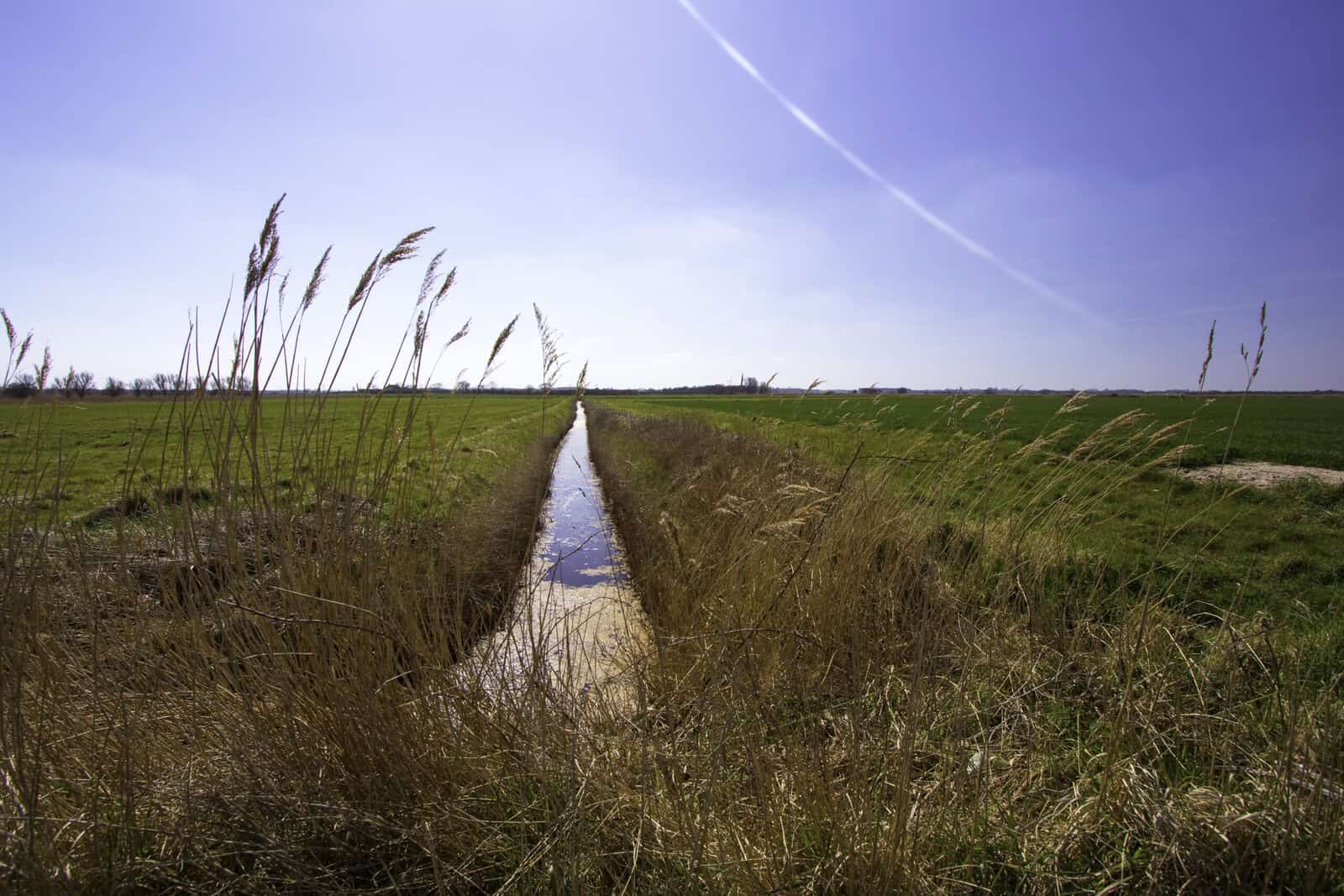
Is a ditch or drain an ordinary watercourse?
Usually, yes. An ordinary watercourse is any channel through which water flows: a river, stream, brook, ditch, drain, leat or culvert, whether it is natural or artificial and whether it runs all year or is dry for long stretches. Government guidance on owning a watercourse, updated on 12 February 2026, draws the line the same way, and treats a channel that only fills during a flood, and is otherwise dry, as not a watercourse.
The classification matters because it decides which regime applies. If the channel is an ordinary watercourse you need OWC from the LLFA; if it is a Main River you need a FRAP from the Environment Agency instead. Check the Environment Agency's Main River Map to rule out a Main River, then, if you are still unsure whether a feature counts at all, ask your LLFA before you touch it. Filling in or diverting what turns out to be a watercourse without consent is treated exactly like any other unauthorised works.
How close can you build to a watercourse?
There is no single national setback distance written into the Land Drainage Act, but most authorities protect an undeveloped margin beside a watercourse through local byelaws, and building into that margin is where consent, or a refusal, most often bites. As a working rule, expect to keep development back from the top of the bank and to leave an access strip for maintenance.
The only reliable setback figure is the one in the byelaw that applies to your site — commonly around 8 metres for an ordinary watercourse, but set locally, not nationally.
The common distances are worth knowing. The Environment Agency's byelaws generally require its permission for work within 8 metres of a non-tidal Main River, and 16 metres of a tidal one or a flood defence. For ordinary watercourses the figure is set locally: many Internal Drainage Boards require a 9-metre undeveloped easement from the top of the bank of a board-maintained channel, and many LLFAs look for a comparable buffer, commonly around 8 metres, before they will support development next to a watercourse. Where a scheme has to sit close to the channel, that constraint usually needs designing out through the drainage strategy rather than argued away later.
How to apply for ordinary watercourse consent
The process runs in five stages, and the third, preparing the application, is where the real work sits.
- Confirm the watercourse is “ordinary”. Check the Environment Agency's Main River Map. If it is a Main River, you need a FRAP instead.
- Contact the right authority before you apply. That is usually your LLFA, though in some low-lying areas an Internal Drainage Board holds the consenting role instead. Most LLFAs actively encourage a pre-application call, and several publish a direct line so they can tell you whether consent is needed at all, or flag a problem before you have drawn anything. It is free, and it routinely saves a redesign.
- Prepare the application. This is more than a form. See the document checklist below.
- Submit and pay. The statutory default fee is £50 per structure, though the Act allows this to be varied by order, so confirm the current figure with your LLFA. A scheme with three culverts needs three consents and three fees, though most authorities will process them together if they sit on the same watercourse.
- Wait for a decision. The Act gives the LLFA up to two months to decide, and the clock starts from the later of the day you submit or the day your fee clears. If the authority does not notify you within that window, consent is treated as automatically granted. Even so, chase a written decision if a lender or building control inspector will want to see one.
A credible submission usually needs a defined set of drawings and statements.
- A location plan on an Ordnance Survey base, showing the site and the watercourse in its wider context.
- A site plan showing the existing channel, the proposed works, and any other structures affecting local hydraulics: bridges, pipes, culverts, screens, embankments, outfalls and any existing fish passes.
- Cross sections upstream and downstream of the works, and a longitudinal section along the centre line, with existing and proposed bed and water levels referenced to Ordnance Datum.
- Hydraulic calculations comparing pre- and post-development flow, so the LLFA can see the works will not raise flood risk in either direction.
- A method statement covering construction technique, timing and pollution prevention. Temporary works such as cofferdams or diversions may need a separate consent of their own.
- A maintenance statement naming who is responsible for the structure, during construction and after it.
- An environmental appraisal where the site is near a protected habitat. Several LLFAs have a statutory duty under the Habitats Regulations to confirm the works will not harm a Site of Special Scientific Interest, Special Area of Conservation, Special Protection Area, Ramsar site or Scheduled Ancient Monument before they can grant consent.
Timing matters too. If the channel supports salmonid fish or other protected species, expect a condition restricting when the in-channel work can happen, to keep it clear of the spawning season. In our experience the £50 fee is rarely the real cost of an application. The modelling, the cross sections and the method statement behind it are what take the time and the expertise. They are also what an LLFA actually scrutinises when it decides whether to grant, condition or refuse.
Facing works on a watercourse?
The £50 fee is the easy part. Our experienced consultants prepare the hydraulic modelling, cross sections and method statement an LLFA actually scrutinises, alongside your drainage strategy.
Start a quoteHow much does consent cost, and does it expire?
The statutory application fee is modest, but consent is neither free of conditions nor open-ended. The fee is £50 per structure by default, and a scheme with several structures pays per structure. Consent then comes with a shelf life: many LLFAs attach a standard condition, commonly around three years, requiring works to start within that window, after which the consent lapses and has to be reapplied for.
The application itself has to name who maintains the structure, both while it is built and once it is finished, so this is not something to leave vague. An unmaintained culvert or headwall that later blocks and floods is exactly the problem OWC exists to prevent, and it can trigger enforcement long after the original works were signed off. If a site changes hands, check what the consent says about who inherits that duty: it sits alongside, not instead of, the riparian ownership responsibilities that come with land next to water.
What if the LLFA refuses, or won't decide?
The Act is explicit that consent is “not to be unreasonably withheld”, and it gives you a specific route if you think it has been. Under Section 23(5), a disputed refusal, or conditions that go beyond what is reasonable, is referred to a single arbitrator, agreed between you and the LLFA or, failing agreement, appointed by the President of the Institution of Civil Engineers.
This is arbitration, not a planning-style appeal, and it is a mechanism most guidance on the subject, including some professional flood-risk sites, does not mention at all. In most cases it is faster and cheaper to revise the application to meet the authority's stated concerns than to arbitrate. But the route exists, and it is worth knowing about when a refusal genuinely looks unreasonable rather than merely inconvenient.
What happens if you work without consent?
Carrying out work on an ordinary watercourse without consent is treated as a nuisance under Section 24 of the Land Drainage Act, and the authority can serve a notice requiring you to put it right within a set period. In practice LLFAs escalate: an advice letter first, then a formal warning, then an enforcement notice, and, if that is ignored, direct remedial action with the cost recharged to you, alongside possible prosecution.
Ignoring an enforcement notice is itself an offence, carrying a fine of up to £5,000 (level 5 on the standard scale), plus a further £40 for every day the breach continues after conviction.
The part that catches people out is that there is no route to consent the works retrospectively. Work already done cannot be regularised after the fact; the LLFA's only tools are enforcement and remediation. If you are tidying up a development more broadly through a retrospective planning application, unconsented watercourse works are one of the few problems planning permission alone cannot fix.
A small number of works are exempt from Section 23 altogether: anything under the control of a navigation, harbour or conservancy authority, and works carried out under another Act or an order with the force of one. Nationally significant infrastructure projects, for instance, are sometimes granted a Development Consent Order that specifically disapplies Section 23 for that scheme. These are edge cases; assume consent is needed unless your project falls squarely into one of them.
Which activities need consent, and which don't?
Not every structure near a watercourse counts as an obstruction. The following is a general guide, not a substitute for a site-specific check, and several authorities publish their own cross-section diagrams of consentable and non-consentable works.
Works that usually need consent:
- A culvert, including extending or removing one.
- A trash screen fitted to a culvert that could restrict flow.
- A pipe crossing the watercourse within the channel.
- A weir or dam.
- A bridge or decking where the underside sits below the top of the bank, or where the supports narrow the flow width.
Works that usually do not:
- Bank protection works.
- A pipe crossing above the bank, or laid below the bed.
- An outfall that protrudes into the channel without restricting flow.
- A clear-span bridge with no supports in the channel.
Treat the split as a starting point. Some “usually doesn't” items still need consent if they are temporary works during construction, and authorities such as Derbyshire County Council publish detailed cross-section diagrams worth checking against your specific design before you assume either way.
OWC vs FRAP: what's the difference?
Both regulate work on a watercourse, but which one applies depends entirely on how that watercourse is classified, not on its name or size. Ordinary watercourse consent covers ordinary watercourses; a FRAP covers Main Rivers under the Environmental Permitting Regulations 2016. The full comparison of the two regimes sits in our main rivers guide, but the essentials are these.
| Factor | Ordinary Watercourse Consent (OWC) | Flood Risk Activity Permit (FRAP) |
|---|---|---|
| Watercourse type | Ordinary watercourses | Main Rivers |
| Regulating authority | LLFA, or an IDB in some areas | Environment Agency |
| Typical trigger | Culverting, obstructions, diversions | Works near flood defences, in floodplains, or affecting Main Rivers |
| Legislation | Land Drainage Act 1991 | Environmental Permitting Regulations 2016 |
| Application fee | £50 per structure (statutory default) | Varies by activity |
| Processing time | Up to 2 months (deemed granted if no decision) | Varies by complexity |
| Disputed refusal | Arbitration under s.23(5) | Environment Agency appeal process |
Other permissions to check
A few approvals sit alongside OWC and catch people out. Clearing them one at a time, early, is far cheaper than discovering a missing one mid-construction.
- Protected sites and species. Work within 2km of a Site of Special Scientific Interest may need input from Natural England, and protected species such as water voles, otters or nesting birds can trigger a separate wildlife licence.
- Landowner permission. Where a watercourse is shared, get agreement from every owner before starting. This sits alongside, not instead of, the riparian responsibilities for the stretch you own.
- Culverting. Risk management authorities are reluctant to consent new culverts at all, because they tend to increase flood risk and damage the water environment, so do not assume a culvert is a formality.
- Planning permission. OWC and planning permission are two separate hurdles, and clearing one does not clear the other.
If your project touches a Main River rather than an ordinary watercourse, you will need an Environment Agency flood risk activity permit instead. For help working out which consent applies to your site, or with the drainage strategy and flood risk assessment that usually sit alongside it, Unda's team can help.
Frequently asked questions
Is land drainage consent the same as ordinary watercourse consent?
Yes. Land drainage consent (LDC) and ordinary watercourse consent are two names for the identical permission under Section 23 of the Land Drainage Act 1991, and some authorities also call it a flood defence consent. If your council's website or application form uses one of the other names, you are in the right place; search your LLFA's site for whichever term it uses locally.
Do I need consent to clear a blocked ditch or dredge a watercourse?
Routine maintenance that keeps a channel flowing as it always has — clearing a blockage, removing silt or cutting back vegetation — generally does not need consent, and is often part of your riparian duty as the owner. Consent is triggered when you change the channel rather than maintain it: deepening or widening it, lining or piping it, or installing a structure. If in doubt, a quick call to the LLFA will confirm which side of the line your work falls.
Does ordinary watercourse consent apply in Scotland and Northern Ireland?
No. The Land Drainage Act 1991 extends to England and Wales, so OWC applies in both, with day-to-day administration in Wales sitting with the relevant unitary authority rather than an English LLFA, and Natural Resources Wales regulating Main Rivers there. Scotland and Northern Ireland run different regimes: in Scotland, engineering works in or near a watercourse are controlled by SEPA under the Controlled Activities Regulations, not by OWC.
Who can carry out the hydraulic modelling for an OWC application?
The pre- and post-development flow calculations, cross sections and method statement are usually prepared by a flood risk or drainage consultant, because the LLFA judges the application on that evidence rather than on the fee. It is the same modelling that supports a planning drainage strategy, so it is efficient to have the two produced together. Unda prepares this evidence as part of a surface water drainage strategy or a standalone watercourse assessment.
About the author. Jackie is a co-founder and Director of Unda with 30+ years in flood risk, and sits on CIWEM's South Eastern Branch committee. Unda has been trading since 2014, is a CIWEM Business Partner with CIWEM member and chartered (C.WEM MCIWEM) consultants, and has delivered 5,000+ flood risk assessments and drainage strategies across England and Wales.
Jackie Stone · MSci, BSc (Hons), DIC, CIWEM Environmental Partner
Latest news




One of our experienced Flood Risk Consultants will get back to you within 60 minutes
