The Environment Agency (EA): Flood Risk and Planning
Estimated reading time 13 minutes
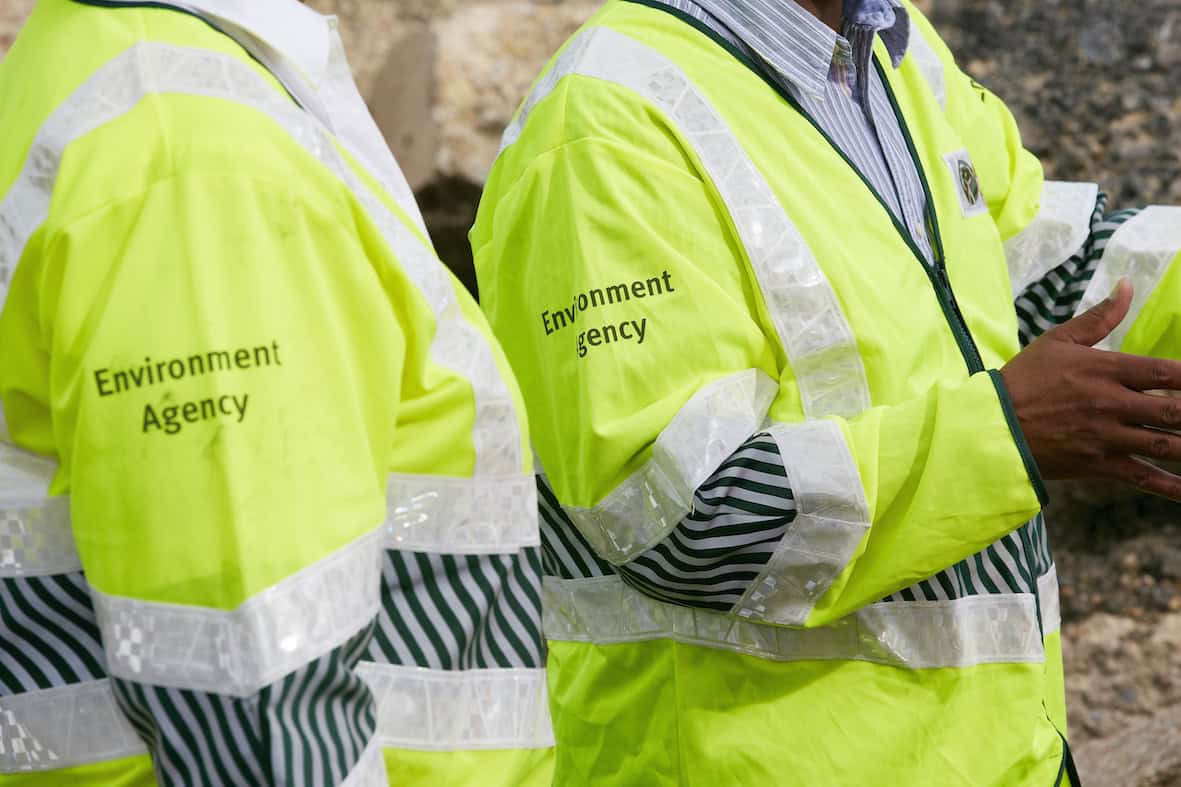
The Environment Agency is the government's statutory adviser on flood risk in the English planning system. It does not decide planning applications, but where a site carries flood risk its advice usually shapes whether permission is granted, refused, or held up.
Getting Environment Agency flood risk planning right, before an application is submitted, is often the difference between a clean determination and months of delay.
This guide explains when the Environment Agency is consulted, how it reviews flood risk, the most common reasons it objects, and what has changed across 2025 and 2026 that developers now need to account for. It is written for anyone progressing a site where flood risk is, or might become, a planning issue.
What does the Environment Agency do in flood risk planning?
The Environment Agency is a non-departmental public body, sponsored by the Department for Environment, Food and Rural Affairs (Defra), responsible for managing flood risk from main rivers, the sea and reservoirs in England. In planning, it acts as a statutory consultee: a body that local planning authorities are legally required to consult on defined types of application, and whose technical advice they must take into account before deciding.
The Environment Agency does not determine applications; that power sits with the local planning authority, but an unresolved objection is very hard for an authority to set aside.
In practice its planning role involves:
- Reviewing Flood Risk Assessments (FRAs) submitted with applications
- Advising on mitigation — flood mitigation, finished floor levels and resilience measures
- Assessing impacts on floodplain storage and flood flow routes
- Checking policy compliance over the development's whole lifetime
Depending on what it finds, the Environment Agency may support an application, recommend conditions, or object. Its advice draws on national policy and on its own published flood risk standing advice for developers, which was last updated in October 2025. Unda's guide to planning with EA flood risk standing advice explains how that advice is applied in practice.
When is the Environment Agency consulted on a planning application?
The Environment Agency is consulted when an application raises flood risk from the sources it is responsible for, principally main rivers and the sea. For a straightforward case, consultation is triggered where any of the following apply.
- Flood Zone 2 or 3 — the development sits in a medium- or high-probability flood zone
- Main river or tidal risk — the site is affected by a main river or the sea
- A more vulnerable use is proposed in a higher-risk area
- Off-site risk — the proposal could increase flood risk elsewhere
Flood risk is normally established first through the Flood Map for Planning, the Environment Agency's statutory dataset. Understanding how land is divided into Flood Zones 1, 2 and 3 is the clearest guide to when consultation is likely, and understanding what the Flood Map for Planning shows is the starting point for any site.
| Situation | Environment Agency consulted? | Lead body |
|---|---|---|
| Development in Flood Zone 2 or 3 | Yes | Environment Agency |
| Site over 1 hectare in Flood Zone 1 | Yes | Environment Agency |
| More vulnerable use in a higher-risk area | Yes | Environment Agency |
| Surface water flood risk on a major application | Not usually | Lead Local Flood Authority |
| Minor householder extension, low risk | No — standing advice applies | Local planning authority |
For lower-risk proposals, such as many minor extensions and householder works, the Environment Agency is not consulted directly. Authorities rely instead on its standing advice, which sets out what a proportionate assessment should contain without a bespoke response. A minor extension, for this purpose, is a householder or non-domestic extension with a floor space of no more than 250 square metres.
A site can sit in Flood Zone 1, outside the Environment Agency's usual river-and-sea remit, and still attract scrutiny on surface water grounds.
That caveat matters more than any other in 2026. Surface water and groundwater are largely the responsibility of the Lead Local Flood Authority, not the Environment Agency, and it became more pronounced after the September 2025 Planning Practice Guidance update, which confirmed the sequential, risk-based approach applies to all sources of flooding.
Environment Agency or Lead Local Flood Authority: who handles what?
The single most common confusion in flood risk planning is which body reviews which source of flooding.
Get this wrong and an application can be held up because the right consultee was never satisfied, even where the Environment Agency raised no concern at all.
The division is broadly as follows.
| Flood source | Reviewing body |
|---|---|
| Main rivers | Environment Agency |
| The sea (tidal) | Environment Agency |
| Reservoirs | Environment Agency |
| Surface water (pluvial) | Lead Local Flood Authority |
| Groundwater | Lead Local Flood Authority |
| Ordinary watercourses | Lead Local Flood Authority |
On major development, the Lead Local Flood Authority is a statutory consultee on surface water drainage and sustainable drainage systems (SuDS). A well-run application treats the two bodies as a pair: the Environment Agency for fluvial and tidal risk, the Lead Local Flood Authority for surface water and drainage. Where groundwater flood risk is in play, that too sits with the Lead Local Flood Authority, and it is a frequent gap in submissions that focus only on rivers and the sea.
How does the Environment Agency assess flood risk?
The Environment Agency's review tests one core question: is the development safe, appropriately located and policy-compliant for its whole lifetime? For most residential schemes that lifetime is taken as 100 years. Its assessment focuses on:
- Location — whether the site is suitably located, tested through the Sequential and Exception Tests
- Vulnerability — the vulnerability classification of the proposed use
- The FRA — the adequacy and proportionality of the Flood Risk Assessment
- Climate change — the impact of climate change on future flood risk
- Mitigation — whether it is effective, deliverable and enforceable
Climate change sits at the centre of the review. Assessments must apply the Environment Agency's climate change allowances, modelling a 1% annual probability (1-in-100-year) river flood or a 0.5% (1-in-200-year) tidal flood, each with an added allowance for climate change over the development's lifetime.
Finished floor levels are generally expected to sit at least 600mm above the design flood level, reducible to 300mm only where there is high certainty, with all levels referenced to Ordnance Datum.
For smaller or less complex sites, the review often aligns with standing advice. More sensitive or technically demanding sites need bespoke assessment, frequently supported by hydraulic modelling.
Why does the Environment Agency object to planning applications?
The Environment Agency objects when a proposal fails to show that flood risk has been properly assessed or can be safely managed. Objections are among the most common causes of delay and refusal on flood-affected sites, and most trace back to gaps in the evidence rather than the development being unacceptable in principle. The recurring reasons are:
- No adequate FRA — no Flood Risk Assessment, or one that is inadequate for the site
- Unjustified location — development in a high-risk area without sufficient justification
- Sequential Test — failure to apply or pass it
- Climate change — insufficient allowance for it
- Floodplain impact — loss of floodplain storage or obstruction of flood flow routes
- Weak mitigation — mitigation that is vague, undeliverable or unenforceable
The Environment Agency's own reporting shows that limited resourcing, rather than the merits of individual schemes, is the main reason its responses run late.
Most of these are avoidable, so a complete and well-evidenced first submission is the most effective way to avoid a holding objection. Our detailed guide to an Environment Agency objection and what to do next walks through the response in full.
What happens after an Environment Agency objection?
An Environment Agency objection is rarely the end of an application, but it does change its path. A "holding" objection signals that the flood risk case has not yet been made, and until it is resolved the authority will usually be unable to determine the application.
Applicants typically respond by revising the Flood Risk Assessment, submitting further modelling, or strengthening mitigation such as raised floor levels or compensatory flood storage. Where the concerns are met, the Environment Agency can withdraw its objection.
There is also a formal backstop. Under the Town and Country Planning (Flooding) (England) Direction 2007, where a local planning authority is minded to grant permission against a sustained Environment Agency objection on flood risk grounds, it must first notify the Secretary of State, who can choose to "call in" the application for their own determination. In practice the great majority of decisions follow the Environment Agency's advice, which is why resolving an objection on its merits is almost always faster than trying to overturn it.
How quickly does the Environment Agency respond?
The Environment Agency has a statutory target of responding to planning consultations within 21 days. Its performance against that target slipped in 2024 to 2025, with direct consequences for development programmes. According to the Environment Agency's planning consultation response timeliness report for 2024 to 2025, it:
- 9,635 developments — responded on that many proposed developments, down 6% on the previous year
- 18 days — the average time taken to respond
- 88.3% — met the 21-day deadline, or an agreed extension, down from 91.7% the year before
The Environment Agency has committed to responding to 95% of relevant planning consultations within 21 days from September 2025, backed by process changes and investment in a replacement IT system. The lesson for applicants is unchanged: a complete, high-quality submission is far less likely to attract the requests for further information that push a consultation past 21 days.
How to keep the Environment Agency onside and avoid delay
Addressing the Environment Agency's concerns is usually a matter of technical refinement and early engagement. The most reliable route to a clean decision is to anticipate its requirements before submission, rather than react to an objection afterwards. That generally means:
- Commission a robust Flood Risk Assessment early, covering all relevant flood sources.
- Build in deliverable mitigation, from finished floor levels to compensatory storage and resilient construction.
- Demonstrate compliance through Sequential and Exception Testing where the site requires it.
- Provide hydraulic modelling where the site's complexity warrants it.
- Align the proposal with current Environment Agency guidance and standing advice.
Engaging with the Environment Agency's requirements at the design stage, before the layout is fixed, sharply reduces the risk of redesign, delay and refusal. The applicant guidance on gov.uk sets out the baseline the Environment Agency expects a submission to meet.
What is changing for the Environment Agency's role in 2025–26?
The framework around the Environment Agency's planning role is in unusually rapid flux. Several changes since the original version of this article materially affect how flood risk is handled.
December 2024 NPPF and September 2025 PPG. The National Planning Policy Framework was revised in December 2024, and the September 2025 Planning Practice Guidance update confirmed the Sequential Test must consider all flood sources, including surface water, with climate change.
Updated national flood data. NaFRA2 has fed revised river, sea and surface water data into the Flood Map for Planning, and since 28 May 2026 the map has carried new surface water climate change extents. Some sites that previously screened as low risk now look different on the map.
The Environment Agency now estimates about 6.3 million properties in England are at risk from rivers, the sea or surface water, a figure it expects to rise toward 8 million by mid-century.
2025 national standards for SuDS. New national standards for sustainable drainage were published in June 2025, raising expectations on surface water management and, with them, the scrutiny applied by Lead Local Flood Authorities.
April 2026 appeal reforms. Changes to the planning appeals process now place more weight on the quality of first-time submissions and limit new evidence introduced at appeal, so the flood risk case has to be right at the outset.
A draft NPPF and consultee reform. On 16 December 2025 the Government published a draft NPPF for consultation, which closed on 10 March 2026, alongside proposals to reform the role of statutory consultees in the planning system. The draft treats flood risk as a standalone chapter and leans more heavily on national datasets. As of mid-2026 it has no statutory force, so the existing NPPF and PPG on flood risk and coastal change remain in force.
The direction of travel is toward earlier scrutiny of flood risk, drawing more on national data. That raises, rather than lowers, the value of getting the Environment Agency's requirements right before an application is submitted.
What this means for your planning application
The Environment Agency's involvement adds a layer of technical scrutiny that can shape outcomes, timelines and viability. Where flood risk is not addressed properly from the outset, applications are more likely to face prolonged determination, requests for further information, formal objections and, ultimately, refusal. A well-prepared, technically robust approach removes the grounds for objection before they arise.
Frequently asked questions
Can the Environment Agency stop a planning application?
No. The Environment Agency cannot refuse or approve an application; only the local planning authority can decide. But a sustained flood risk objection is very difficult for an authority to grant against, and where it is minded to do so it must notify the Secretary of State first. In practice most decisions follow the Environment Agency's advice.
When does the Environment Agency object to development?
It objects when a proposal has not shown that flood risk is properly assessed or can be safely managed, most often because there is no adequate Flood Risk Assessment, the Sequential Test has not been passed, climate change has been underestimated, or mitigation is undeliverable.
Can you build in Flood Zone 3 with Environment Agency approval?
Sometimes. Development in Flood Zone 3 is not automatically ruled out, but it must pass the Sequential Test, satisfy the Exception Test where required, and demonstrate through a Flood Risk Assessment that it will be safe for its lifetime without increasing flood risk elsewhere. The Environment Agency advises on that evidence; the local planning authority decides.
Is the Environment Agency responsible for surface water flooding in planning?
Largely no. Surface water and groundwater sit with the Lead Local Flood Authority, while the Environment Agency leads on main rivers, the sea and reservoirs. A site can clear the Environment Agency's remit and still need to satisfy the Lead Local Flood Authority on drainage.
How long does the Environment Agency take to respond?
Its statutory target is 21 days. In 2024 to 2025 it took an average of 18 days and met the deadline, or an agreed extension, on 88.3% of cases. A complete first submission is the surest way to avoid the requests for further information that extend that timeline.
Managing Environment Agency involvement effectively
Environment Agency consultation is a routine part of many planning applications, but the outcome turns on how flood risk is handled from the start. A clear grasp of the site's constraints, the relevant policy and the Environment Agency's technical expectations, backed by sound evidence, is what keeps an application moving.
For sites affected by flood risk, early technical input makes a real difference to both programme and outcome. Specialist support with flood risk assessments for planning keeps proposals aligned with policy from the outset, while NPPF flood risk guidance and advice helps with more complex or sensitive sites. Where development is proposed in higher-risk areas, robust justification through Sequential and Exception Test reports is often decisive in securing consent.
If you are progressing a site where flood risk or Environment Agency consultation is a factor, contact Unda to discuss how to structure your approach and reduce planning risk.
Latest news



One of our experienced Flood Risk Consultants will get back to you within 60 minutes