Riparian Rights and Ownership: Responsibilities and the Law in the UK

Estimated reading time 24 minutes
Riparian rights are the rights and duties that come with owning land beside, above or containing a watercourse, whether that is a river, a stream, a brook or a ditch. Unless your title deeds say otherwise, the law presumes you own the bed and banks up to the centre line of the channel. You may use the flow. You must also let it pass to your neighbour unblocked, undiverted and clean.
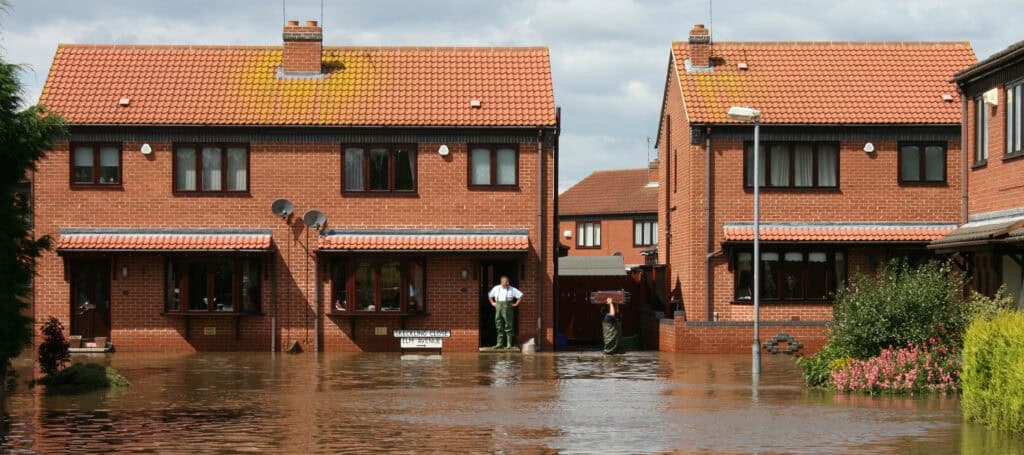
Most owners find out about these duties only when something goes wrong. In April 2026 GB News reported that a 76-year-old St Neots homeowner faced what it called a five-figure bill after Cambridgeshire County Council inspected the Duloe Brook, found it "in a poor state of repair", and wrote to households along its banks reminding them to keep the channel clear. He told reporters that had the searches flagged the duty, he "probably wouldn't have bought the house".
This guide sets out what riparian ownership gives you, what it asks of you, where the law draws the line between neighbours, and where it meets the planning system, which is the point at which a developer first needs a flood risk assessment for planning. It reflects the Land Drainage Act 1991 and the Environment Agency's Owning a watercourse guidance, last updated on 12th February 2026, and covers England and Wales.
Unless your title deeds say otherwise, the law presumes you own the bed and banks of a watercourse up to its centre line, and that ownership carries maintenance duties under the Land Drainage Act 1991 and the common law.
What is a riparian owner?
A riparian owner is anyone who owns land or property next to, above or containing a watercourse: a river, stream, brook, beck or ditch. Ownership runs to the centre line. With it comes responsibility for the channel's flow and upkeep, and that responsibility applies whether the watercourse is open or piped underground, and whether it crosses your land or simply runs along the edge of it.
The word comes from the Latin ripa, meaning bank. You own the land and the bed. The water is not yours, which is why taking it and fishing in it are regulated separately.
What counts as a watercourse is wider than most people expect. Section 72 of the Land Drainage Act 1991 includes "all rivers and streams and all ditches, drains, cuts, culverts, dikes, sluices" and passages through which water flows. A channel can be natural or man-made and can run dry for long spells yet still count. A channel that only fills during temporary flooding does not.
You normally own a stretch of watercourse that runs on or under your land, or on the boundary of your land, up to its centre.
GOV.UK, Owning a watercourse (Environment Agency)
What are riparian rights?
Riparian rights in the UK are common-law rights. They attach to land beside a watercourse rather than to a person, pass with the land when it is sold, and sit alongside the statutory controls that limit how far each of them goes.
- Flow. The right to receive the water in its natural quantity and quality, undiminished and unpolluted by owners upstream.
- Protection. The right to protect your land from flooding and erosion, provided the works have any consent they need and do not push the problem onto someone else.
- Land. Ownership of the bed and banks to the centre line, and of land that builds up gradually against your bank.
- Water. A right to use the water for ordinary purposes. Under section 27 of the Water Resources Act 1991, anyone may take up to 20 cubic metres in any 24 hours without an abstraction licence. Above that, you normally need a licence from the Environment Agency.
- Fishing. The right to fish your stretch, subject to a rod fishing licence. Fishing without one can bring a fine of up to £2,500, and fishing rights can be sold or let separately from the land, so check the deeds.
The 20 cubic metre threshold is often described as a riparian privilege. It is not: since the Water Act 2003 it has been a general exemption that applies to anyone taking water, riparian owner or not.
How do you work out your riparian rights?
To work out your riparian rights in the UK, start with the title register and title plan from HM Land Registry. If your boundary runs along, over or through a watercourse, you are almost certainly a riparian owner. Where the paperwork is silent, the common-law presumption fills the gap and your ownership runs to the middle of the channel.
The presumption has a Latin name, ad medium filum aquae ("to the middle thread of the water"), and the Court of Appeal confirmed in Micklethwait v Newlay Bridge Co (1886) 33 Ch D 133 that it applies to watercourses as it does to roads. It is a presumption, not a rule. A conveyance can rebut it, and the title plan will not settle it either way: under section 60 of the Land Registration Act 2002, a registered boundary is a general boundary that "does not determine the exact line of the boundary". A fence set back from the bank does not by itself mean you stop at the fence.
- Order your title register and title plan from HM Land Registry, and read any older conveyances for express rights, exceptions or maintenance covenants over the watercourse.
- Walk the boundary and note every watercourse on, under or alongside it, including open channels, ditches and any culvert beneath a drive or garden.
- Where the deeds are silent, apply the centre-line presumption.
- Check the Main River Map to see whether the channel is a main river or an ordinary watercourse, because that decides which authority you deal with. The difference is set out in main rivers and ordinary watercourses explained.
- Where ownership is genuinely unclear (a shared ditch, a diverted channel, an old culvert), take specialist advice before carrying out works or agreeing to split a bill.
Can you own a river in the UK?
You can own the bed and banks of a river in England and Wales, but not the water flowing in it. Most non-tidal rivers are privately owned in stretches by the landowners either side, each to the centre line. Tidal rivers and the foreshore are different: the bed below the mean high water mark is often owned by the Crown Estate or another body, so riparian presumptions should not be assumed on tidal reaches.
Ownership moves with the river when change is slow. The Privy Council held in Southern Centre of Theosophy Inc v State of South Australia [1982] AC 706 that where a boundary shifts gradually and imperceptibly, the title follows the land as it changes. A sudden change, such as a channel cutting a new course in a single flood, generally leaves the old boundary where it was.
A stream that has crept across a field since the deeds were drawn has taken the boundary with it; one that cut a new course in a single flood has not.
What are your responsibilities as a riparian owner?
Riparian responsibilities come down to one overriding duty: let water flow through your land naturally, and do nothing that increases flood risk to others. The Environment Agency's guidance, which replaced its long-running Living on the Edge leaflet, sets out what that means for the stretch you own.
- Keep water flowing. Remove blockages, fallen trees or overhanging branches where they reduce flow and could flood someone else, but keep other bankside vegetation, which protects against erosion.
- Maintain structures. Keep any trash screen, weir, mill gate or headwall on your stretch clear, including debris that arrived from upstream.
- Prevent pollution. Keep waste water, chemicals, garden cuttings and litter out of the channel. Using herbicide within one metre of the top of the bank needs the Environment Agency's agreement.
- Protect wildlife. Do not disturb protected species, their habitats or nesting birds, and make sure fish and eels can pass any structure you own.
- Control invasive plants. Stop species such as Japanese knotweed spreading into the wild or onto neighbouring land.
- Do not build, culvert or divert without consent. Works in or near the channel usually need permission from the lead local flood authority, an internal drainage board or the Environment Agency.
The 2014 edition of Living on the Edge told owners they "must accept flood flows through your land, even if these are caused by inadequate capacity downstream". The current GOV.UK wording is shorter ("you must let water flow naturally"), but the principle has not changed: you are responsible for maintaining your stretch, not for reducing a flood risk that exists naturally. Report serious problems (flooding, pollution, blockages or collapsed banks) to your lead local flood authority on an ordinary watercourse, or to the Environment Agency on a main river. Where property floods, the authority may also investigate under section 19 of the Flood and Water Management Act 2010.
Who maintains a boundary ditch, a culvert or a roadside ditch?
Where a watercourse runs between two properties, each owner is normally responsible for their own half up to the centre line. A watercourse crossing your land is yours for the length it crosses. There is no automatic duty on the council or the Environment Agency to maintain it for you, even where an authority has powers to step in.
| Situation | Who is normally responsible | What to check |
|---|---|---|
| Stream or ditch along a boundary | Each owner, up to the centre line | Deeds for any express maintenance covenant |
| Watercourse crossing one property | That owner, for the full length | Whether any part is a main river |
| Culvert under your drive or garden | The owner of the land above it | Who built it, and whether a highway authority owns any length |
| Roadside ditch beside a highway | Usually the adjoining landowner, not the highway authority | Deeds; the council's highways records |
| Debris washed down from upstream | The owner of the stretch where it lodges | Photographs and dates if it recurs |
Neighbours along a shared ditch often agree to do the work together, and CIRIA C821 on community maintenance sets out how local groups can organise it. Private pipes are a separate question: who owns a surface water drain covers those.
A ditch beside a public road is not the council's to maintain just because the road is. Herefordshire Council's guidance is typical: the highway authority is responsible for the road but does not own the subsoil, so "the owner of the land or property adjoining the highway is normally the sole riparian owner" of the ditch beside it. Section 100 of the Highways Act 1980 lets a highway authority drain the road into such a ditch, and doing so does not make it the riparian owner.
What happens if you neglect a watercourse?
If a riparian owner fails to maintain a watercourse, the consequences run from a formal notice to a civil claim for damages. The council or drainage board can make you do the work, or do it and send you the bill, and a neighbour flooded as a result can sue. The two routes are separate, and either can arrive first.
Enforcement by the council or drainage board
Under section 25 of the Land Drainage Act 1991, the lead local flood authority, or the internal drainage board inside a drainage district, can serve a notice wherever an ordinary watercourse is in "such a condition that the proper flow of water is impeded". The notice can go to whoever controls that stretch, to the owner or occupier of adjoining land, or to the person whose act or default caused the problem. If it is ignored, the authority can carry out the work and recover its reasonable costs, and failing to comply is an offence carrying a fine of up to level 4. There is a right of appeal to the magistrates' court.
Unconsented works are dealt with under section 24. An obstruction or culvert built without consent is a nuisance, and the authority can require its removal. Ignoring that notice carries a fine of up to level 5, plus up to £40 for every day the breach continues after conviction.
Civil claims by neighbours
The courts have treated flooding from a neglected watercourse as a nuisance since at least 1940. In Sedleigh-Denfield v O'Callaghan [1940] AC 880, occupiers who knew about a badly laid culvert and went on using the ditch were held liable for the flooding it caused, even though a trespasser had installed it. Leakey v National Trust [1980] QB 485 settled that an owner who knows of a natural hazard on their land owes a "measured" duty: to do what is reasonable, taking account of cost and their own resources.
That measured duty has limits. In Lambert v Barratt Homes Ltd [2010] EWCA Civ 681, the Court of Appeal held that a council whose land held a blocked culvert and ditch had to allow access and co-operate, but did not have to pay the whole cost of the relief works. In Bybrook Barn Garden Centre Ltd v Kent County Council [2001] BLR 55, a road culvert that had become too small because upstream development increased the flow made its owner liable once it knew and failed to act.
The Stevens succeed in their claim in nuisance against the Sihans, with damages being awarded in the sum of £59,500.
Partakis-Stevens v Sihan [2022] EWHC 3249 (TCC)
That case concerned raised garden levels rather than a watercourse, but it shows what happens when a change to one property sends water onto the next. Unresolved riparian problems come to light at awkward moments: in the middle of a sale, an insurance claim or a planning decision, when the other side has a deadline and you have a bill.
Buying near a stream, or flooded from one?
A flood risk survey shows what a watercourse means for a property before you exchange, and an independent assessment can establish why a home flooded. One of Unda's experienced consultants will get back to you within 60 minutes.
Get a QuoteDo you need permission to carry out works on a watercourse?
Often, yes. Routine maintenance such as clearing debris or cutting back vegetation usually needs no consent, but altering the channel, building a structure or culverting almost always does. Which permission you need depends on whether the watercourse is an ordinary watercourse or a main river, and in low-lying areas on whether it sits inside an internal drainage district.
| Ordinary watercourse | Main river | |
|---|---|---|
| What it covers | Most streams, brooks, ditches and drains | Watercourses designated by the Environment Agency |
| Regulator | Lead local flood authority, or the internal drainage board in its district | Environment Agency (Natural Resources Wales in Wales) |
| Consent for works | Ordinary watercourse consent | Flood risk activity permit |
| Legal basis | Section 23, Land Drainage Act 1991 | Environmental Permitting Regulations 2016 |
| Report problems to | Lead local flood authority | Environment Agency |
On an ordinary watercourse, section 23 of the Land Drainage Act 1991 requires written consent before anyone builds or alters a dam, weir or similar obstruction, builds a culvert, or alters one in a way likely to affect flow. The statutory fee is £50, and consent is treated as given if the authority has not decided within two months. Inside an internal drainage district, the board's own byelaws can add a second consent: the internal drainage boards guide explains both.
The map shows how the split looks on the ground around Crawley. The Environment Agency has designated much of the Upper Mole network as main river, including the River Mole, the Gatwick Stream, the Ifield Brook and the Burstow Stream: about 115 km of channel within the frame, against about 40 km of other watercourses in the Ordnance Survey's Open Rivers data. Everything that is not main river, down to the smallest field ditch, is an ordinary watercourse regulated by West Sussex County Council, or by Surrey County Council north of the county line near Gatwick. A riparian owner on either side of that line has the same duties; only the authority changes.
Three further rules apply. Culverting an open watercourse is rarely permitted because it raises flood risk and harms the environment, and it may need planning permission too. Removing water, or building or altering a dam or weir, can need an abstraction or impoundment licence. And any work on, or within eight metres of, a fluvial flood defence (sixteen metres for a tidal one) needs permission in its own right; if a defence sits on your land, you may also be responsible for its upkeep, as the guide to flood defence condition explains.
Works planned on a watercourse that runs through your site?
Get a free, no-obligation quote. One of Unda's experienced flood risk consultants will get back to you within 60 minutes to talk through the consents, easements and flood risk work your scheme needs.
Start a QuoteHow does riparian ownership affect flood risk and development?
Riparian ownership affects flood risk because the owner controls how well a stretch of channel carries water. A blocked culvert or an overgrown bank raises flood risk on your own land and, as water backs up and finds another route, on the properties that sit upstream or downstream. You may protect your property, but not by diverting water or reducing the channel's capacity in a way that floods someone else.
On a development site, the same duties feed straight into the planning application. The Environment Agency and the lead local flood authority look for maintenance access to watercourses, confirmation of who will own and maintain each stretch, and evidence that the layout keeps flow and floodplain storage intact. Old field drains count too: a piped drain carrying flow can be an ordinary watercourse, which is why land drains on a development site need a decision rather than a digger. A well-prepared submission settles four things before the layout is fixed.
- Identify every watercourse on or next to the site, open or culverted, and establish who owns each stretch.
- Set out the riparian rights and duties that attach to the land, including the consents the scheme will need.
- Show maintenance access, usually an undeveloped strip along the channel. Byelaw and consent distances vary by authority (commonly around eight metres), so confirm the local figure early.
- Show that the layout preserves flow and floodplain capacity, with compensatory flood storage where land is raised.
Discharge is the other point where riparian rights meet a drainage design. A watercourse comes after rainwater reuse and infiltration in the discharge hierarchy, but the LLFA will restrict the rate, and if the outfall crosses land you do not own you need the owner's agreement. The August 2026 NPPF, under Policy F8, also discourages culverting existing watercourses. A surface water drainage strategy that deals with ownership, consent and discharge rate together gives the lead local flood authority far less to object to. Where a culvert's capacity is in doubt, hydraulic flood modelling tests it against the design flow.
Are riparian rights different in Wales and Scotland?
In Wales the same common law and the same Land Drainage Act apply, but the bodies differ. Natural Resources Wales issues flood risk activity permits on main rivers and consents ordinary watercourse works inside internal drainage districts, while the lead local flood authority handles them elsewhere. NRW's guide to riverside ownership in Wales sets out the same duties as the English guidance. The NRW explainer covers its wider planning role.
Scotland has its own property law and regulator. The Land Drainage Act 1991 extends to England and Wales only, and since 1st November 2025 works affecting Scottish watercourses have been regulated by SEPA under the Environmental Authorisations (Scotland) Regulations 2018. The principles in this guide should not be assumed to apply north of the border.
How Unda can help
Unda advises landowners, buyers and developers on riparian rights as part of flood risk and drainage work: identifying the watercourses on a site, establishing who is responsible for each stretch, and securing the consents before they become objections. If a watercourse runs on or near a development site, a flood risk assessment for planning and a surface water drainage strategy deal with it on your terms. If you are buying a home by a stream, a flood risk survey before you buy shows what the watercourse means for the property; for land, a flood risk feasibility study does the same before you commit. If a watercourse has already flooded you, a flood risk assessment for insurance can establish the cause. Call 01293 214444 or email enquiries@unda.co.uk.
Frequently asked questions
Who owns the stream at the bottom of my garden?
In most cases, you do. If a stream, brook or ditch runs along or through your garden, the law presumes you own the bed and banks up to the centre line, with the neighbour opposite owning their half. The same applies to a stream piped beneath the garden. A fence set back from the bank does not by itself change that, because Land Registry plans show general boundaries only.
Does riparian ownership transfer when I sell my property?
Yes. Riparian rights and duties run with the land and pass to the buyer on completion. Searches and the title plan should show a watercourse, but they rarely spell out the duties, so a buyer should ask about maintenance, past flooding and any notices. A seller must also answer the flooding questions on the TA6 form honestly; the guide to declaring flooding when selling explains what that covers.
Isn't the Environment Agency responsible for maintaining main rivers?
No. The Environment Agency has permissive powers under section 165 of the Water Resources Act 1991 to work on main rivers, but no duty to do so. Maintenance of the bed and banks still rests with the riparian owner, even on a main river, and the Agency decides where to spend its own maintenance budget.
Who is responsible for a culvert running under my land?
The owner of the land above it, whoever originally built it, unless the deeds or a highway authority's records show otherwise. A culverted watercourse has the same duties as an open one, including keeping the inlet clear, but you should never enter a culvert. Where flooding points to a culvert, a CCTV survey and a capacity check will show whether the pipe or a blockage is at fault, as in this flooded home with a narrowing outfall.
Do I need consent to clear or dredge my own watercourse?
Routine clearance of debris and vegetation to keep water flowing does not usually need consent. Dredging that changes the bed or profile, removing material from the bed, or adding any structure usually does, from the lead local flood authority or drainage board on an ordinary watercourse, or through an environmental permit on a main river. Check before you start.
Can the council make me clear a blockage I didn't cause?
Yes. A section 25 notice can be served on the owner or occupier of land next to the obstructed stretch, as well as on whoever caused the problem. If the blockage came from someone else's land or works, you may have a claim against them, but that does not stop the notice.
Can I put a fence or bridge across a stream on my land?
Not without checking first. A fence or bridge support standing in the channel can obstruct flow and usually needs ordinary watercourse consent, or a permit on a main river. A bridge that spans the channel clear of the water is less likely to need consent, but the authority should confirm it, and planning permission may apply as well.
Is a tenant a riparian owner?
Not in the sense this guide uses. Ownership of the bed and banks, and the maintenance duties that go with it, sit with the landowner. A tenant can still be served with a section 25 notice as the occupier, and a lease will often say who looks after ditches and watercourses, so landlord and tenant should agree it in writing.
About the author. Jackie is a co-founder and Director of Unda with 30+ years in flood risk, and sits on CIWEM's South Eastern Branch committee. Unda has been trading since 2014, is a CIWEM Business Partner with CIWEM member and chartered (C.WEM MCIWEM) consultants, and has delivered 5,000+ flood risk assessments and drainage strategies across England and Wales.
Jackie Stone · MSci, BSc (Hons), DIC, CIWEM Environmental Partner
Latest news





One of our experienced Flood Risk Consultants will get back to you within 60 minutes
