Why Some Floods Get Investigated and Others Don’t: Section 19 Reports Explained
Estimated reading time 17 minutes
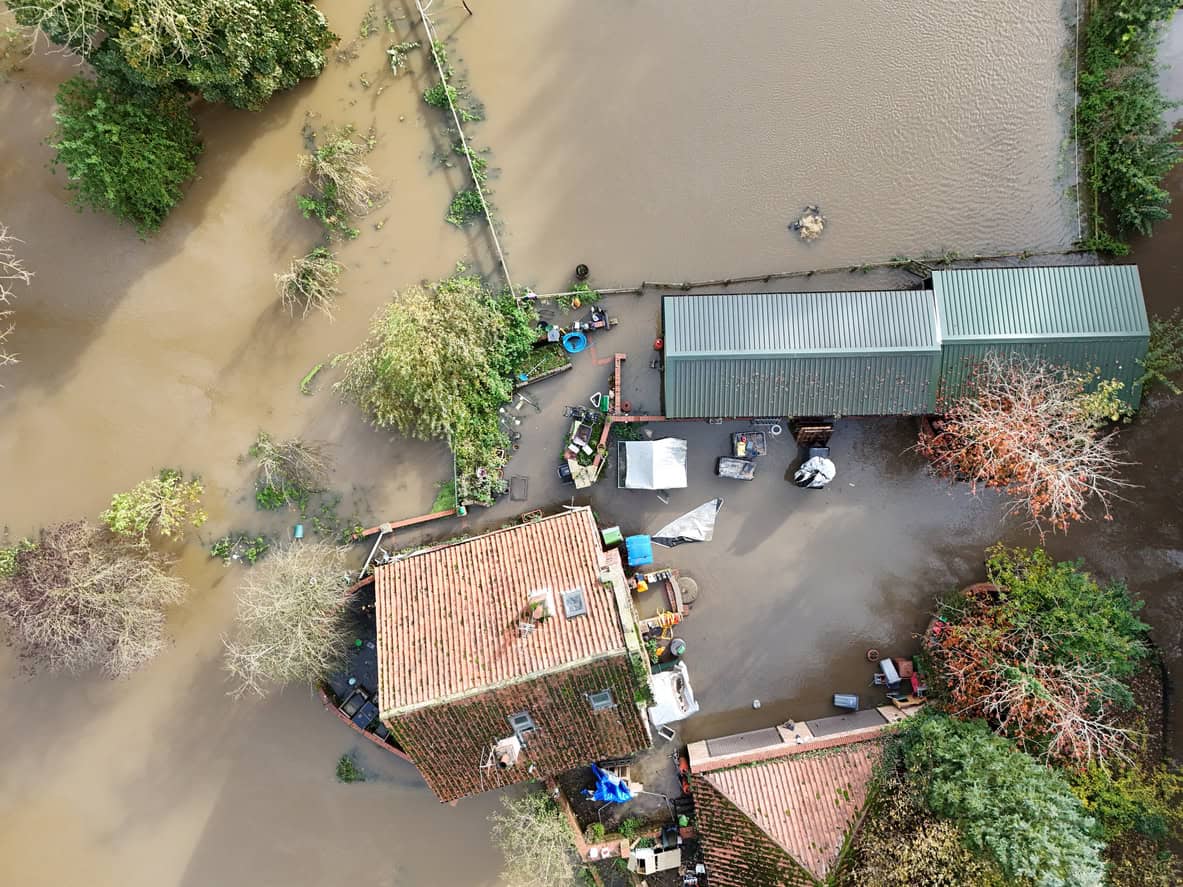
A Section 19 flood investigation is the report a lead local flood authority publishes after a flood it has decided is serious enough to look into. It records what flooded, why it flooded, which authorities held responsibilities, and what each of them did. What it is not is automatic. The duty sits in section 19 of the Flood and Water Management Act 2010 and applies across England and Wales. The threshold that triggers it does not. Each authority sets its own, and they differ enough that the same flood can produce a published investigation in one county and nothing at all in the next.
Defra's guidance to councils puts the discretion plainly: "It's your decision whether to carry out a flood investigation under section 19." There is no national threshold in England.
That matters most to anyone who goes looking for a report and finds nothing. An empty search can mean the flood fell below the local threshold, or that a report was written and never released. Those are very different answers, and the council will usually tell you which one applies if you ask.
What is a Section 19 flood investigation?
A Section 19 investigation is a statutory duty on the lead local flood authority, meaning the county council or unitary authority responsible for local flood risk, to establish which risk management authorities held relevant flood risk functions and whether each of them used those functions in response to the flood. Where the authority investigates, it must publish the results and notify the authorities involved.
"Local" is doing precise work in that phrase. It means flooding from surface water, groundwater and ordinary watercourses, and it excludes main rivers, the sea and reservoirs, which stay with the Environment Agency. The duty came out of the 2007 floods and the Pitt Review that followed them, which found that nobody owned surface water flooding at all.
The statutory wording is narrower than most descriptions of it suggest.
On becoming aware of a flood in its area, a lead local flood authority must, to the extent that it considers it necessary or appropriate, investigate — (a) which risk management authorities have relevant flood risk management functions, and (b) whether each of those risk management authorities has exercised, or is proposing to exercise, those functions in response to the flood. Where an authority carries out an investigation under subsection (1) it must — (a) publish the results of its investigation, and (b) notify any relevant risk management authorities.
Section 19, Flood and Water Management Act 2010
Section 19 came into force on 6 April 2011, and two things in the text are worth pausing on. The phrase "to the extent that it considers it necessary or appropriate" is what makes an investigation discretionary rather than automatic. And the subject of the investigation is the authorities and their functions rather than the flood itself, which is why a Section 19 report reads more like an account of who was responsible for what than a piece of hydrology.
The word "significant" does not appear in section 19 at all. It comes from the national strategies and from the criteria councils write for themselves, and it is the source of a good deal of confusion about what the Act actually requires. Our guide to what a Lead Local Flood Authority does sets out where this duty sits among the rest.
A Section 19 report does not apportion blame, establish liability or create any right to compensation. Nor does it assess an individual property. Most people arrive at the subject because they want to know what a flood means for a house they own or are buying, and that is a different question, answered by a property-specific flood risk survey rather than by a council's account of an event.
Why the same flood gets investigated in one county and not the next
Because Parliament left the threshold to the authority. Defra's guidance for lead local flood authorities, published in April 2025 and updated that July, sets out example criteria and asks each council to define and publish its own, on the basis that "your flood investigation criteria should reflect local circumstances and flooding characteristics, as every local authority area is different". What councils have published in response varies in the number of properties, in what counts as a property, and in whether a number is given at all.
| Authority | Residential trigger | What varies underneath it |
|---|---|---|
| Defra example criteria | 5 or more residential, 2 or more commercial | Offered as examples, not as a rule |
| Warwickshire | 5 or more residential, 2 or more commercial | Adds one property flooded five or more times in five years |
| Derbyshire | 5 or more residential, 2 or more non-residential | Adds recurrence more than once in a 10-year return period |
| Buckinghamshire | 5 or more residential within 1 km² | Basements expressly included |
| Oxfordshire | 5 or more residential or business within 1 km² | Basements expressly excluded |
| Lancashire | 1 to 4 dwellings, repeated within 5 years | A five-tier policy; 5 to 9 and 10 or more each trigger on one event |
| Sheffield | No figure published | Investigates where "a significant number" of properties or key infrastructure are affected |
| East Riding of Yorkshire | No figure published | Eight qualitative factors weighed together |
| Wales, national strategy | 20 or more properties | Eight Welsh authorities have adopted a lower threshold |
Most English authorities have settled near the five residential or two commercial properties in Defra's examples, but the detail underneath that figure moves. Buckinghamshire counts internal flooding to five or more residential properties within an area of one square kilometre and expressly includes basements. Oxfordshire uses the same five-property figure and the same square-kilometre area, and expressly excludes them. Lancashire runs a five-tier policy under which between one and four dwellings will trigger an investigation where the flooding has repeated within five years. Sheffield publishes no figure at all, saying only that it investigates when "a significant number of properties and / or key infrastructure are affected".
The area qualifier does as much work as the property count. Five flooded homes in one street will satisfy a one-square-kilometre test that the same five homes spread across a large rural parish will not, and nothing in the Act suggests the second case matters less to the people living in it.
In Wales the national strategy sets the threshold at 20 properties. The Welsh Government's own independent review found that eight local authorities had adopted a lower one.
What triggers an investigation where you live
The answer is in your lead local flood authority's published criteria, which usually sit on its flood risk pages or inside the local flood risk management strategy it must publish under section 9 of the same Act. Defra's example criteria are the closest thing to a national baseline, and most published policies are recognisable variations on them.
- Residential property. Five or more residential properties flooded internally within a specified area, settlement or catchment.
- Commercial property. Two or more commercial properties flooded internally within the same area.
- Duration. Internal flooding lasting more than a week, even where fewer properties are affected.
- Repeat flooding. Fewer than five residential or two commercial properties flooded on two or more occasions within two years.
- Critical infrastructure. Flooding of hospitals, schools, emergency services, utilities or substations.
- Transport. Motorways or major rail links impassable for two hours or more, with longer thresholds for lower road categories.
- Risk to people. Depths and velocities falling in the "danger for most" or "danger for all" hazard bands.
Meeting a criterion does not compel an investigation. The criteria describe when an authority has said it will normally investigate, and every published policy reserves the discretion the Act gives it. Several authorities also work the other way and investigate below their own threshold where the local impact warrants it. Warwickshire and Derbyshire both publish their criteria in full, which is the model worth looking for; East Riding of Yorkshire publishes a list of factors instead of figures. If you are not sure which body covers your site, our guide to who manages flood risk in England works through the split.
What is in a Section 19 report?
Defra publishes an example structure, and reports produced since have converged on it. Eight sections run in order, moving from context to event to what the authorities intend to do next.
- Background. Why the investigation was carried out and which criteria the event met.
- Location. The flooded area, its topography, drainage, geology and soils.
- Flood risk understanding. What was already known about flood risk there, including previous events and existing flood risk management measures.
- Roles and responsibilities. Which authorities hold which functions in that area.
- Summary of the event. Antecedent conditions, rainfall, river, tidal or groundwater data, and an estimate of how probable the event was.
- Source, pathways and receptors. Where the water came from, how it travelled, and what it reached.
- Actions taken. What each authority did during and after the flood, with a response timeline.
- Lessons learnt. The discussion and a recommendations table with a lead organisation named against each.
The analysis is meant to be proportionate. Defra's guidance discourages extended technical studies where they would hold up publication, and detailed hydraulic modelling is not expected as part of an investigation. Reports are also written with data protection in mind, aggregating impacts by street or neighbourhood rather than listing individual addresses, which is why a report can confirm that a road flooded without confirming that a particular house on it did.
Because the analysis is proportionate rather than exhaustive, a Section 19 report tells you what happened and who was responsible. It does not tell you what will happen next time.
How long does a Section 19 investigation take?
Longer than the guidance suggests, and there is no statutory deadline of any kind. Defra's stated aim is a draft report within six months of the event. Published evidence puts the real figure closer to two years, and authorities are open about it.
Leicestershire County Council lists its ongoing investigations with estimated publication dates against them. Flooding on 21 September 2024 at Market Harborough is expected to report in August 2026. Flooding on 26 September 2024 in the Blaby district is expected in October 2026. Countywide flooding on 6 January 2025 is expected in February 2027, a little over two years after the event, and the council describes these as "our best estimates for delivery". Rhondda Cynon Taf's investigation into Storm Dennis flooding at Porth on 15 and 16 February 2020 was issued on 27 July 2022, two years and five months afterwards.
The Welsh Government's independent review identified 154 Section 19 investigations across 22 local authorities. Eighty-four had been published, 43 were complete but unpublished, and five authorities confirmed they would carry out none at all.
The 43 completed but unpublished reports are the number to hold onto. An investigation that has finished is not necessarily an investigation you can read, and asking is often the only way to find out which category a particular event falls into. The review itself put the cause bluntly, finding that section 19 lacks "a statutory framework as to the defined purpose or prescribed content of an investigation". Where a report does exist it can be pointed and specific: Tower Hamlets' investigation into Storm Henk is one we cite in our guide to residual flood risk, because it established that the Lea Bridge sluice gates were designed for 70 m³/s, that flows never exceeded 50 m³/s, and that 61 properties flooded internally anyway.
How to find or request a Section 19 report
Work through the sources in order, because the later steps are slower and most reports are found at the first one.
- Start with the authority's own pages. Most lead local flood authorities publish completed reports as PDFs grouped by event or by year, and some, including Oxfordshire, map them.
- Ask the flood risk team directly. Where nothing is published they can usually tell you whether a report is in draft, complete but awaiting approval, or was never commissioned.
- Make a formal request if that fails. A Section 19 report is environmental information, so a request falls under the Environmental Information Regulations 2004 rather than the Freedom of Information Act. The authority has 20 working days to respond, extendable to 40 where the request is genuinely complex or voluminous.
- Ask about the asset register at the same time. Section 21 of the same Act requires a register of structures with a significant effect on local flood risk, part of which must be open to public inspection, and it is often more useful on a specific site than the investigation report.
- Widen the search if the flood was recent. Local press coverage, the authority's committee papers and neighbouring parish records frequently document an event years before any report appears. Unda's free flood risk map is a reasonable first-look check while you wait.
What a Section 19 report can and can't prove about a property
A published report is good evidence of flood history and poor evidence of flood risk, and the distinction decides what you can sensibly do with one.
| The question | What the report gives you | What it does not give you |
|---|---|---|
| Did this area flood? | A dated, sourced account of a specific event | Anything at all where no investigation was carried out |
| Did this property flood? | Impacts aggregated by street or neighbourhood | Confirmation for an individual address |
| Why did it flood? | The source, pathway and receptor for that event | Modelled probability, depths or levels for a site |
| Who was responsible? | The authority holding each function, and what it did | Liability, fault or a right to compensation |
| Can the site be developed? | Credible supporting evidence of local flood history | Climate change allowances or finished floor levels |
| What happens next? | Recommendations with a lead organisation named | Any enforceable duty to carry them out |
The top right cell is the one that causes the most trouble. Because an investigation is discretionary and thresholds vary, the absence of a report proves nothing about whether an area has flooded. A flood affecting four homes in a county using a five-property threshold produces no report; the same four homes in Lancashire, flooded twice in five years, produce one.
We have more than once seen a blank search offered as reassurance during a purchase. It is not reassurance. It is an absence of evidence produced by a threshold nobody in the transaction has read. The same caution applies to a conveyancing search, which answers a narrower question again: a CON29DW drainage and water search reports the water company's record of sewer flooding and little else, as our guide to what your conveyancing solicitor does about flood risk explains. If you are checking a property before committing, how to check flood risk before buying sets out the order of work, and the gap between a flood zone and a flood record covers why the two are not the same thing.
For planning, a published report is worth finding early. It is credible supporting evidence on a constrained site, and a drainage strategy that contradicts an authority's own published account of why an area floods will not survive consultation. It is not a substitute for a flood risk assessment for planning, which has to do things a Section 19 report never attempts: model probability, apply a climate change allowance over the development's lifetime, and set finished floor levels against modelled flood levels. No off-the-shelf conveyancing product closes that gap either, for the reasons set out in why a conveyancing flood report won't pass planning. Defra's own note on the importance of flood investigations frames the reports as an evidence base for funding bids and risk-based decisions about where development goes, not as site assessments.
What changes in April 2027
England's local government reorganisation moves lead local flood authority duties from county councils to new unitary authorities on vesting day, and Section 19 investigations move with them. Where a county becomes a single unitary the duty transfers intact. Where a county splits into several, as Kent, Devon, Lancashire and Hertfordshire each will, the investigation criteria, the published back catalogue and the local knowledge behind both have to be divided between successor authorities.
For anyone looking for a report on a flood that happened before the transfer, the practical question from 2027 onwards is which successor authority now holds it. It is worth asking for anything you may need while the answer is still straightforward. Our guides by local authority area track who currently does what.
If you have found a Section 19 report and need to know what it means for a specific site or purchase, or found nothing and still need an answer, Unda's flood risk consultants can assess the property itself.
Frequently asked questions
Can I make my council carry out a Section 19 investigation?
No. The Act gives lead local flood authorities discretion and creates no right to compel one. Reporting the flooding to the authority is still worth doing, because the record feeds the criteria and repeat flooding is itself a trigger in many published policies. Where you believe a decision not to investigate was badly made, the route is the council's own complaints procedure and then the Local Government and Social Care Ombudsman, which examines how a decision was reached rather than whether it was correct.
Does a Section 19 report affect insurance or a house sale?
Not by itself. It is public information that a buyer's solicitor or an insurer may come across, and it creates no disclosure duty of its own. The flooding it records is the kind of event a seller is asked about on the TA6 property information form, so a report can corroborate a disclosure, or contradict the absence of one. Our guide to declaring flooding when selling a house covers what the form asks and what happens when an answer is wrong.
What if the council has finished a report but has not published it?
Section 19(2) requires an authority that carries out an investigation to publish the results, so a completed but unpublished report is worth chasing. Ask the flood risk team first, then make a request under the Environmental Information Regulations 2004, and refer the matter to the Information Commissioner's Office if the authority refuses without a valid exception.
Do Section 19 investigations happen in Scotland and Northern Ireland?
No. The Flood and Water Management Act 2010 extends to England and Wales only, and both other nations run separate flood risk legislation with their own arrangements for recording and reporting flood events. Wales does operate section 19, but under a national strategy that sets its own threshold, as our piece on quarry flood risk in Wales shows in practice.
Who actually writes Section 19 reports?
Either the lead local flood authority's own flood risk team or a consultancy it commissions. Unda does not carry out Section 19 investigations, which are the authority's own statutory function. We read them, because they are among the most useful pieces of local flood evidence available on a site, and in our experience nobody thinks to ask whether one exists.
About the author. Edward is a co-founder and Director of Unda with 20+ years in flood risk and drainage, and a national-press commentator on flooding. Unda has been trading since 2014, is a CIWEM Business Partner with CIWEM member and chartered (C.WEM MCIWEM) consultants, and has delivered 5,000+ flood risk assessments and drainage strategies across England and Wales.
Edward Bouët · BSc (Hons)
Latest news


One of our experienced Flood Risk Consultants will get back to you within 60 minutes