The Surface Water Sequential Test Exemption: Evidencing It Under Policy F5
Estimated reading time 10 minutes
The surface water sequential test exemption is the biggest change Policy F5 makes to flood risk decision-making in the August 2026 NPPF. It lets a site at risk of surface water flooding only avoid the sequential test — but only where a site-specific flood risk assessment demonstrates, clearly, that the development will stay safe for its lifetime without increasing flood risk elsewhere. It is not a shortcut. It swaps one hurdle for a higher evidence bar, and a thin flood risk assessment loses it. This guide sets out what Policy F5 asks and how to evidence the surface water sequential test exemption so it holds.
The exemption removes the sequential test, but it raises the bar on the flood risk assessment that replaces it — the demonstration has to be made "clearly", or the exemption falls away.
What is the surface water sequential test exemption?
It is a route in the August 2026 National Planning Policy Framework that removes the sequential test for sites whose only flood risk is surface water, provided a site-specific flood risk assessment proves the scheme will be safe for its lifetime and will not increase risk elsewhere. It sits at policy F5(2)(b), and it applies from 17 August 2026. Where any river or sea flood risk is also present, the exemption does not apply and the ordinary sequential test returns. Because the exemption is won or lost on the strength of the flood risk assessment, our sequential and exception test reports are written to make the F5(2)(b) case from the outset, backed by a full flood risk assessment. Where drainage drives the safety case, our surface water drainage strategies are built to the national SuDS standards, and our NPPF flood risk guidance and planning support covers the wider Framework changes.
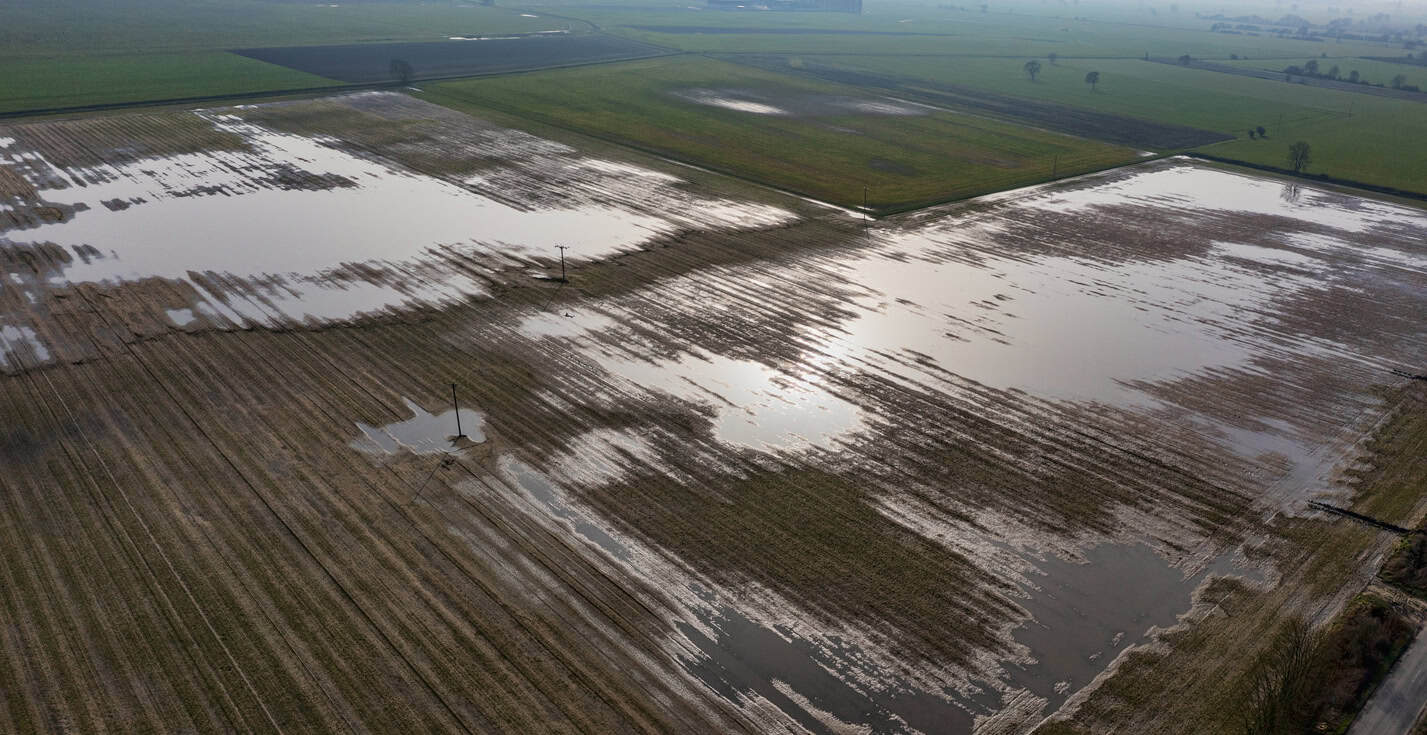
The route matters because surface water is now the widest source of flood risk in England. The Environment Agency puts 4.6 million properties at risk from surface water, and the updated flood mapping brings many of them into scope for the first time.
Why Policy F5 created the exemption
Policy F5 redrew the sequential test in three ways. It capped the area of search to the development's likely catchment, it exempted sites already sequentially tested through the local plan, and it introduced the surface water exemption. Much of this had been trailed in the September 2025 planning practice guidance update; the 2026 Framework hardens it into national policy and goes further, with the planning practice guidance on flood risk and coastal change expected to be rewritten to match. For the full set of flood and drainage changes, see our overview of the NPPF August 2026 flood risk and drainage changes, and for the mechanics of the tests themselves our explainer on the sequential and exception tests.
The exemption was contested. It reached the published Framework unchanged despite formal opposition during consultation.
Sites where a site-specific flood risk assessment demonstrates clearly that ... the site would be at risk of surface water flooding only, [and] the proposed layout, design, and mitigation measures would ensure that occupiers and users would remain safe from current and future surface water flood risk for the lifetime of the development without increasing flood risk elsewhere in accordance with policy F7.
National Planning Policy Framework, August 2026, policy F5(2)(b)
The evidence bar: what "clearly" means
The word doing the work in F5(2)(b) is "clearly". The exemption is not granted on the label of a flood zone; it is earned by the flood risk assessment. A case officer who cannot see the demonstration made in full can decline the exemption and ask for the sequential test after all, or refuse the application under the refusal-worded flood policies. The burden has moved from the council, which used to run the test, to the applicant's evidence.
Seventeen insurance and flood bodies, including the ABI, Aviva and Flood Re, formally opposed the surface water exemption during consultation; it survived unchanged, so scrutiny of the evidence is where the argument now happens.
The exemption is also an opportunity
Read defensively, F5(2)(b) is a higher evidence bar. Read commercially, it is a route to unlock land the December 2024 wording would have stalled. A small Flood Zone 1 site now shown within a surface water extent no longer has to pass a sequential test it might have failed on catchment grounds; where the flood risk assessment demonstrates lifetime safety clearly, the scheme proceeds on its own evidence. The site is won or lost on the strength of that assessment — so the advantage goes to whoever brings the evidence first.
Relying on the surface water exemption?
Our flood risk consultants build the F5(2)(b) demonstration into a full, site-specific flood risk assessment — and we quote within the hour.
Get a QuoteHow to evidence the surface water sequential test exemption, step by step
Take a typical case: a small residential infill site in Flood Zone 1 that the updated Flood Map for Planning now shows within a surface water risk extent, with no river or tidal risk present. To rely on the exemption rather than run the sequential test, the flood risk assessment has to close out each limb of F5(2)(b) in turn.
- Prove surface water is the only source. Confirm from the Flood Map for Planning and the local strategic flood risk assessment that the site sits clear of fluvial, tidal and, where relevant, groundwater and reservoir risk. The May 2026 Flood Map for Planning update added surface water climate change extents, so a site the old maps showed clear can now read at risk. If any other source is in play, the exemption does not apply.
- Model the surface water risk on the site. Move past the risk band to depths, velocities and flow routes across the layout, using climate change allowances for the lifetime of the development. "Low risk" on the map is a probability, not a design input.
- Design for safety and show it. Set finished floor levels above the modelled level with freeboard, keep safe access and egress, and steer flows through the layout with levels and landscaping rather than assuming them away.
- Control runoff and show no increase elsewhere. Tie the surface water drainage strategy to the site so runoff is limited to greenfield or betterment rates, and demonstrate, in line with policy F7, that the scheme pushes no water onto neighbouring land.
- Document it clearly. Append the calculations, plans and levels rather than asserting the outcome. The demonstration has to be legible to a case officer on the page, because that is the test F5(2)(b) sets.
What the flood risk assessment must contain
A flood risk assessment relying on the exemption is a fuller document than the screening note a low-risk site once attracted. In practice it needs to carry the evidence for every limb above.
- Source confirmation. Mapping and SFRA evidence showing surface water is the only risk.
- Hydraulic detail. Modelled depths, velocities and flow routes across the site, not a risk category.
- Levels and safety. Finished floor levels, freeboard, and safe access and egress in a design event.
- Drainage and runoff. A SuDS-led strategy controlling discharge to greenfield or betterment rates.
- Lifetime and climate. Allowances applied across the development's design life, not today's baseline.
- Third-party risk. A clear demonstration of no increase in flood risk elsewhere, per policy F7.
When the exemption does not apply
The exemption is narrow by design. It answers one question: is this a surface-water-only site that can be made safe? The moment the answer is no, it drops away.
| Site situation | Sequential test? | Why |
|---|---|---|
| Surface-water-only risk, safety demonstrated clearly in the FRA | No test | Meets policy F5(2)(b) in full |
| Any fluvial or tidal risk present | Test required | Exemption is confined to surface water only |
| Mixed sources (e.g. surface water plus groundwater) | Test required | Not a surface-water-only site |
| Surface-water-only, but the FRA cannot demonstrate safety "clearly" | Test likely | Exemption lost; expect a request for the test or a refusal |
| Allocated site already sequentially tested in the local plan | No test | Separate F5 exemption for allocated sites |
| Householder extension | No test | Outside the sequential test in any case |
Common mistakes that lose the exemption
- Treating it as automatic. The exemption is earned by the flood risk assessment, not granted by the flood zone. No demonstration, no exemption.
- A thin surface water chapter. A risk band and a sentence is what used to trigger a sequential test request. It now loses the exemption instead.
- Ignoring future risk. Leaving out climate change allowances or the development's lifetime is the fastest way to a request for more information.
- Confusing drainage design with flood mitigation. A SuDS scheme controls the runoff your site creates. On its own it does not deal with surface water flowing onto the site from elsewhere.
- Fixing levels too late. If finished floor levels are set before the flood work is done, safe design becomes a retrofit and the demonstration weakens.
Frequently asked questions
Does the exemption remove the need for a flood risk assessment?
No — it depends on one. The exemption removes the sequential test only because a site-specific flood risk assessment carries the demonstration instead. Without the FRA there is nothing to prove surface-water-only risk and lifetime safety, so the exemption cannot be claimed.
Do I still need the test if my site has any river or sea flood risk?
Yes. Policy F5(2)(b) is confined to sites at risk of surface water flooding only. As soon as fluvial or tidal risk is present, the site falls outside the exemption and the ordinary sequential test applies, followed by the exception test where the zones require it.
Is a Flood Zone 1 site automatically exempt?
No. Flood Zone 1 describes river and sea risk, not surface water. A Zone 1 site can sit inside a surface water risk extent on the Flood Map for Planning, and under policy F4 that now triggers a flood risk assessment. The exemption still has to be evidenced; it is not granted by the zone.
Does the exemption apply to householder extensions?
Householder extensions sit outside the sequential test in any case, so the exemption is not the operative point for them. If the extension is in a flood zone you will still need a flood risk assessment, with finished floor levels and resilience the practical focus.
What happens if the flood risk assessment does not demonstrate safety "clearly"?
The exemption is lost. A case officer who cannot see the demonstration made in full can require the sequential test, ask for more information, or refuse under the refusal-worded flood policies. The practical answer is to make the demonstration properly the first time rather than invite the test back.
Where is the exemption in the NPPF?
Policy F5(2)(b), in Chapter 18 of the August 2026 National Planning Policy Framework. The flood zone definitions and the vulnerability tables that sit alongside it are now in Annex F of the same document.
Unda's consultants have worked with the 2026 Framework from the day of publication. If your site turns on the surface water exemption, our sequential and exception test reports and flood risk assessments are built to make the F5(2)(b) demonstration hold. Get in touch and we will quote within the hour.
About the author. Edward is a co-founder and Director of Unda with 20+ years in flood risk and drainage, and a national-press commentator on flooding. Unda has been trading since 2014, is a CIWEM Business Partner with CIWEM member and chartered (C.WEM MCIWEM) consultants, and has delivered 5,000+ flood risk assessments and drainage strategies across England and Wales.
Edward Bouët · BSc (Hons)
Latest news





One of our experienced Flood Risk Consultants will get back to you within 60 minutes
