Does Flood Risk Affect House Prices? UK Evidence (2026)
Estimated reading time 18 minutes
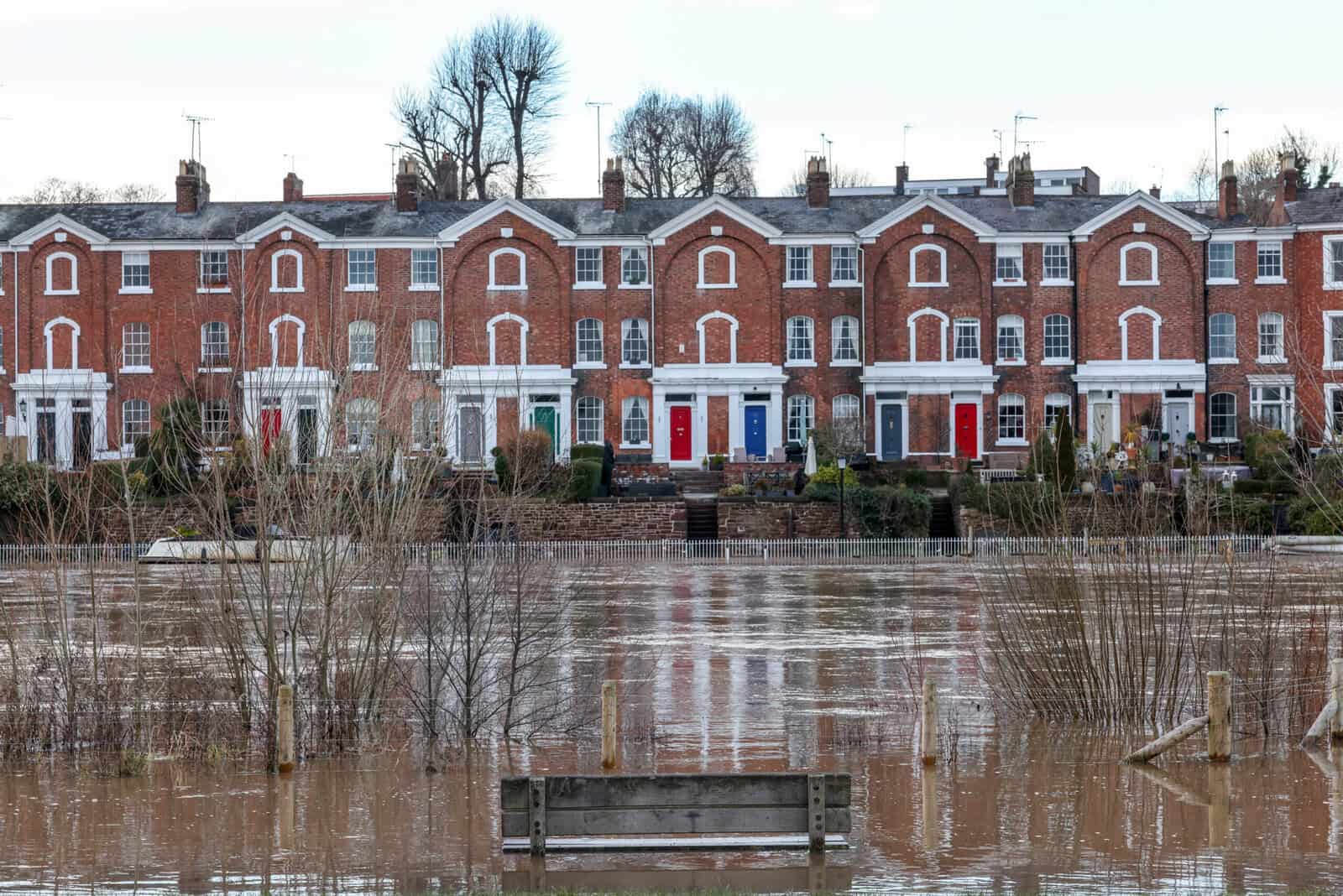
Flood risk has stopped being a footnote in the UK housing market. Buyers check whether a property sits in a flood risk area before they offer, lenders weigh flooding when they price a mortgage, and sellers know that flood history can move an asking price, slow a sale, or sink it.
So does flood risk affect house prices? Yes. Large-scale UK property data shows that both actual flooding and assessed flood risk are reflected in what homes sell for. Often the effect is modest. Where risk is high, or a property has flooded before, it can be severe enough to decide whether a sale completes at all.
This article sets out how flooding affects house prices, where the sharpest risks fall for buyers and sellers, what has changed in 2026 around mortgages and insurance, and how a property-specific assessment helps you decide with the facts in front of you.
By 2050, up to 430,000 English households could become "climate mortgage prisoners", unable to sell, remortgage or move because of flood exposure, according to a March 2026 report from UKSIF and Public First.
The short answer: yes, and the evidence has only hardened
Both actual flooding and assessed flood risk influence UK house prices. The size of the effect turns on a handful of factors: whether the home has actually flooded, how high the assessed risk is, whether it has flooded more than once, and how buyers, insurers and lenders read that risk. For most homes the discount is a few per cent; at the extreme it can exceed 30%.
The table below pulls together the strongest headline findings from England-wide research.
| Scenario | Typical price impact | Notes | Source |
|---|---|---|---|
| Property floods (inland) | ~24.9% immediate reduction | Repeat-sales analysis of fully inundated postcodes | Beltrán, Maddison & Elliott (2019), JEEM |
| Property floods (coastal) | ~21.1% immediate reduction | Comparable method for coastal flood events | Beltrán, Maddison & Elliott (2019) |
| Flooded property, recovery | 4–5 years on average | Longer for lower-value homes; repeat flooding worsens it | Beltrán, Maddison & Elliott (2019) |
| Flood-risk exposure (no flood) | ~8.1% lower sale price | Average across flood-exposed homes | Skouralis, Lux & Andrew (2024), J. Housing Economics |
| Very high flood risk | Up to ~32% lower sale price | Extreme tail; not typical of most homes | Skouralis, Lux & Andrew (2024) |
| Each +1% of flood risk | ~0.07%–0.11% price reduction | Applies to asking and sold prices | Skouralis, Lux & Andrew (2024) |
Two points stand out. Flood events can cause sharp, immediate losses. And flood risk on its own, with no flood ever recorded, is increasingly priced in too, particularly at the higher risk levels. The effects are not uniform, but they are now well evidenced.
What happens to house prices after a property floods
After a flood, prices tend to fall sharply and then recover slowly. The clearest UK evidence comes from studies that track the same property before and after a flood, so the drop cannot be blamed on the wider market. On average, inland homes in fully flooded postcodes lost around a quarter of their value straight after the event.
An England-wide study by Beltrán, Maddison and Elliott (2019), published in the Journal of Environmental Economics and Management, used repeat-sales data for millions of homes sold between 1995 and 2014. Because it compares each home with itself, it isolates the effect of the flood from everything else moving in the market. You can read the full paper here.
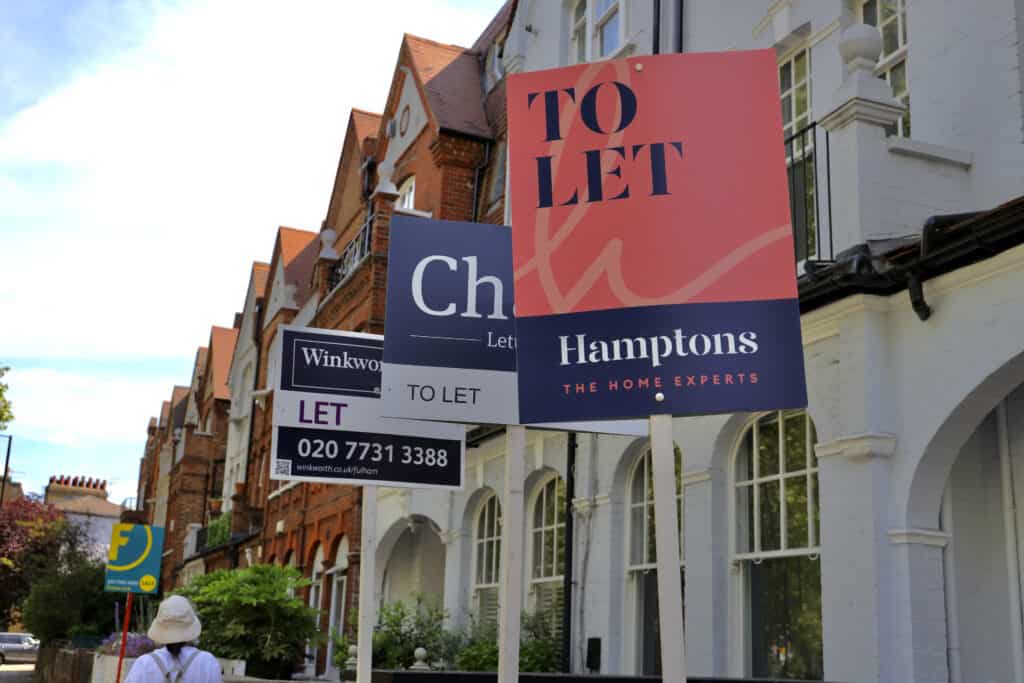
Flood history and assessed risk increasingly shape both the asking price and how long a home takes to sell.
The results are stark. Homes in postcodes that were entirely inundated saw immediate price falls averaging 24.9% after inland flooding and 21.1% after coastal flooding. These are not marginal movements; they reflect a sudden collapse in buyer confidence over and above normal market drift.
The study also measured how long the effect lasts. Inland-flooded prices were, on average, no longer statistically different from comparable dry homes after about five years, and coastal-flooded prices recovered after roughly four. Recovery was uneven. Lower-value homes took deeper discounts and recovered more slowly, with price effects lingering for six to seven years in the cheapest quartile. Homes that flooded more than once were penalised again, the repeat history compounding both the value loss and buyer resistance.
A single flood can wipe roughly a fifth off a home's value overnight, and for the cheapest homes that shadow can last six to seven years.
Flood risk can lower prices even without a flood
Yes. A property does not have to have flooded for the risk to show up in its price. More recent work looks at how assessed flood risk, rather than flood experience, is priced into the market, and finds that exposed homes sell for around 8% less on average even when they have never taken water.
An England-wide study by Skouralis, Lux and Andrew (2024) in the Journal of Housing Economics analysed millions of listings and transactions using a property-level flood risk score of the kind lenders and insurers rely on. The study is available here. It found that homes exposed to flood risk sold for around 8.1% less on average than comparable homes with no exposure, even where they had never flooded. Each incremental rise in flood probability tracked a measurable fall in value, with a one percentage point increase in flood risk linked to a 0.07%–0.11% reduction in both asking and final sale prices.
Buyers, in other words, do not wait for a flood; the risk itself shapes what they will pay, and sellers build it into asking prices from the start. That pressure has grown as risk data has become easier to see: since January 2025, the property portal Zoopla has shown flood risk directly on its listings, putting the flag in front of buyers at the search stage rather than late in conveyancing. If you want to understand why a home can carry a flood-risk rating despite a clean history, our explainer on why a house can be in a flood zone if it has never flooded walks through the reasons.
Where the real problems start: the high-risk tail
For most homes, flood risk produces a modest price effect. The serious trouble sits at the extreme end of the scale, where discounts stop rising in a straight line and start to accelerate. Once risk is very high, the issue shifts from price to whether a sale can happen at all.
Analysis using lender-grade flood scores shows a strongly non-linear pattern. At low to moderate risk the price effect is usually a few per cent. Once risk becomes high, discounts accelerate: property-level analysis indicates that homes below roughly 60% flood risk typically see discounts of around 2–4%, those in the 80–90% band average around 15%, and those above 90% can face discounts approaching 30%.
At that point the problem stops being about price. Buyer demand narrows, mortgage availability tightens, and insurance becomes the question that decides whether a sale completes. A price problem turns into a liquidity problem: the home may still have a notional value, but far fewer buyers can, or will, proceed.
Buying a house in a flood zone: what to weigh up
You can buy a house in a flood zone, and a flood-risk property can still be a sound purchase, but only once you understand the specific risk to that home rather than its headline flood zone. Four questions decide it: has the property itself flooded, what sources of flooding apply, is it insurable at a sensible premium, and will a lender support the purchase?
Work through them in order.
- Check the property's own flood history. Ask the seller directly whether the home has flooded, how deep, how often, and whether water entered the building or stayed in the garden. A one-off surface-water event in a back garden is a very different proposition from repeated internal flooding.
- Weigh what any past flooding means. A home that took water once in an exceptional storm, and has since had resilience measures fitted, can be a reasonable buy at the right price. A property with a pattern of internal flooding is a different risk entirely, with tighter insurance, more lender caution and a harder resale to come.
- Look past the published flood zone. The Environment Agency's Flood Map for Planning covers river and sea flooding, but surface water and groundwater, two of the most common sources for individual homes, are not shown there and can affect a property that reads as low risk nationally.
- Confirm it is insurable and mortgageable. For a higher-risk home the practical question is rarely whether it will fall down; it is whether you can insure it affordably, secure a mortgage, and sell it on later. Those three answers together decide whether the price reflects a manageable risk or a future liability.
Our guide to checking flood risk before you buy a property sets out the free maps, searches and TA6 questions in more detail.
Selling a house in a flood zone
Yes, you can sell a house in a flood zone. It is harder than selling an equivalent dry home, but far from impossible, and preparation changes the outcome. The damage to a sale usually comes from surprises late in the process, not from the risk itself.
More precise mapping has raised the stakes. The Environment Agency's updated national assessment has pushed flood risk onto more home sales, and buyers' solicitors increasingly order environmental searches as a matter of course. Buyers, their solicitors, surveyors and lenders will all probe flood risk during the transaction, and sellers have a legal duty to declare flood history on the TA6 property information form.
If a flood concern surfaces only when a conveyancing search flags it, negotiations are often already strained, and the buyer's instinct is to walk or chip the price hard. Getting ahead of the questions, with evidence of the actual risk, any past flooding put in context and any resilience measures already in place, keeps you in control of the story. A clear, property-specific flood report does the same job in reverse: it lets you show a flagged risk is overstated or manageable, rather than leaving the buyer to assume the worst from a generic search result.
- Declare honestly. Complete the TA6 flood-history section fully; our guide to declaring flooding when selling a property explains the legal risks of getting it wrong.
- Gather evidence. Assemble any past flood records, resilience work and a property-specific assessment before viewings begin.
- Pre-empt the search. Know what an environmental search will show, so a flag is context you supply rather than a surprise the buyer discovers.
- Price with the risk in view. A realistic asking price set against clear evidence sells faster than an optimistic one that collapses in conveyancing.
Flood risk, mortgages and insurance: the 2026 squeeze
This is the part of the picture that has moved fastest. Flood risk now reaches house prices through the mortgage and insurance markets as much as through buyer sentiment. A flood flag no longer simply nudges a price; it can decide whether a home is insurable and mortgageable at all, and those two answers feed straight back into value and saleability.
A flood-risk flag does not make a property unmortgageable, but it moves the decision from routine to case-by-case. Lenders have grown noticeably more cautious since 2024, weighing insurability first, then long-term value, then the gap between a 25-to-40-year mortgage term and the horizon over which flood risk is expected to rise. Two lenders can reach opposite decisions on the same house. Our guide to flood risk and mortgage lending goes through how approval tends to track flood zone and what strengthens a borderline application.
Coastal flood risk deserves a separate word. Lenders treat tidal and coastal risk much as they treat river risk, but coastal exposure carries an extra concern: it tends to worsen over the life of a long mortgage as sea levels rise and erosion advances. The same repeat-sales research found coastal flooding cut prices by around 21.1% immediately after an event, and the heaviest concentrations of potential "mortgage prisoners" sit in low-lying coastal seats such as Boston and Skegness. For a coastal property, expect a lender to look harder at the insurance position and at how the risk is projected to change before committing.
The backdrop is hardening on every front.
- Homes at risk. The Environment Agency now puts around 6.3 million properties in England at risk of flooding, heading towards 8 million by mid-century, with 4.6 million exposed to surface water alone.
- Record claims. The Association of British Insurers reported a record £6.1 billion in property claims for 2025, including £312 million in domestic flood claims (up 38% on 2024), with the average flood payout reaching about £30,000, up 60%.
- The affordability cliff. Flood Re, the scheme that keeps flood cover affordable for many higher-risk homes, is designed to wind down in 2039 and has never covered homes built after 2009.
- The mortgage trap. UKSIF and Public First estimate up to 430,000 "climate mortgage prisoners" by 2050, with around 116,000 mortgaged homes potentially uninsurable from river and sea risk, prices in the highest-risk areas falling more than 20%, and standard-variable borrowers facing roughly £4,000 a year in extra interest.
By 2050, up to half a million households could be left trapped in unsellable homes.
Amy Norman, Public First — Flooding the Market: The Climate Mortgage Trap (2026)
Some lenders have already begun pulling back from the highest-risk homes, and the insurance industry has made the same point in its warning over proposed planning changes. For buyers and sellers, the message is the same: a property's flood risk now feeds directly into its insurability, its mortgageability, and through both, its price and how easily it sells. For the wider view, see our analysis of flood risk and the UK housing market.
Who is most exposed
Flood risk does not fall evenly across the market. Lower-value homes tend to take larger percentage discounts after flooding, recover more slowly, and react more sharply to any rise in assessed risk. Homes that have flooded more than once are especially exposed, with repeat flooding compounding both the price hit and buyer resistance.
Geography concentrates the risk further. The UKSIF analysis found the largest clusters of high-risk mortgaged homes in a handful of constituencies: around 8,600 in Boston and Skegness, 7,700 in Thurrock, and 6,900 in Goole and Pocklington. Over time this pattern can pull flood-exposed neighbourhoods behind the wider market, widening the gap between areas rather than closing it, while the report also estimated that homes in safer locations could see values rise by as much as 8% as demand shifts.
The biggest risks for buyers and sellers
Flood risk tends to become a problem not because it exists, but because it is found late or poorly understood. The most expensive mistakes come from leaning on broad flood-zone maps instead of property-specific analysis, assuming no past flooding means no risk, or discovering an issue only once money has been spent in conveyancing.
The Royal Institution of Chartered Surveyors (RICS), in its consumer guidance on flooding, is explicit that flood risk can reduce a home's value, affect its insurability, and in some cases make a property temporarily uninhabitable. It also stresses that the size of any value reduction depends on the specifics: the location, the construction, the flood history, and the defences in place. In other words, there is no flat "flood-risk discount"; the number that matters is the one for this house.
RICS is also clear that surface water and groundwater are common sources the national maps do not fully capture, yet they carry real consequences for value and insurance. By the time these things surface in a transaction, a deal is often already on shaky ground. The remedy is to investigate early. Our explainer on whether flood maps are accurate shows why a home can flood while reading as "low risk".
What you can do to protect yourself
Investigate flood risk early, and treat a solicitor's desktop search as a screening tool, not the final word. Automated conveyancing reports and national flood maps are useful, low-cost starting points, but they describe an area, not an individual property. Better information changes outcomes: it lets buyers decide with their eyes open and sellers price and present a home realistically, which is what keeps a sale together.
- If you are buying. Establish whether the home has flooded before, understand the full range of possible sources including surface water and groundwater, and think through how flood risk could affect insurance and lending before you commit.
- If you are selling. Anticipate the questions surveyors, valuers and buyers will ask, and prepare the evidence to answer them rather than being caught out late.
- Either way, consider resilience. UKSIF and Public First put the cost of making a flooded home liveable again at up to £45,000, so measures that keep water out, or limit the damage when it gets in, can protect both safety and value. Our guide to protecting your home from flooding covers the options.
Why a detailed flood risk assessment matters
When flood risk enters a transaction, most buyers and sellers do not want technical theory; they want clarity, confidence and a degree of control at a point where uncertainty hits price, timing and peace of mind at once. A detailed flood risk assessment is best understood as a decision-support tool that answers one question: is this a level of risk I am comfortable taking on?
By going beyond binary search results and broad mapping, a property-specific assessment separates theoretical or mapped risk from what is realistically likely to affect the home itself. In practice, assessments are often commissioned after flood risk is flagged during conveyancing, where the value lies in independent validation: confirming whether a concern is genuinely material, showing that a flagged risk is overstated or manageable, and stopping a transaction stalling over a misread search result.
A good assessment also explains why a risk exists, from the flood mechanisms to the ground conditions and drainage behaviour at play, so the position can be explained in turn to a solicitor, insurer or lender. It puts past flooding in context, distinguishing a garden or road event from an ongoing internal problem, and it looks forward, setting out whether the risk profile is stable or likely to worsen with climate change.
An assessment does not remove flood risk; it replaces uncertainty with insight, so that whether the outcome is reassurance, renegotiation or walking away, the decision is an informed one.
Worried about flood risk on a home you are buying or selling?
Unda's property-specific flood risk assessments confirm whether a flagged risk is genuinely material, put any past flooding in context, and give you evidence you can share with solicitors, insurers and lenders. One of our experienced Flood Risk Consultants will get back to you within 60 minutes.
Get a free, no-obligation quoteFrequently asked questions about flood risk and house prices
My seller didn't declare past flooding — what can I do?
Sellers must answer the flood-history questions on the TA6 property information form truthfully. If a seller knew a property had flooded and concealed or misstated it, a buyer who relied on that answer may have a claim for misrepresentation, which can lead to damages or, in serious cases, rescinding the contract. Keep the TA6, the marketing particulars and any correspondence, and take early legal advice. Outcomes turn on what was asked, what was answered and what the seller knew.
Does flood risk affect a property's value at auction?
Yes, and often more visibly than in a private sale. Auction buyers price risk quickly and cautiously, and legal packs increasingly include environmental and flood search results, so a flagged property tends to attract lower bids or fewer bidders. A clear, property-specific assessment in the legal pack can steady bidding by showing the real risk rather than leaving buyers to assume the worst.
Will my house still be affected once new flood defences are built?
Often, yes. Formal flood maps generally show the risk as if defences were not there, because defences can be overtopped or fail, so a defended home can still read as higher risk. That residual risk is exactly what a property-specific assessment quantifies. Our explainer on why a home stays in a flood zone after defences are built explains the mapping logic.
Do the free flood maps show every type of flooding?
No. The Environment Agency's headline maps focus on river and sea flooding, and while a separate surface-water map exists, groundwater and drainage-related flooding are poorly captured nationally. For many individual homes, surface water and groundwater are the real sources, which is why an area rating can understate the risk to a specific property.
How much does it cost to make a home more flood resilient?
It varies widely, from a few hundred pounds for basic measures such as flood barriers, non-return valves and airbrick covers, to far more for full property flood resilience. As a ceiling, UKSIF and Public First put the cost of making a badly flooded home liveable again at up to £45,000, which is precisely why targeted resilience, planned in advance, is usually cheaper than a recovery after the event.
Latest news
One of our experienced Flood Risk Consultants will get back to you within 60 minutes