Why Hosepipe Bans Happen, and What Planning Can Do
Estimated reading time 13 minutes
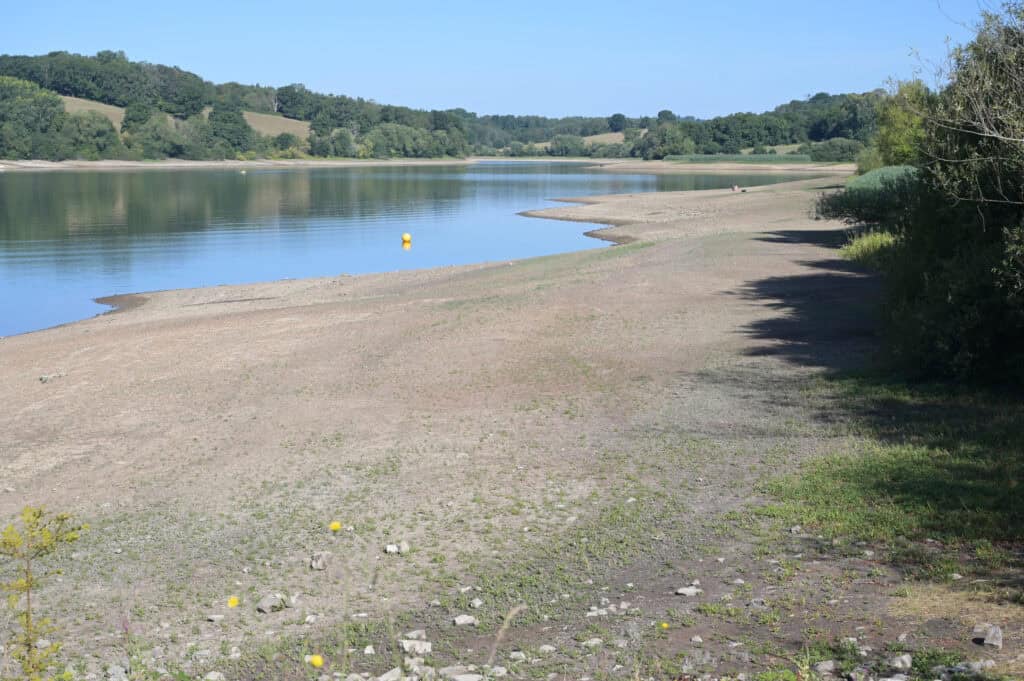
Hosepipe bans happen when a water company decides it is facing a serious shortage of water for distribution and uses a statutory power to prohibit a list of outdoor uses. The trigger is rarely one dry month. It is the distance between what a supply system can store and move and what a hot, dry season asks of it, and because that distance is a function of storage, network capacity and abstraction licensing rather than of weather alone, it widens every time rainfall arrives in the wrong place at the wrong time.
Thames Water's catchments received 42% of average rainfall for April 2025, while South East Water recorded unprecedented demand for the time of year.
Southern, South East and Thames Water all stopped short of restrictions that spring, in what was on course to be the driest spring in over a century. Thames Water's own reservoir level and rainfall figures told the same story. The warnings were unambiguous even so, and bans had already been imposed in parts of the South East in two consecutive years. What follows sets out what a hosepipe ban is in law, how restrictions escalate beyond one, why hosepipe bans keep happening in the same places, and where the planning system can do something about it.
What is a hosepipe ban in law?
A hosepipe ban is a temporary use ban made by a water company under section 76 of the Water Industry Act 1991. The company may impose one where it thinks it is experiencing, or may experience, a serious shortage of water for distribution. Ministers do not make the decision. Nor can a company pick its own list: the Act names eleven uses, and only those eleven may be prohibited.
A water undertaker may prohibit one or more specified uses of water supplied by means of its supply system if it thinks that it is experiencing, or may experience, a serious shortage of water for distribution.
Water Industry Act 1991, section 76(1)
| s.76(2) | Prohibited use | What it covers in practice |
|---|---|---|
| (a) | Watering a garden using a hosepipe | Lawns, borders and beds at a domestic property |
| (b) | Cleaning a private motor-vehicle using a hosepipe | Private cars; a commercial valeting business is outside it |
| (c) | Watering plants on domestic or other non-commercial premises using a hosepipe | Pots, planters and allotment plots not run commercially |
| (d) | Cleaning a private leisure boat using a hosepipe | Private craft, not working or charter vessels |
| (e) | Filling or maintaining a domestic swimming or paddling pool | Covers topping up as well as first filling |
| (f) | Drawing water, using a hosepipe, for domestic recreational use | Water slides, sprinklers and similar garden play |
| (g) | Filling or maintaining a domestic pond using a hosepipe | Ornamental ponds; fish welfare is a common concession |
| (h) | Filling or maintaining an ornamental fountain | Applies whether or not a hosepipe is used |
| (i) | Cleaning walls, or windows, of domestic premises using a hosepipe | Domestic premises only; commercial window cleaning is outside it |
| (j) | Cleaning paths or patios using a hosepipe | Includes pressure washing from a mains-fed hose |
| (k) | Cleaning other artificial outdoor surfaces using a hosepipe | Decking, artificial turf, courts and hard standings |
A prohibition has to specify the date it starts and the area it covers, which can be all or part of the company's supply area. Contravening it is a summary offence carrying a fine of up to level 3 on the standard scale, currently £1,000, and a company that issues a prohibition must also make arrangements for a reasonable reduction of charges to the customers affected by it. The power in its present form dates from the Flood and Water Management Act 2010, which replaced a much narrower predecessor.
The Water Use (Temporary Bans) Order 2010 supplies the definition that settles most borderline cases. Using a hosepipe includes drawing water through a hosepipe from a container, and filling a container by hosepipe and then applying the water. So a watering can filled at a tap sits outside the ban. The same can filled from a hose does not.
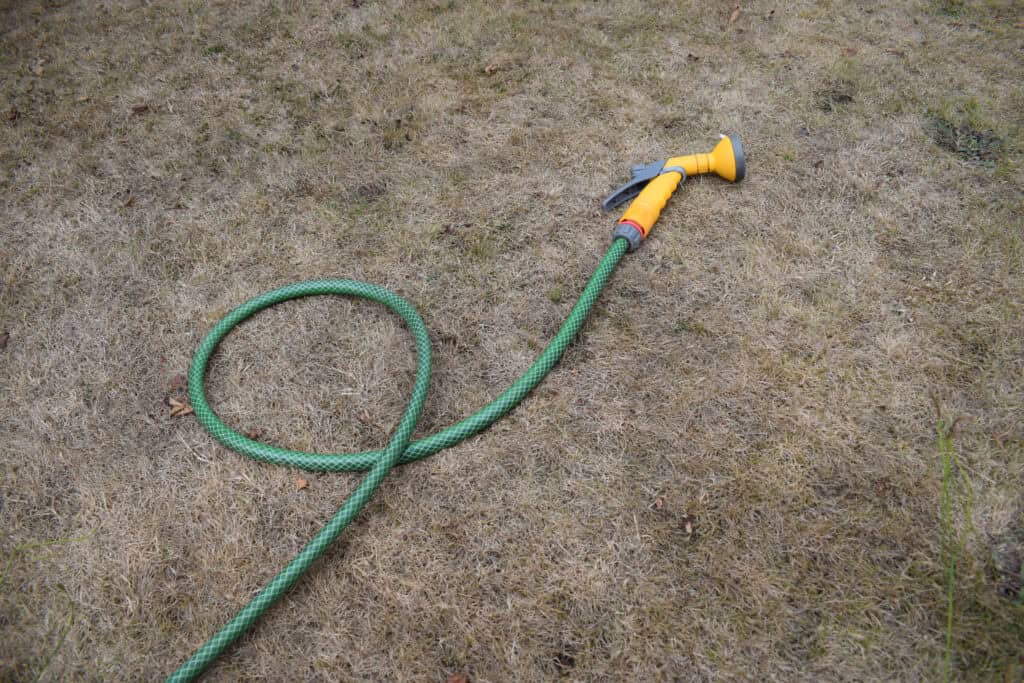
Restrictions of this kind are a demand-side answer to a supply-side problem, and the other half of the answer is written in the planning system. On a development site, the decisions that keep rainfall on the plot instead of losing it to a sewer — harvesting, infiltration and reuse among them — are fixed in the surface water drainage strategy submitted with the application. They are not left to what occupiers do once the homes are built.
How restrictions escalate beyond a hosepipe ban
A hosepipe ban is the second rung of four, and the only one a water company can reach on its own. Above it sit two further instruments, each needing either a regulator or a minister to grant it and each carrying a wider range of powers than the rung below. Defra's drought management framework sets out the sequence, and expects a company to impose a temporary use ban before applying for a drought permit unless its drought plan explains why not.
Only one of the four rungs is a decision a water company can take on its own; the two above it need the Environment Agency or the Secretary of State.
- Demand management and leakage. The company reinforces water efficiency campaigns and pushes leakage below its target. Nothing is prohibited at this stage.
- Temporary use ban. The company acts alone under section 76, prohibiting some or all of the eleven listed uses in a stated area from a stated date.
- Drought permit. The Environment Agency grants it, allowing abstraction from specified sources or a change to licence conditions. A ban normally has to come first.
- Drought order. The Defra Secretary of State makes it. The powers are wider, and an ordinary drought order is what allows a non-essential use ban to reach non-domestic customers.
Water in the wrong places, at the wrong times
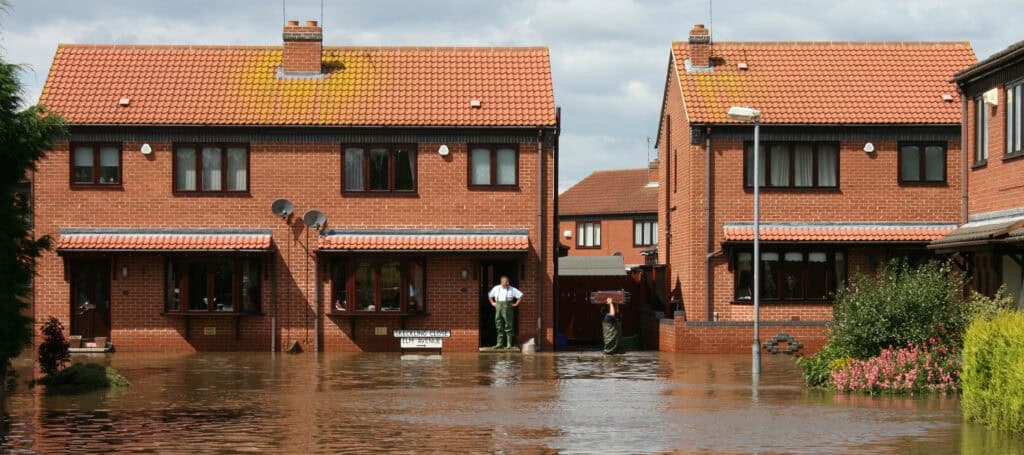
Water scarcity in England is rarely a shortage of rain. It is a failure to store, move and manage what falls, and the pattern in which rain now falls has been shifting considerably faster than the storage and distribution infrastructure that was built to handle it. One season can produce a supply shortage and a flood in the same catchment, because the two problems share a cause.
- Prolonged dry spells cut river flows, damage crops and raise wildfire risk, and they bake the ground into a surface that sheds rain instead of absorbing it — the mechanism behind flooding during a drought.
- Sudden intense storms overwhelm conventional drainage, triggering flash flooding and sewer overflows. Heavier rainfall from ordinary weather systems is doing more of this than stronger storms are, though a named storm in a climate-altered Britain still does the concentrated damage.
- The swing between the two is sharpening. Research modelling almost 700 UK catchments found rivers lurching more abruptly between flood and drought, a pattern now described as climate whiplash.
Both halves of that pattern end the same way. The water is lost, too much of it too fast and in the wrong place, and the ground gets none of it. The same dry-then-wet cycle also shows up in the network itself, where shrink-swell clay drags ageing pipes apart and produces a summer burst-main season alongside the winter one.
What the warnings revealed about the supply system
The 2025 warnings arrived alongside a bill settlement that showed how far the system had fallen behind. Average bills rose by £86 that year, part of a 36% increase approved over five years to fund a £104 billion upgrade, with Southern Water customers facing a rise of 53%. The money addresses treatment, storage and leakage. It does not change how much rain a region captures before that rain reaches a drain.
The Environment Agency's 2025 National Framework for Water Resources put the shortfall in England's public water supply at around 5 billion litres a day by 2055.
Where the 5 billion litres has to come from
- Demand and leakage first. More than 60% of the gap is to be closed this way, and up to 80% of it in the early years.
- Leakage halved by 2050. The committed target, against a network still losing roughly a fifth of what it puts into supply.
- A further billion litres a day. Needed by 2055 for uses outside public supply, mostly energy and food production.
More than 60% of that shortfall has to be closed by demand management and leakage reduction rather than by new reservoirs and transfers, and up to 80% of it in the early years, before the strategic resource options now in planning are built and come online. The National Framework is explicit that the early years depend on saving water rather than finding it. Who carries that obligation is itself in flux, after the Independent Water Commission recommended abolishing Ofwat and folding its functions into a single regulator.
What actually reduces the pressure
No single measure is sufficient. What works is layered and place-based, and three areas do most of the work. All three land, sooner or later, in the drainage strategy that accompanies a planning application.
Sustainable drainage
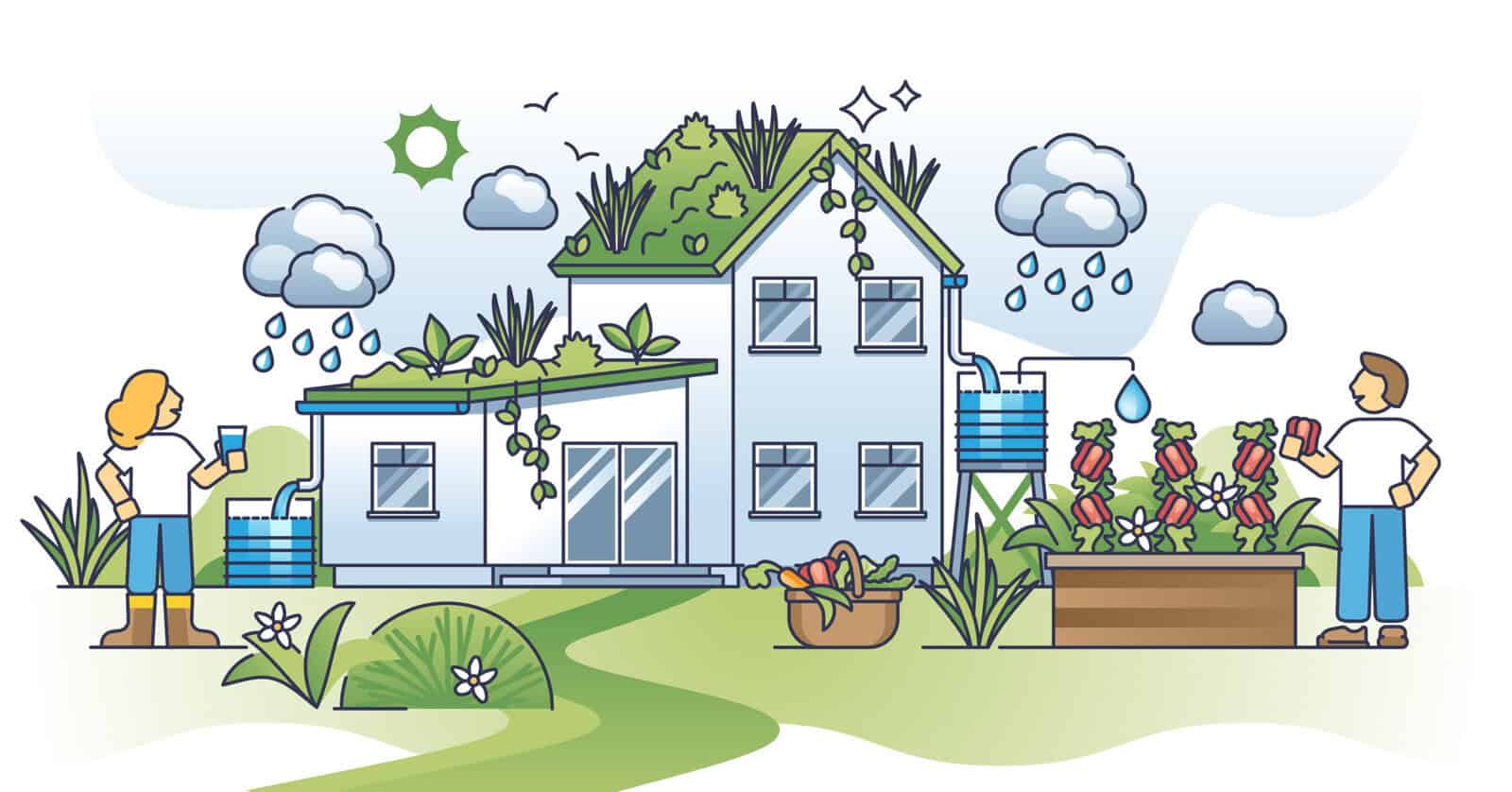
Sustainable drainage systems slow and treat runoff so more of it soaks in, recharges the aquifer and supports planting instead of leaving the site through a pipe. Bioretention areas, permeable paving, swales and infiltration trenches, rain gardens and green roofs all do a version of the same job, and the SuDS hierarchy sets the order in which they should be tried. In a region facing surface water flooding and water stress at once, that is infrastructure, not enhancement — which is the argument behind sponge-city thinking and behind the shift towards nature-based drainage.
Rainwater harvesting and reuse
Rainwater harvesting captures rainfall before it is lost and stores it for non-potable use, from irrigation to toilet flushing. It sits at the top of the national discharge hierarchy, though the volume a tank holds rarely earns credit against the attenuation storage a drainage strategy still has to provide, because a tank sized to supply water is not empty when the design storm arrives. What harvesting counts for in a SuDS design is the detail most schemes get wrong. Greywater reuse, recycling water from sinks, showers and appliances, remains far less common in the UK than in Europe or Australia.
Water efficiency in the planning system
Building Regulations Part G sets a national baseline of 125 litres per person per day, with an optional tighter standard of 110 available to any local planning authority that chooses to adopt it through policy. Water-scarce areas have gone further. Schemes in the Sussex North Water Supply Zone typically reached 85 to 100 litres per person per day under the water neutrality requirement, and Greater Cambridge's emerging local plan proposes 80. Those numbers are the mechanism. Everything else is a campaign.
Is behaviour change enough?
Campaigns for shorter showers and less garden watering help, and during a critical period they help materially. They are also the cheapest part of the response, which is why they arrive first and loudest.
Consumers are asked to cut back while the network supplying them still loses about a fifth of its water to leakage.
Resilience will not come from restraint alone. It comes from redesign: homes, developments and public spaces that store, filter and reuse water instead of shedding it. That redesign is a decision taken by water companies, planning authorities and developers together, and mostly before a spade goes in the ground.
What a water-secure South East looks like
Climate projections for southern England point to hotter, drier summers and wetter winters, which means more frequent hosepipe bans and more frequent surface water flooding produced by the same shifting weather. The measures that reduce one reduce the other. That is the part the debate misses.
The measures that keep a hosepipe running in August are the same ones that keep a road clear in November.
Nature-based drainage, circular water use and place-sensitive planning produce greener and cooler places as a by-product. For developers, landowners and local authorities, the decisions that matter are taken early, at the point a scheme's surface water drainage strategy is being set and not after a condition has been refused. Unda works on that stage of a scheme, from flood risk assessment through to SuDS design, and can be contacted for a no-obligation view on a site.
Hosepipe ban questions
Does a hosepipe ban apply to a water butt or a private borehole?
No. Section 76 reaches water supplied by means of the undertaker's supply system, so rainwater held in a water butt and water drawn from a licensed private supply both sit outside a temporary use ban. A hose run from a butt is unaffected. This is one of the quieter arguments for installing storage: it keeps a garden watered in the season when mains water is restricted.
Can a business be told to stop using a hosepipe?
Not by a hosepipe ban. Every one of the eleven prohibited uses is domestic or private, so a commercial car wash, a nursery or a window-cleaning round is outside the ban even when neighbouring households are not. Restricting non-domestic use requires an ordinary drought order made by the Secretary of State, which can impose a non-essential use ban on business customers.
Who is exempt from a hosepipe ban?
There is no national exemption list. The Act says what may be prohibited, not who is excused, so each water company sets its own concessions in the notice it publishes for its supply area. Blue badge holders, customers on a priority services register, newly laid turf and fish welfare are the concessions that appear most often, but they vary by company and by ban. The published notice for the supply area is the only reliable answer.
Can water scarcity stop a planning application?
It can, though rarely through flood risk. Water availability reaches planning through local plan water efficiency policy, a water company's resource management plan, and in one case a Habitats Regulations test. The Sussex North Water Supply Zone was the only formal water neutrality area in England, holding up around 21,000 homes for four years until the requirement was withdrawn on 31 October 2025. Greater Cambridge is managed through local plan policy instead.
About the author. Edward is a co-founder and Director of Unda with 20+ years in flood risk and drainage, and a national-press commentator on flooding. Unda has been trading since 2014, is a CIWEM Business Partner with CIWEM member and chartered (C.WEM MCIWEM) consultants, and has delivered 5,000+ flood risk assessments and drainage strategies across England and Wales.
Edward Bouët · BSc (Hons)
Latest news


One of our experienced Flood Risk Consultants will get back to you within 60 minutes
