Home Flood Defences: Doors, Barriers, Airbricks and What Comes First
Estimated reading time 21 minutes
Flood defences for homes are the products and building changes that stop floodwater getting into a house, or limit the damage when it does: flood doors and door barriers, self-closing airbricks, non-return valves on drains, sealed walls, and a sump and pump for water that rises through the floor. They work as a set, because water finds the one entry point that was missed. They also work only up to a point. Guidance treats keeping water out as reasonable up to about 300 mm, dependent on the walls between 300 and 600 mm, and unwise above 600 mm, where the better course is to let water in and make the house quick to recover. So the first question is how deep the water could get and which way it would come in. For a house being bought, a flood risk survey for a property purchase answers it. The wider guide to flood defences covers walls, barriers and storage schemes; this article covers household flood defences fitted to a single house.
A flood door does little for a house with open airbricks: one unsealed vent, pipe entry or drain lets water in behind the best door on the market.
Keeping water out or letting it in: resistance and recoverability
There are two strategies, and most houses need some of each. The Code of Practice for Property Flood Resilience, published by CIRIA as C790, defines flood resistance as keeping water out of a building. It defines flood recoverability as using materials and construction that water does not ruin, so the house can be back in use quickly. The two are sometimes called dry-proofing and wet-proofing.
| Strategy | What it does | Typical measures | Suits |
|---|---|---|---|
| Resistance | Seals the building's entry points so water stays outside | Flood doors, door barriers, self-closing airbricks, non-return valves, sealed walls | Shallow, short floods from a river, the sea or surface water |
| Recoverability | Accepts that water gets in and limits what it ruins | Solid tiled floors, water-resistant plaster, raised sockets and boiler, resilient kitchen units | Deeper or longer floods, and water rising through the ground |
The code applies to existing homes and new ones alike. How it is used for new development, and what a planning authority expects to see, is covered in the article on property flood resilience and planning.
How deep can flood defences for homes hold back water?
To about 600 mm at most, and often less. Floodwater pushes sideways on the walls and upwards on the floor, and the push grows with depth. The 2007 government guidance on improving the flood performance of new buildings treats keeping water out as acceptable up to 300 mm. Between 300 and 600 mm it depends on a structural assessment, and above 600 mm it advises letting water in, because masonry walls are at risk from the difference in level inside and out.
Let the water in, then recover
Most house walls are not built to hold back water this deep. Resistance gives way to recoverability, with a pump to get the water out.
What a certified product must hold
BS 851188-1 requires flood doors and other products that seal an opening to hold still water to at least this height above the threshold. Add the 60 mm allowed for the threshold and it matches the 600 mm wall limit.
Keep it out if the walls can take it
Exclusion depends on a structural assessment of the walls and floor, and on every entry point being sealed.
Keep the water out
Doors, barriers, airbricks and valves are the right first choice, with a sump as back-up.
Typically, most residential buildings are not structurally capable of preventing floodwater above 600mm. If barriers are to be installed above 600mm, a structural survey of the building should be carried out.
Historic England, Flooding and historic buildings: resistance measures
The product standard is built around the same limit. BS 851188-1, the British Standard for flood doors, boards and other products that seal an opening, requires them to hold back still water to at least 540 mm above the threshold, a figure that includes a 60 mm allowance for the threshold itself and so lines up with the 600 mm wall limit. A certificate says the product held in a still-water test. It says nothing about the wall it is fixed to, or about moving water, waves from passing traffic and floating debris, which is why Historic England's advice on resistance measures asks for a structural survey before going higher.
Depth is only half of it. The source of the water decides which measures help at all. Rivers and the sea usually give hours of warning and arrive over the threshold, which is what doors and barriers are built for. Surface water flooding can arrive within minutes of heavy rain, which favours products that work without anyone fitting them. Groundwater flooding rises through the floor, and sewer water comes back up through toilets and drains. A house can face more than one, and the flood zones on the government map cover only rivers and the sea.
Doorways: flood doors and door barriers
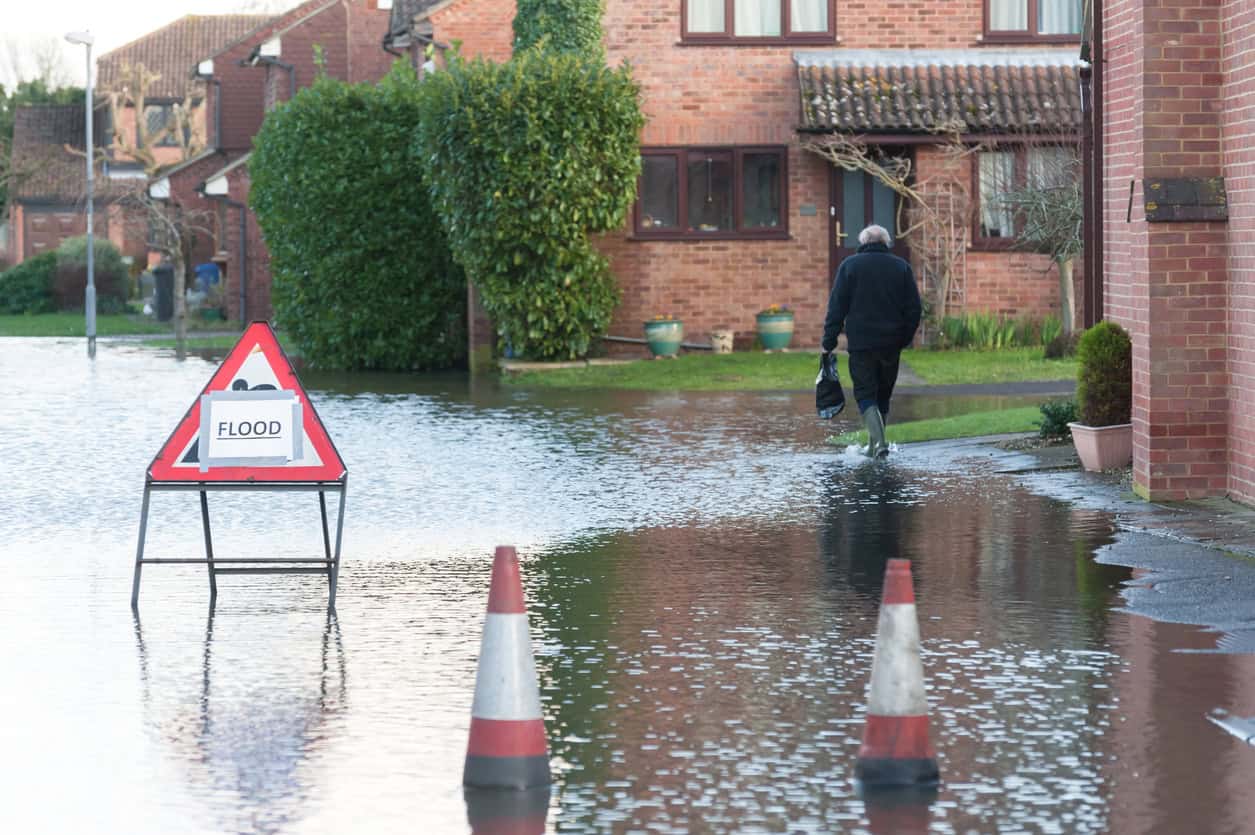
Doorways are the obvious way in and the most expensive part of a house to seal. There are two choices. A flood door replaces the existing doorset and seals when it is shut and locked, so it protects the house around the clock without anyone acting. A door barrier, the commonest of the flood barriers sold for homes, is a panel slotted into channels fixed either side of the opening, or an expanding board, put in place when a flood is forecast.
- Flood doors. Passive, and from around £1,800 installed for a single uPVC door, with composite, timber and French doors costing more. They look like an ordinary door, but the seal only works when the door is locked.
- Door barriers. Active, at around £500 to £800 for a single doorway and more for wide openings. They need someone at home with time to fit them, somewhere dry to store them, and clean channels.
- Patio, French and garage doors. Wide and sliding openings are hard to seal, so barriers for them are made to measure. Up-and-over and roller garage doors are not designed to hold water back, so the barrier goes in front of them.
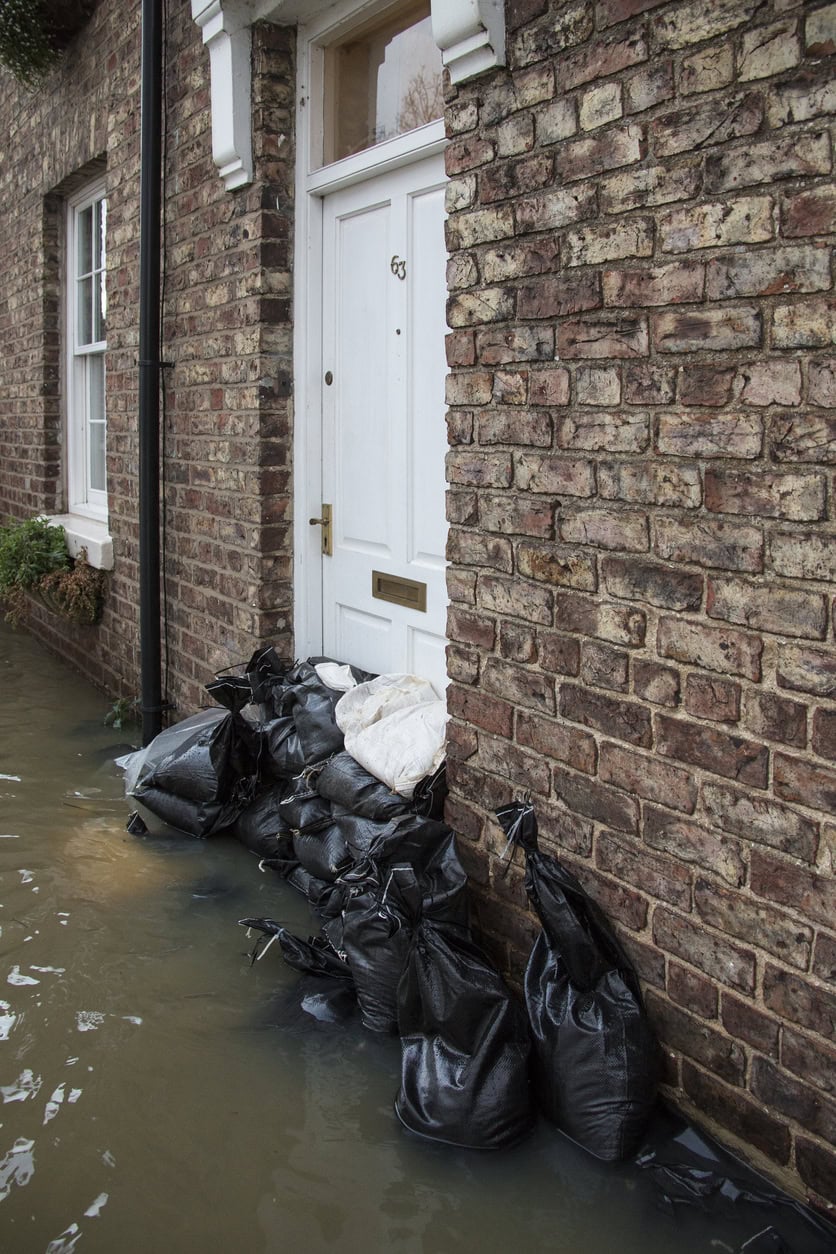
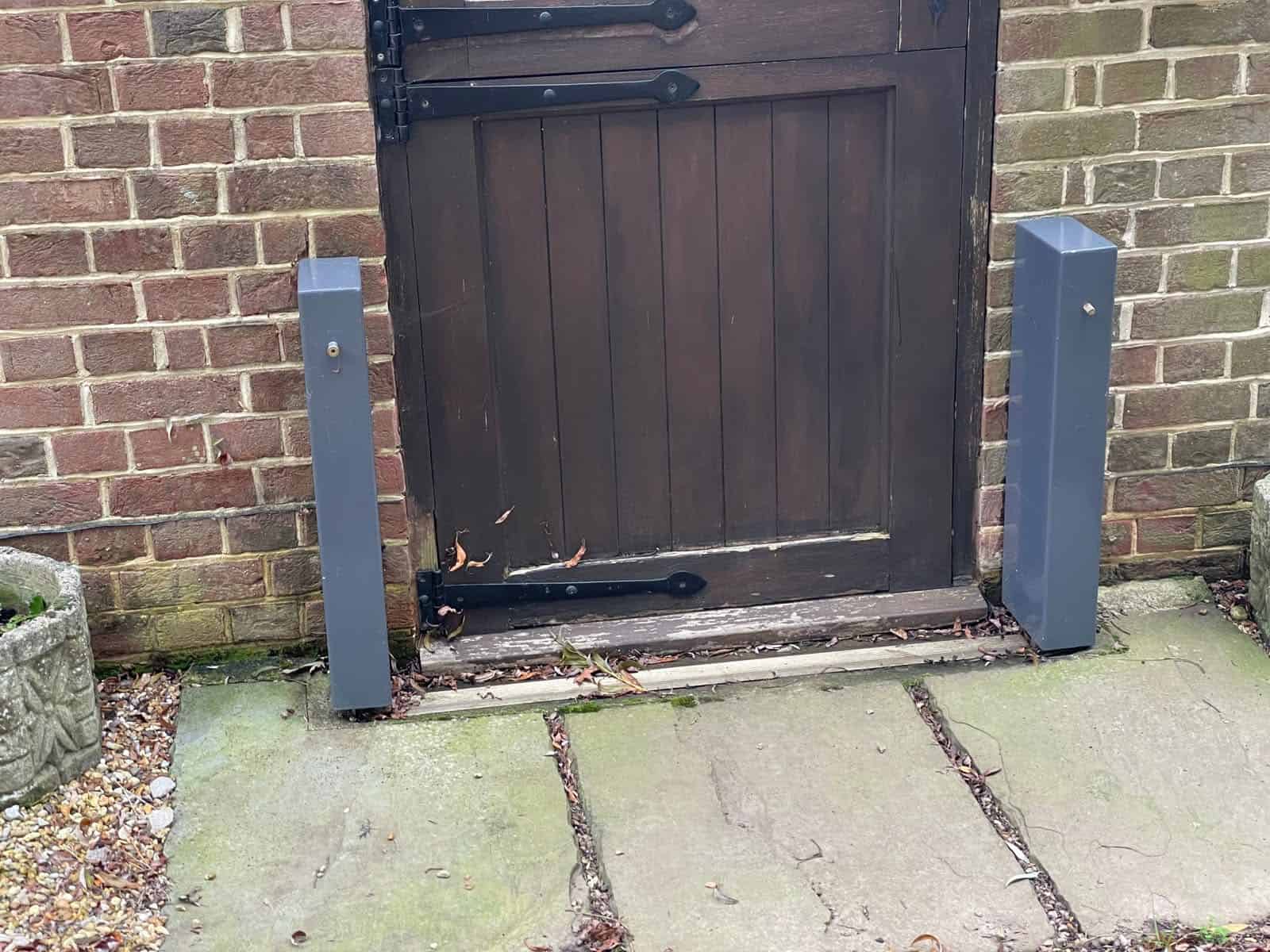
A door barrier depends on warning time: surface water from a cloudburst can arrive before anyone gets home to fit it.
When choosing either, ask for certification to the current standard, BS 851188-1:2019+A1:2021. Its predecessor, PAS 1188, was withdrawn in 2019 and still turns up in sales literature. Certification covers the product, not the fitting: a certified door set in a weak frame or crumbling brickwork will still leak. The government's advice on protecting a property names flood doors alongside self-closing airbricks and non-return valves, and that pairing matters, because a door only keeps water out if the other routes are closed too. Barriers that protect a whole street or site are a different kind of product, covered in the guide to temporary and demountable flood barriers.
Airbricks, vents and walls
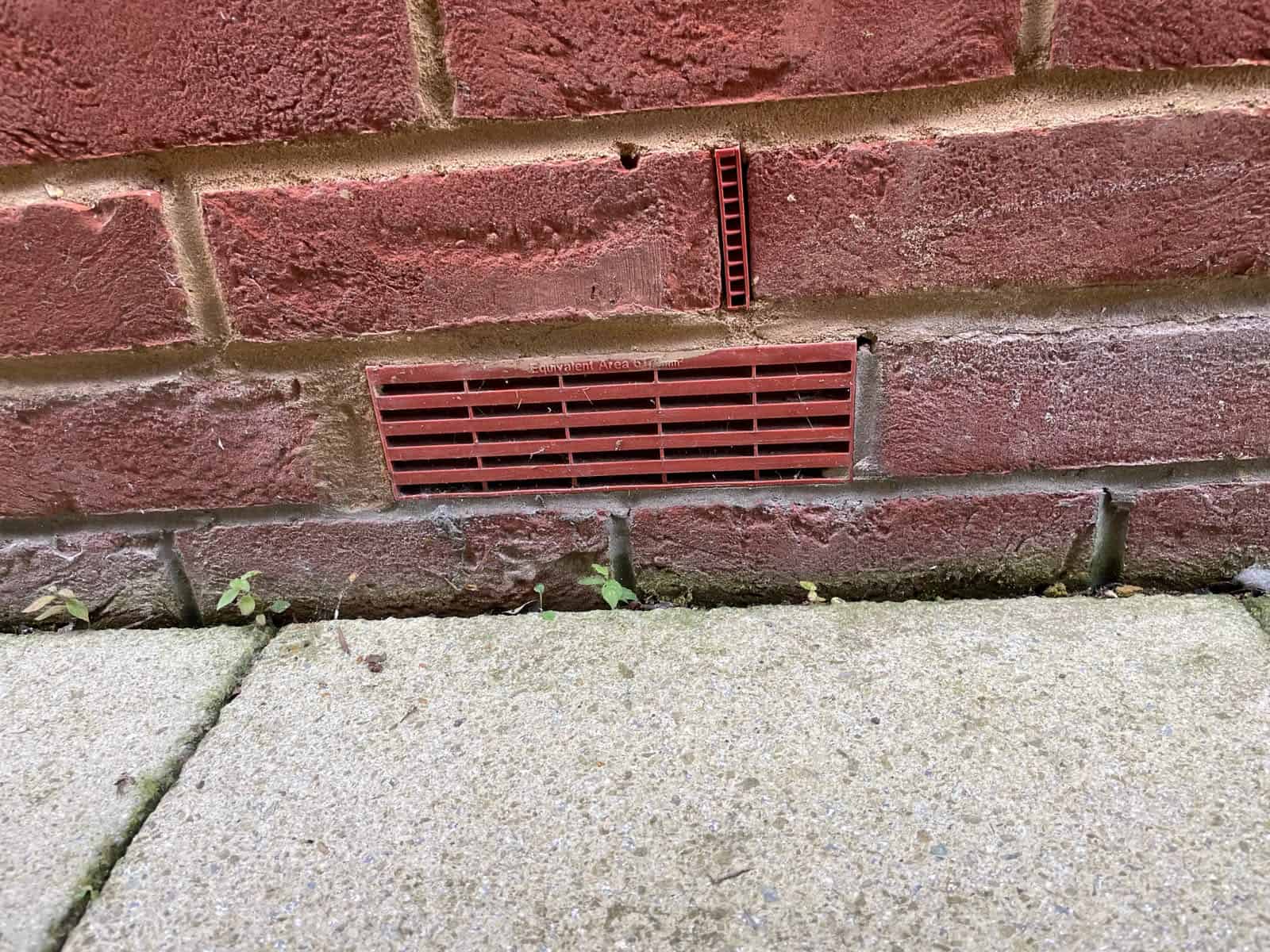
Airbricks are the entry point people miss most often. They ventilate the space under a suspended timber floor, sit low in the wall, and let water straight under the house at exactly the depth a door barrier is meant to handle. Walls leak too, through porous brick, soft mortar and the gaps around every pipe and cable that passes through them.
An automatic self-closing airbrick replaces the old one with a unit whose float rises with the water and closes the vent, while letting air through the rest of the time. At around £90 fitted it is one of the cheapest passive measures. A clip-on airbrick cover, at about £30, does the same job if someone remembers to fit it, and blocks ventilation while it is on. Weep holes in cavity walls can take one-way valves, at a few pounds each, that let moisture out and close under flood conditions.
For the walls, re-pointing in water-resistant mortar, a breathable sealant on the brickwork and sealed service entries close the slower routes. Water-resistant render can help but may trap damp if it is taken above the damp proof course, and on some houses it needs planning permission. Each penetration costs little to seal; the work is in finding every one.
At around £90 fitted, a self-closing airbrick costs about a twentieth of a flood door and closes a route that no door can.
Drains and toilets: stopping sewer backflow
When sewers fill during a flood, water can come back up through ground-floor toilets, sinks, showers and floor gullies, and it is usually contaminated. A non-return valve stops it by closing when the flow reverses. It can be fitted in the pipe itself or, as a flap valve, in the inspection chamber outside.
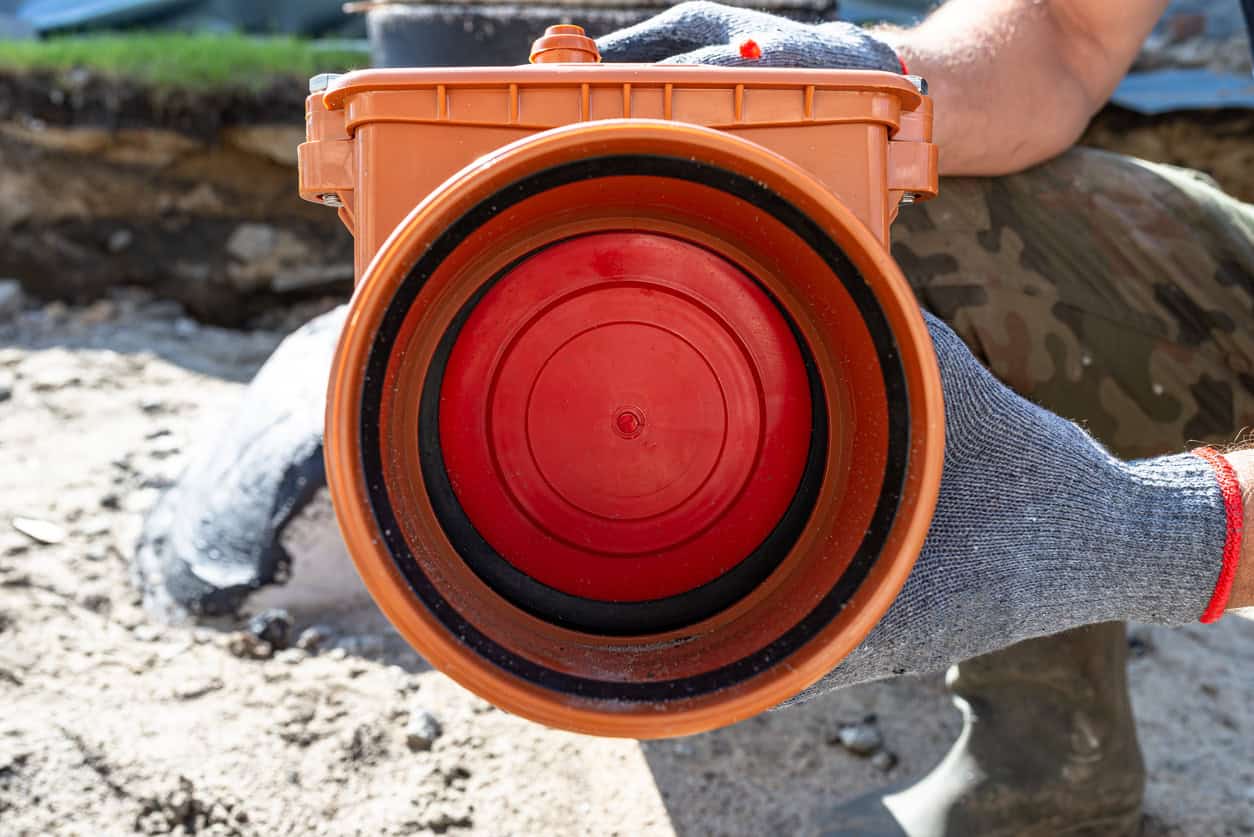
- In-line valves. Fitted in the soil or waste pipe. The valve itself costs from about £200, and installed costs are commonly £850 to £1,140.
- Flap valves in the chamber. Cheaper, from around £25 for small units plus fitting, but they need regular checks so that debris does not hold them open.
- Toilet pan seals. An inflatable bung, about £40 to £50, for where a valve cannot be fitted. Like a door barrier, it has to be put in before the water arrives.
While a valve is closed nothing drains out of the house either, so toilets and appliances should not be used until the flood has passed. The article on sewer flooding explains who is responsible for the pipes involved.
The floor: groundwater, sumps and pumps
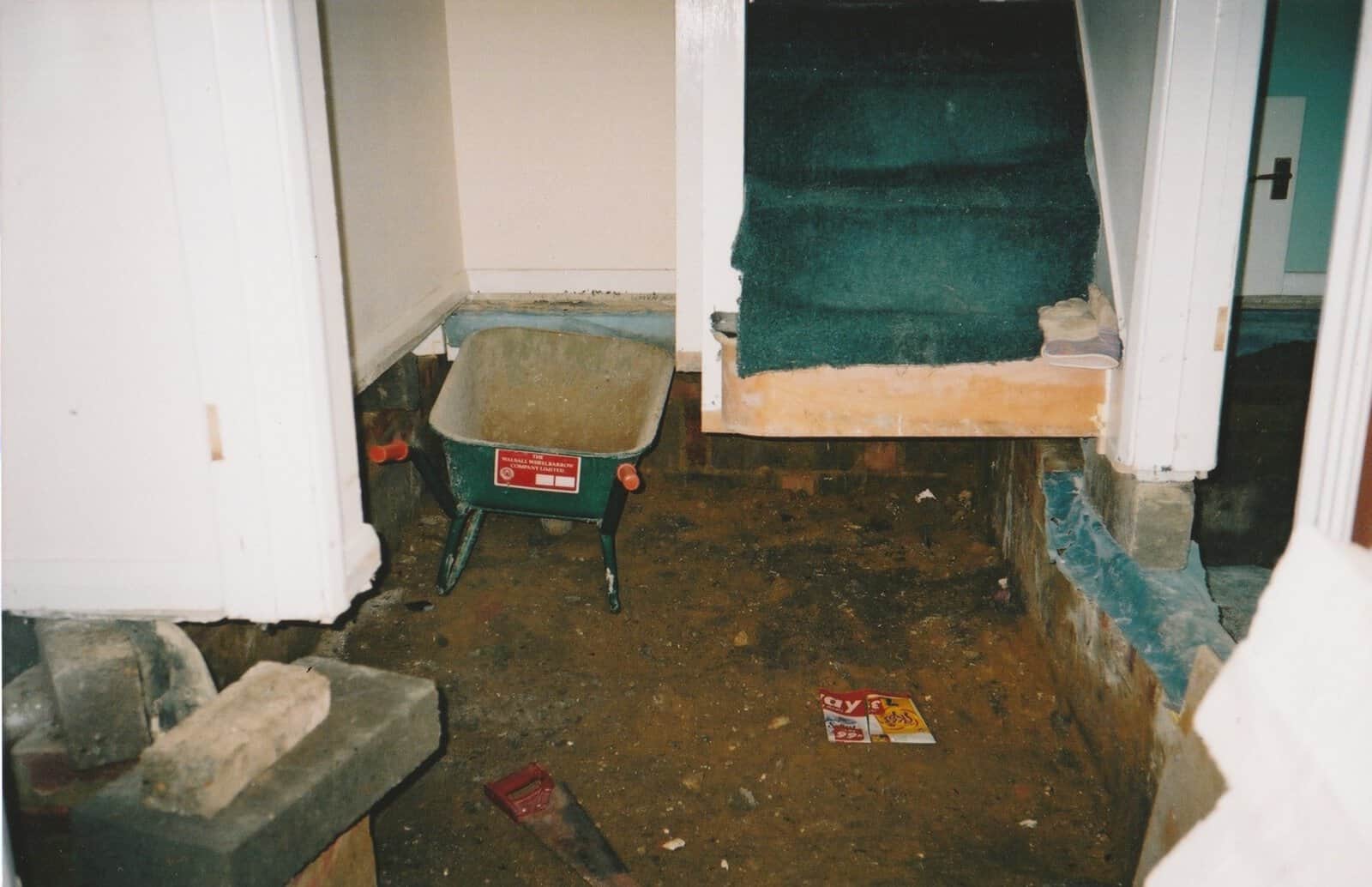
Nothing fitted to a door or an airbrick stops water rising through the floor. Where the ground is saturated, groundwater comes up through solid floors, joints and the void under suspended floors, and it can stay high for weeks. The defence here is to manage the water rather than exclude it: a sump at the lowest point of the floor or void, with a pump that sends the water back outside through a pipe with its own non-return valve.
An installed sump and pump typically costs £1,000 to £3,000. It needs its own electrical circuit and a battery or generator back-up, because power often fails in the floods that need it most. Basements need more: cementitious tanking for damp and minor seepage, or a cavity drain membrane leading to a sump where groundwater is significant. The guide to basement and cellar conversions in a flood zone covers the planning side, and the explainer on what groundwater flooding is covers where it happens.
A sump and pump is also the usual back-up behind doors and barriers, because a little seepage past seals and through the floor is expected in a long flood.
Why the survey comes before the products
A resistance package only works if every route in is sealed. Miss one airbrick, an unsealed cable duct or a floor drain and the house takes on water, however good the doors are. That is why the industry code puts a survey of the property ahead of choosing products, and why buying flood protection for a home one product at a time, starting with the front door, is poor value. C790 sets six standards for the work:
- Hazard assessment. A summary of how the property could flood, from which sources, how often and how deep.
- Property survey. A check of every entry point, the walls and floors, and what the people living there need.
- Options and design. A design agreed with the owner, matching the measures to the depth and the source.
- Construction. Installation in line with regulations, the manufacturers' instructions and good practice.
- Commissioning and handover. Checks after installation, and the information needed to use and maintain the measures.
- Operation and maintenance. Clear responsibility for keeping everything working through its life.
The code expects the work to be led by a suitably qualified and insured person. CIWEM keeps a specialist register of property flood resilience surveyors and installers, and the government's repair grant required the surveyor to have completed CIWEM's property flood resilience training. A survey and design for a single house is typically priced at around £750 to £1,200 plus VAT, a small share of the cost of the products it specifies.
Buying a home that could flood?
An independent flood risk survey shows how the house could flood, from which sources and how deep, before exchange and before money goes on products. Quotes are returned within 60 minutes.
Start a quoteWhat if the water gets in anyway?
Above about 600 mm, or where groundwater or long floods make exclusion impractical, the aim changes: let the water in, get it out, and have the house back in use quickly. Recoverability measures replace materials that water ruins with ones it does not.
- Walls. Lime plaster, cement render or water-resistant boards in place of gypsum plasterboard, with boards fixed horizontally so only the lower ones need replacing, and closed-cell insulation.
- Floors. Concrete finished with ceramic or stone tiles on cement-based adhesive, or treated timber where a suspended floor stays, with rugs rather than fitted carpets.
- Services. Electrics wired down from the ceiling, sockets and the consumer unit raised above the likely flood level, and the boiler moved up the wall or upstairs.
- Fittings. Kitchen and bathroom units in water-resistant materials, appliances on plinths, and internal doors on lift-off hinges.
Most of this means replacing fabric that is still sound, so it is rarely worth doing on its own. A full resilient refit of a typical three-bedroom semi-detached house costs roughly £30,000 to £42,000 at 2025 to 2026 prices, close to the cost of putting it back as it was. The time to do it is during repairs after a flood, when the old materials are coming out anyway and the insurer may pay the difference.
How much do flood defences for homes cost?
For a typical house, a resistance package of doors or barriers, airbricks, valves and sealing costs roughly £6,000 to £12,000 installed at 2025 to 2026 prices. Where the risk is shallow surface water, or measures are built in at the design stage of a new house, it can come in at £1,200 to £2,500. Certified doorsets on every opening, perimeter barriers or tanking push it to £15,000 or more.
| Measure | Passive or active | Indicative cost |
|---|---|---|
| Flood door or window | Passive | From around £1,800 installed |
| Doorway or gateway barrier | Active | £500 to £800 for a single doorway |
| Automatic self-closing airbrick | Passive | Around £90 installed |
| Airbrick cover | Active | Around £30 |
| One-way weep hole valve | Passive | £4 to £10 each |
| Non-return valve on a soil or waste pipe | Passive | £850 to £1,140 installed (in-line) |
| Utility meter housing cover | Passive | Around £450 plus VAT installed |
| Sealing pipe and cable entries | Passive | £15 to £40 per entry, once found by survey |
| Sump and pump | Passive once fitted | £1,000 to £3,000 installed |
These figures are indicative. They come from published supplier and installer prices and older Environment Agency cost data brought up to date, and every house differs. Defra's May 2026 evidence review of property flood resilience notes how little cost data exists from real flood events. Set against those costs, the Environment Agency's appraisal guidance values protecting a semi-detached house at around £33,000 over its life, where it floods at least once in twenty years on average and to less than 60 cm. For a house that floods often and shallowly the measures repay their cost several times over; for one at a remote risk the sums look very different.
Between 2015 and 2024, around 3,700 properties in England were protected through property-level schemes, against 6.3 million at risk of flooding.
Grants, Build Back Better and insurance
Help with the cost exists, but most of it arrives after a flood rather than before one. The FloodReady action plan, the government-commissioned review that produced the delivery figure above, found uptake held back by cost, uncertainty about how products work and difficulty knowing where to start.
- The repair grant. Up to £5,000 including VAT for resilience measures, paid through the local council, but only when the government activates it after a major flood. It was activated for Storm Babet in October 2023 and Storm Henk in January 2024, and the House of Commons Library's May 2026 briefing records no activation since. The survey fee comes out of the same £5,000.
- Build Back Better. Insurers taking part in Flood Re's Build Back Better scheme can pay up to £10,000 on top of a like-for-like repair to make a flooded home more resilient, covering both kinds of measure. It has to be raised as part of the claim, and each insurer sets its own terms.
- Community schemes. Some councils and the Environment Agency fund property-level measures for groups of homes that flood often. Whether one exists depends entirely on the local programme.
Fitting measures does not reliably lower a premium. Flood Re, which keeps flood cover available for most homes built before 2009, charges insurers by council tax band rather than by risk or by the measures fitted, and its excess is a fixed £250 a claim either way. Individual insurers may take documented measures into account, but there is no standard discount. Flood Re's reform package of 1 July 2026 reflects that gap: it includes pilots of flood performance certificates that would earn a premium discount, and a lower claims cap for insurers that do not offer Build Back Better. The guide to what Flood Re is covers eligibility and the scheme's 2039 end date, and where an insurer has loaded or refused cover, a flood risk assessment for insurance provides property-level evidence.
Do you need permission to fit flood defences?
Usually not for the products themselves. Replacing a door with a flood door of similar appearance, and fitting self-closing airbricks, valves and pumps, normally fall within a house's permitted development rights. Permission becomes a question in a few situations.
- Listed buildings. Any alteration that affects a listed building's character needs listed building consent, which can include a new door, render or replacement airbricks. Speak to the council's conservation officer first.
- Conservation areas. An Article 4 direction can remove permitted development rights for doors and other changes to a frontage, as the Planning Portal's guidance on doors and windows explains.
- Walls, gates and raised ground. A garden wall or gate is permitted development up to 1 m next to a road used by vehicles and 2 m elsewhere, but not around a listed building. Raising thresholds or ground levels can need planning permission. The guide to flood walls and embankments sets out the steps for a wall, and the article on house extensions in a flood zone covers the planning test for building work.
- Work near a river. Building anything within 8 m of a main river, or 16 m if it is tidal, needs a flood risk activity permit, and obstructing or culverting a smaller stream or ditch needs ordinary watercourse consent.
Rented homes, flats and leasehold houses add one more step: the landlord or freeholder normally has to agree to changes to doors, walls and drains.
Why do flood products fail?
No published study gives a failure rate for household flood products in England, and Defra's May 2026 evidence review sets out the gaps in what is known. How they fail is well documented, though, and most failures come down to design, installation or use rather than the product itself.
Seals perish. Rubber hardens, cracks and shrinks with age and changes in temperature, so a door or barrier that sealed when new may not after ten winters. Active products go unused: nobody is home, the barrier is in the loft, or the warning came too late. Water bypasses the package through an entry point the survey missed, through porous walls and floors, or up from the ground, which no door or barrier was designed to stop. Drains back up where no valve was fitted. And after large floods, demand runs ahead of the supply of competent installers; the FloodReady review recorded products failing through poor design and through installation by people with little expertise.
Fitted flood defences reduce damage up to their design depth and leave the risk above it in place.
What is left is residual flood risk, the same idea that applies to a town behind a flood wall. It is also why fitted products do not change the flood zone a house sits in, or the risk shown for it on the national maps.
Getting advice for a specific house
The right flood defences for a home depend on things a general guide cannot answer: the depth and source of water at that address, the floor levels, how the walls and floor are built, and where the water would get in. Unda prepares independent, property-level flood risk assessments that answer the first part of that. For buyers, a flood risk survey when buying a house sets out how the property could flood, from which sources and to what depth, with recommendations on mitigation. For owners whose insurer has flagged the property, an independent assessment gives the evidence a postcode model lacks. Designing and fitting a full package of products is specialist installer work, and the CIWEM register is the place to find it. Flood plans, flood kits and the warning service are covered in the guide on how to protect your home from flooding.
Frequently asked questions
Can you fit flood defences yourself?
Some products, yes. Airbrick covers, door barriers supplied with channels for self-fixing, toilet bungs and weep hole valves are sold for owners to fit. The risk is less the fitting than the gaps: a missed entry point defeats the rest, and a channel fixed to soft brick or uneven render will leak. Flood doors, in-line non-return valves and sump installations need trades, and certified products are tested on the basis that they are fitted as the manufacturer specifies.
Will flood defences affect selling a house?
Fitted measures do not remove the duty to disclose flooding, but good records make them easier to explain. Sellers in England and Wales must answer the flooding questions on the TA6 property information form truthfully, and products do not change the risk shown on national maps. Keep the survey report, product certificates, installation records and any maintenance log, because a buyer's surveyor, lender and insurer will ask what was fitted and why. The articles on declaring flooding when selling a house and on whether flood risk affects house prices cover the wider picture.
Does a home in Flood Zone 1 need flood defences?
Possibly. Flood Zone 1 means a low chance of flooding from rivers and the sea only. Around 4.6 million properties in England are at risk from surface water, much of it away from rivers, and groundwater and sewer flooding are not on the flood zone map at all. The government's long-term flood risk service shows surface water risk by address. If it shows medium or high risk, or the house has flooded before, the same questions of depth and entry points apply.
Can flood defences make flooding worse for neighbours?
Products that seal a single house take up almost no floodplain, so their effect on neighbours is negligible. A wall, bund or raised ground around a garden is different: it can push water onto neighbouring land or the road, which is why those can need permits and planning permission. A pump should discharge where the water can drain away, not into a neighbour's garden or across a footway.
Do flood products need maintaining?
Yes, and it is the most neglected part of a package. Test-fit barriers and covers at least once a year, check that seals are still supple and channels are clear, have non-return valves and pumps serviced, and keep the instructions with the products where everyone in the house can find them. Seals and moving parts wear out over the years, so a product that passed when new needs checking long before the next flood.
About the author. Jackie is a co-founder and Director of Unda with 30+ years in flood risk, and sits on CIWEM's South Eastern Branch committee. Unda has been trading since 2014, is a CIWEM Business Partner with CIWEM member and chartered (C.WEM MCIWEM) consultants, and has delivered 5,000+ flood risk assessments and drainage strategies across England and Wales.
Jackie Stone · MSci, BSc (Hons), DIC, CIWEM Environmental Partner




One of our experienced Flood Risk Consultants will get back to you within 60 minutes
