Types of Flood Defences: How Flood Defences Work in the UK
Estimated reading time 24 minutes
Flood defences are the structures and measures that keep floodwater away from people and property, or limit the damage when it gets in. The types of flood defences in use in the UK run from a tidal barrier protecting a capital city to an airbrick cover that costs £30. They fall into eight families: tidal and storm surge barriers, flood walls and embankments, flood storage and relief channels, coastal structures and beach management, catchment-scale measures, sustainable drainage on development sites, temporary and demountable barriers, and measures fitted to individual buildings. Each works at a different scale, is paid for by a different body and fails in a different way.
The Environment Agency's second national assessment of flood risk, published in December 2024, put 6.3 million properties in England at risk from rivers, the sea or surface water. By mid-century that rises to around 8 million, roughly one property in four. Being behind a defence lowers the odds of flooding. It does not change the flood zone, and it says nothing about what happens when the defence is overtopped or fails.
England is spending £1.4bn on flood defence in 2026–27, yet some 164,000 of the roughly 259,000 assets that manage flood risk belong to third parties, most of them held by private riparian owners who receive no funding to maintain them.
This guide covers what gets built to hold water back. The companion explainer on the types of flooding and the sources of flood risk covers where the water comes from in the first place.
What are flood defences?
Flood defences are anything that reduces the chance of floodwater reaching a place, or reduces the harm it does when it arrives. A flood defence can be as large as a tidal barrier or as small as a door guard. All of them share a design limit. Each is built to cope with a flood of a stated size, and beyond that size it offers no guarantee.
Engineers sort them in four ways. The distinctions start to matter once a defence is relied on in a flood risk survey for a property purchase or a flood risk assessment for planning.
- Formal or informal. Formal flood defences are built and maintained for the purpose by a risk management authority, such as an Environment Agency embankment on a main river. Informal flood defences do the job by accident: a railway embankment, a raised road or a garden wall that happens to hold water back, with nobody obliged to keep it in repair.
- Passive or active. A passive measure works whether or not anyone is present, warned or capable. An active measure needs a forecast, a person and enough time. Planning practice guidance says passive measures are "likely to be more effective and more reliable".
- Probability or consequence. Most engineered flood defences reduce the probability of flooding up to a design event. Most measures fitted to buildings reduce the consequences instead, and keep working however large the flood.
- Standard of protection. The standard of protection is the size of flood a defence is designed for, usually written as an annual exceedance probability. A defence built to the 1% event performs to that standard and no further.
What are the main types of flood defences?
The main types of flood defences in the UK are best sorted by the scale they work at, from an estuary down to a single house. Scale decides who pays, since a storm surge barrier is national infrastructure funded through Defra and the Environment Agency while a swale is a planning condition discharged by a developer, and it also decides how each one fails.
The familiar split into hard and soft flood defences is a rougher tool than it looks. On the coast it works well, because a concrete seawall and a shingle recharge really are opposites. Inland it breaks down quickly. A flood storage area is hard-engineered but behaves like a natural washland, and a leaky barrier is soft but holds back only part of the water its promoter claims. Scale and mechanism are the more useful ways to divide them.
The ladder below sets out the spectrum in order of scale. The figures come from Environment Agency scheme costs, its cost estimation evidence and published property flood resilience pricing, and each is cited in the section that covers it.
Tiers 1 to 6 mostly reduce the chance of flooding up to a design event. Tier 4 sits across both. It trims the peaks of frequent floods and does little in rare ones. Tier 7 reduces the consequences, and is the only tier that still does something once the design event is exceeded.
Tidal and storm surge barriers
A storm surge barrier is a moveable gate across an estuary or tidal river. Most of the time it sits open, for shipping and drainage, and it closes against a forecast surge. Because it only has to hold for a few hours at a time, it protects a large area for a fraction of the cost of raising every kilometre of bank behind it. It also has to reopen before river water builds up behind it. Operating one is a balance between the tide and the river, timed to the hour.
The Thames Barrier is the best known. Together with the wider estuary defences it protects around 125 square kilometres of central London, as the Environment Agency's guidance sets out. England's other surge barriers are smaller, and most trace their origins to the lessons of the 1953 North Sea flood.

| Barrier | Opened | Type | Cost | Protects |
|---|---|---|---|---|
| Hull Tidal Surge Barrier | 1980 | Vertical lift gate, 212 tonnes | Not published | Hull and upstream towards Beverley |
| Ipswich Tidal Barrier | February 2019 | 20m rising sector gate, 200 tonnes | £67.4m | 1,608 homes and 422 businesses |
| Boston Barrier | December 2020 | Rising sector gate | Over £100m | 14,000 homes and 800 businesses |
| Foss Barrier, York | 1987, upgraded 2016–22 | Vertical lift gate with pumping station, raised from 30 to 50 cubic metres a second | £38m upgrade | Over 2,000 properties in York |
| Bridgwater Tidal Barrier | Under construction | Two vertical lift gates on the Parrett, with new and raised banks | £249m at the 2024 baseline, under review | 12,800 homes and businesses to a 1 in 200 standard |
Flood walls and embankments
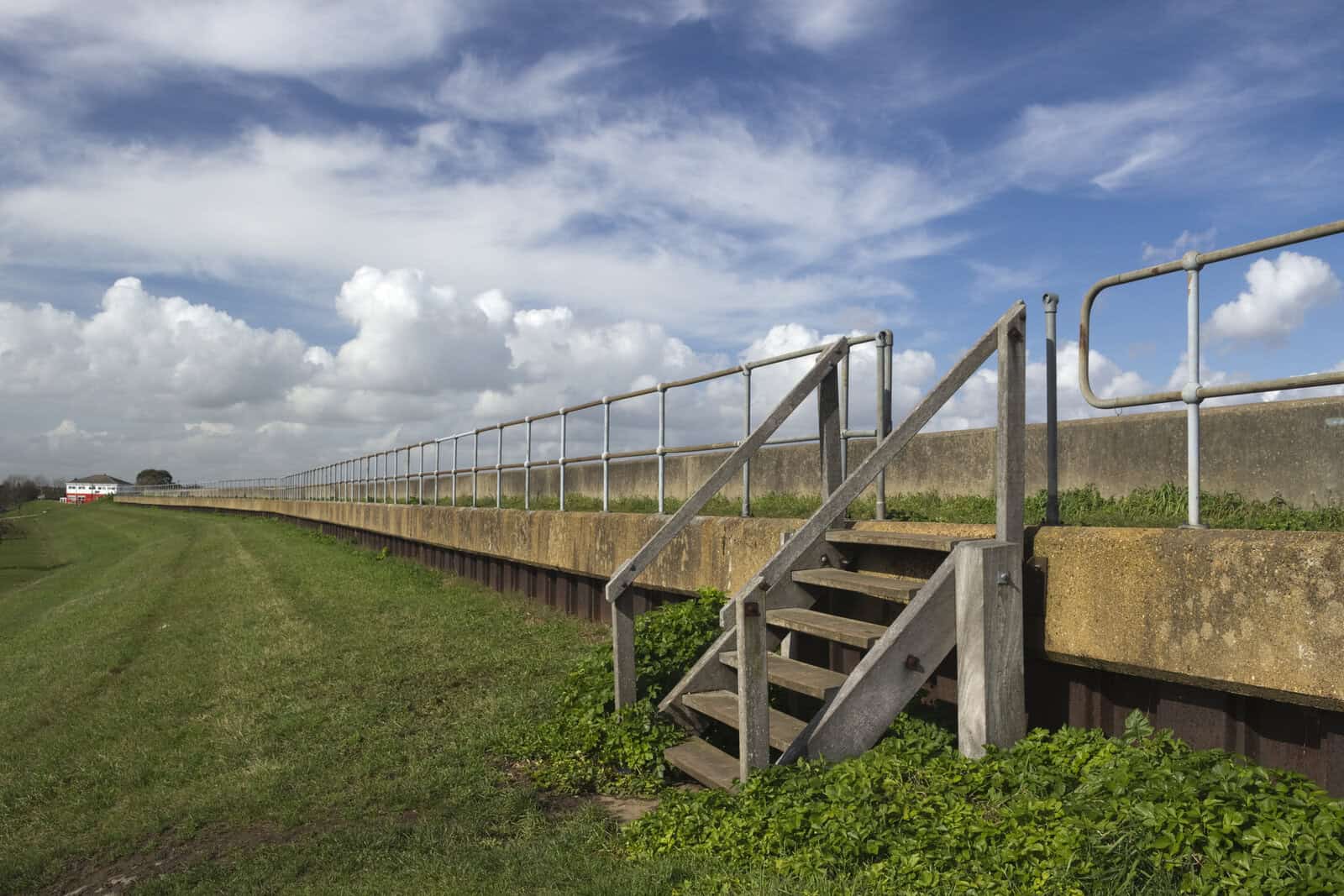
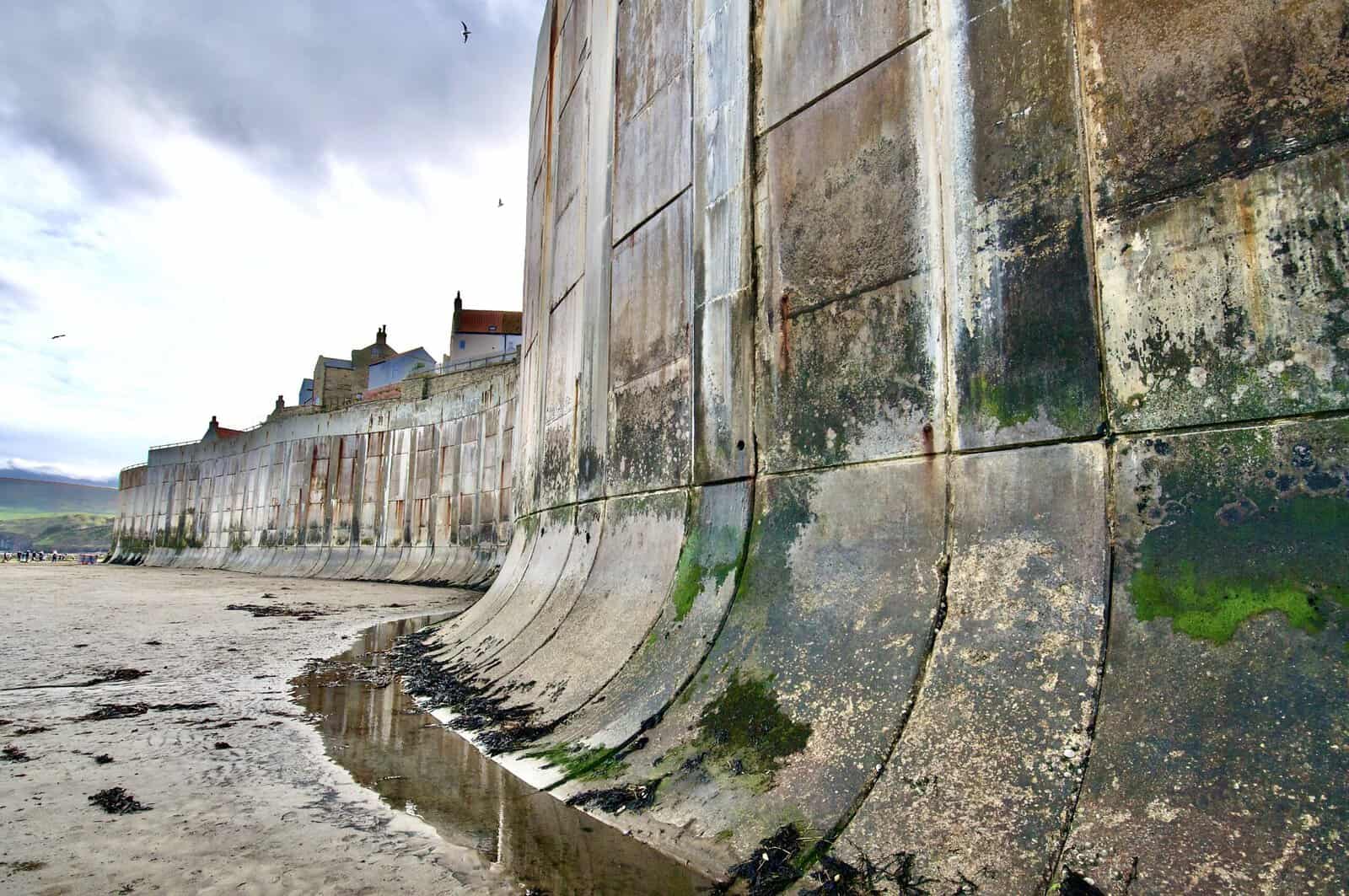
Flood walls and embankments are linear defences: they line a river or shore and hold water in the channel up to their crest height. Walls are built in brick, masonry, reinforced concrete and steel sheet piling, and suit tight urban riverfronts. Embankments are earth banks, typically one to three metres high and rarely more than five, used where there is room for their much wider footprint and where the ground beneath them can carry the load.
Two design questions dominate. Freeboard is extra height above the design flood level to cover uncertainty, waves and settlement, and new schemes commonly assume a 20% uplift on design flow for climate change. Seepage is the quieter problem, because very few flood walls are watertight and water can pipe beneath them.
Two northern schemes show the range. In Leeds, Phase 1 relied on moveable weirs as well as walls, and Phase 2 on the Aire added upstream storage; Leeds City Council puts the combined cost at over £160m, with Phase 2 built to a 1 in 200 standard. In Carlisle, £38m of defences completed in 2010 to a 1 in 200 standard were overtopped, though not breached, in Storm Desmond in December 2015.
Flood storage, washlands and relief channels
Where a channel cannot be widened and a wall cannot be raised, the alternatives are to store the water or send it somewhere else. Online storage holds water back within the channel and floodplain. Offline storage diverts it into a separate area beside the river. A washland, such as the Fenland washes or the Yorkshire Ouse ings, is the historic and entirely passive version of the same idea.
A storage area that can hold more than 25,000 cubic metres above natural ground level is a large raised reservoir under the Reservoirs Act 1975, which brings inspection duties, a supervising engineer and real liability. The Act itself now reads 10,000 cubic metres, but that lower threshold has not yet been brought fully into force in England. A flood storage area works in five stages:
- Flow rises in the river until it reaches the level set by the control structure, often a weir.
- Water spills over the control or through an inlet into the storage area.
- The area holds the volume, cutting the peak to a flow the channel downstream can carry, and delaying it.
- A fixed orifice, a vortex device or a gate releases the stored water at a controlled rate.
- The area drains down before the next storm. If it has not emptied, the next flood arrives with less room to store it, which is how storage schemes underperform in a run of wet weeks.
Two schemes show what storage can do. The Leigh storage area on the Medway was expanded for £36.14m, adding around a quarter to its capacity and protecting more than 1,800 homes. In Oxford, the flood alleviation scheme combines a new five-kilometre stream and floodplain west of the city, with construction due to start between late 2026 and 2027. Storage of this kind is not the same thing as compensatory flood storage, which a developer provides to replace floodplain lost to a building.
Relief channels have a more mixed record. The Jubilee River, built to protect Maidenhead and Windsor and Eton, suffered bank erosion in January 2003 at flows well short of its design maximum. Criticism that it passed risk downstream to Datchet shaped the River Thames Scheme, which as at September 2026 was still at pre-application stage with the Planning Inspectorate.
Sea defences and coastal management
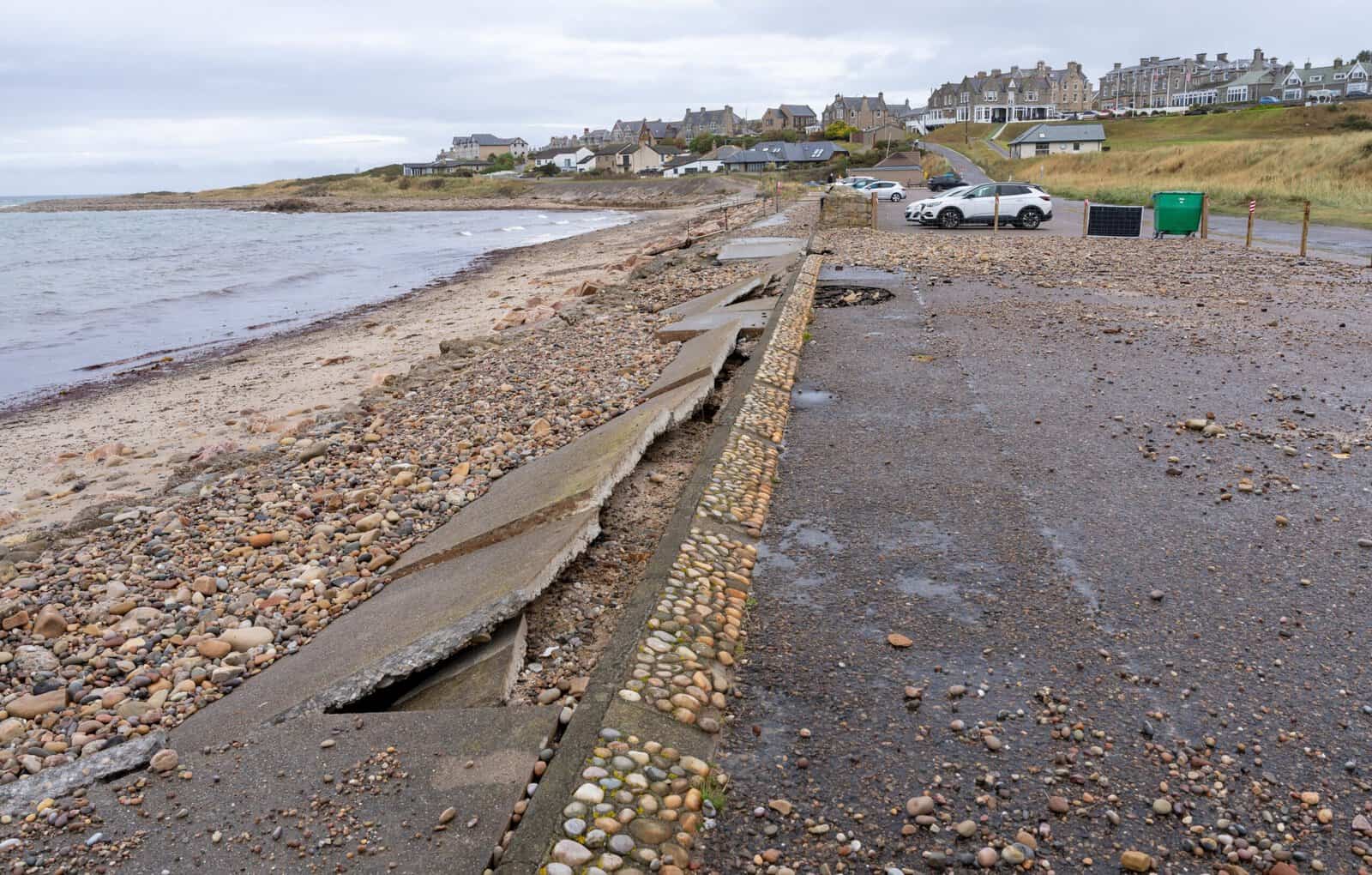
The coast has its own set of hard and soft defences, and they are planned differently. Twenty shoreline management plans cover the English open coast, and each sets one of four policies for a stretch of shoreline: hold the line, advance the line, managed realignment or no active intervention. Plans are drawn on sediment cells rather than council boundaries, because any structure that traps drifting beach material starves the coast downdrift of it. Terminal groyne syndrome, where erosion jumps to the unprotected beach beyond the last groyne, is the standing example.
Soft engineering places or moves sediment instead of building structures. The Lincshore scheme has recharged the Lincolnshire beaches between Mablethorpe and Skegness every year since 1994, protecting around 20,000 homes, 1,700 businesses and 24,500 static caravans; the 2017 campaign alone cost £6.8m.
Soft defence is a permanent running cost, not a one-off project: a recharged beach starts washing away the day the work finishes.
Natural features do similar work. The Office for National Statistics estimates that saltmarsh in England reduces flood risk to 54,838 hectares of land behind it, including more than 87,000 urban homes, and values the assets it protects at £1.79bn. Where holding the line is no longer sustainable, the defence is set back on purpose; at Medmerry in West Sussex a £28m realignment created 183 hectares of intertidal habitat and improved protection for 348 properties. Moving people away, the far end of the same choice, is covered in the article on managed retreat, and the pressure behind it in sea level rise and coastal flooding.
Catchment-scale measures
Catchment-scale measures slow and store water across the land before it reaches the river: leaky barriers in headwater streams, runoff ponds in field corners, woodland and peat restoration. The Environment Agency calls this working with natural processes, and its evidence directory, updated in February 2025, draws on more than 700 papers across 17 measures. The evidence is strongest for small upland catchments in frequent floods. It is weakest for large rivers in rare ones.
- Leaky barriers store less than their design volume. The Environment Agency's benefits estimation method assumes they deliver 23% of their design storage, so a promoter quoting design storage is overstating the benefit.
- They work best in small catchments. The same report finds only minor effectiveness in catchments larger than 25 square kilometres.
- They are not cheaper per cubic metre. Belford in Northumberland stored water at around £37.50 a cubic metre, against £10 to £50 for large engineered earthworks. The case rests on the other benefits delivered alongside flood storage.
- The funding position has improved. Since April 2026, at least 3% of flood investment over three years and 4% over ten must go to these measures, with a floor of £300m over the decade.
More detail on schemes that have been built sits in the articles on natural flood management schemes and the Environment Agency's research, and on the effect of the tree planting shortfall.
SuDS and surface water control on development sites
Sustainable drainage systems are the flood defence most developers deal with directly. They arrive as a planning requirement, not a public scheme. Defra published national standards for sustainable drainage systems in June 2025, including a destination hierarchy that puts collection for reuse and infiltration ahead of discharge to a sewer. Under Policy F8 of the August 2026 National Planning Policy Framework, development that could affect drainage should use SuDS designed in accordance with those standards, proportionate to the scheme. Schedule 3 of the Flood and Water Management Act 2010, which would have put the standards on a statutory footing and ended the automatic right to connect surface water to the public sewer, is still not in force in England, so the requirement runs through planning policy alone. The 2025 national SuDS standards article and the summary of the new Framework set out the detail, and a surface water drainage strategy is how an application shows compliance.
Temporary and demountable defences
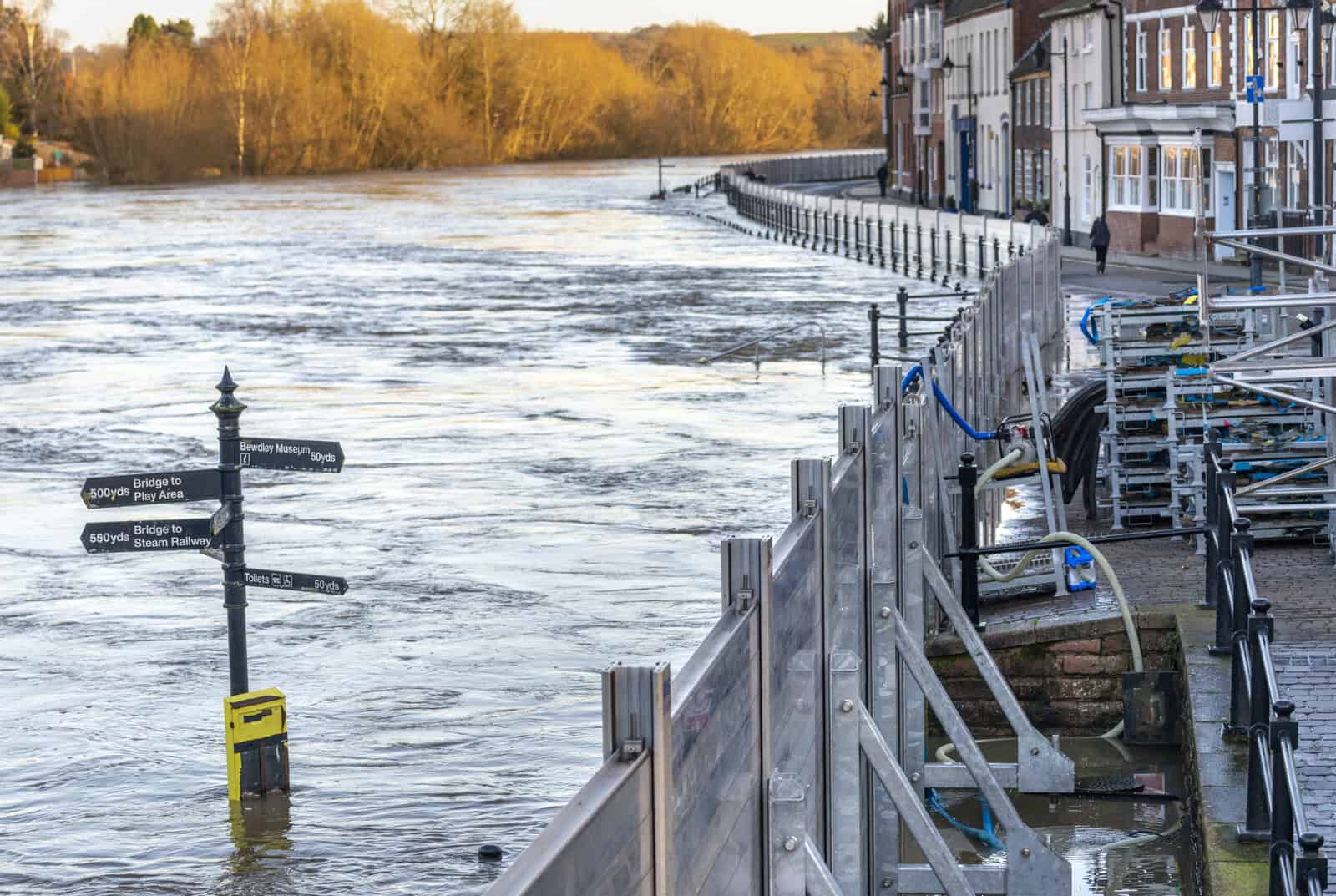
Demountable defences use permanent foundations and sockets, with panels stored off site and fitted when a flood is forecast. They give close to the protection of a fixed wall without blocking views or access for the rest of the year. Historic riverfronts use them for that reason. Temporary barriers are free-standing units taken to a site and put up when needed, with nothing permanent in the ground.
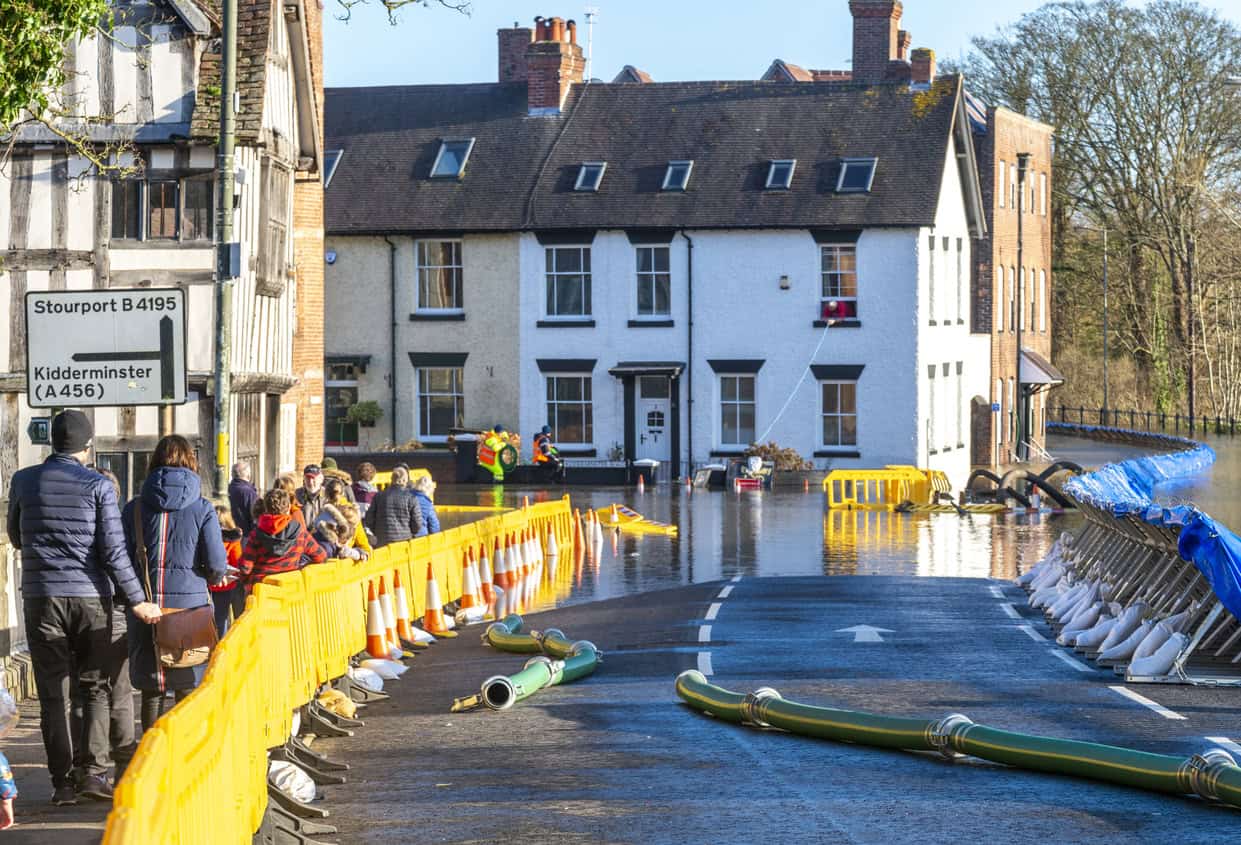
Both depend on warning time. Shrewsbury's Frankwell defences need six to twelve hours of notice, and at Bewdley on the Severn an earlier temporary system of 2,000 components took up to twelve hours to erect. Where warning is short or absent, the normal condition for surface water, an active barrier cannot be relied on and the design has to be passive.
Protection for individual properties
Home flood defences are what most people search for, and the technical term, used by insurers, grant schemes and the CIRIA C790 code of practice alike, is property flood resilience. It splits into two strategies that are often confused. Flood resistance keeps water out, with flood doors, barriers, self-closing airbricks and non-return valves. Flood recoverability accepts that water will get in and uses materials and layouts that dry out and clean up quickly. Keeping water out is generally treated as safe up to around 600mm of depth without a structural assessment; above roughly 900mm, the pressure on the walls means letting water in is usually the safer option.
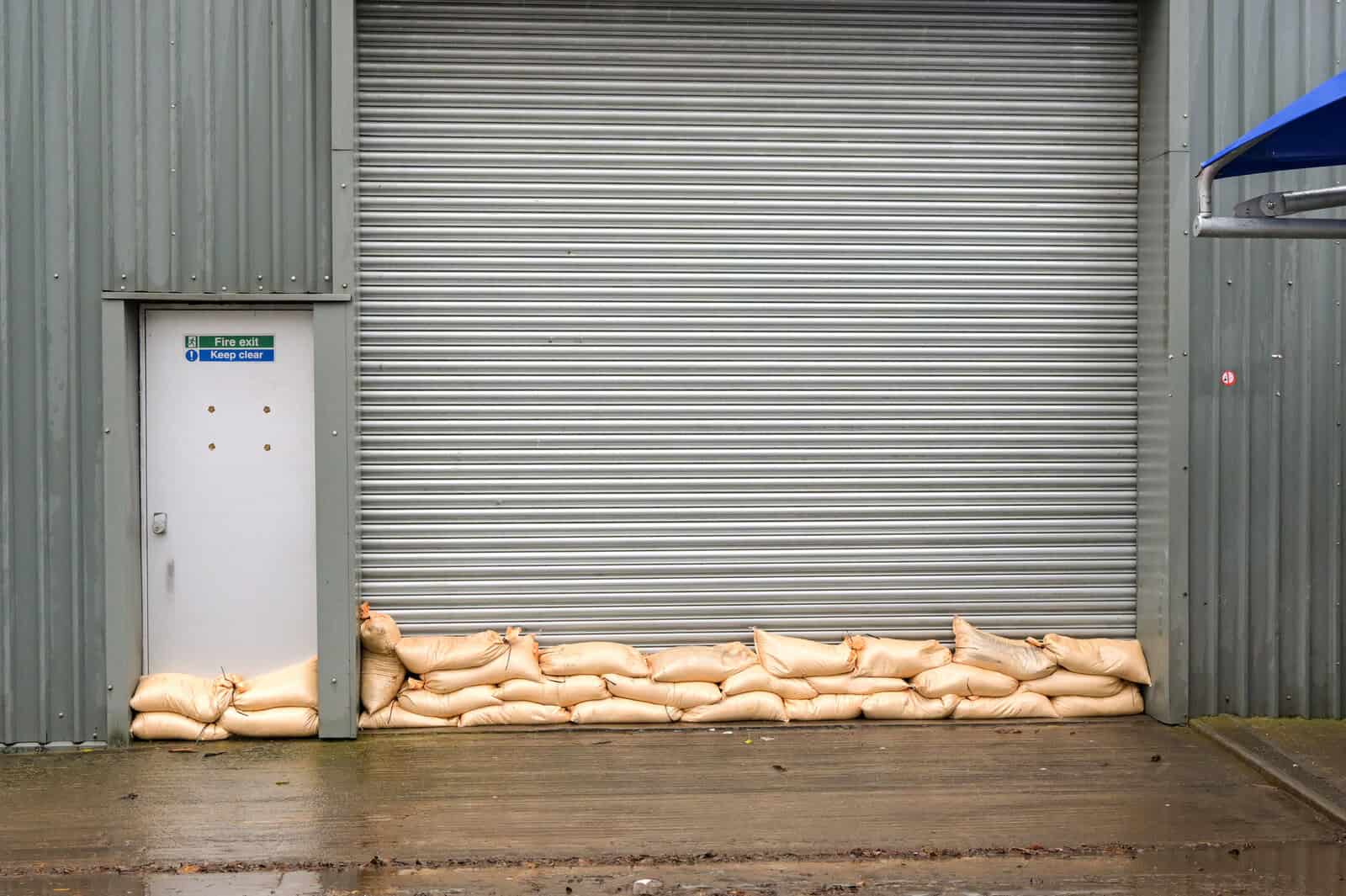
A resistance package is only as good as its weakest entry point. Miss one airbrick or cable duct and the property floods anyway. That is why a survey comes before any product is bought. The articles on property flood resilience and planning and on how to protect your home from flooding go further.
Do flood defences stop all flooding?
No. Every flood defence has a design limit and several ways to fail, and the risk that remains once a defence is built, which planning and insurance both still have to deal with, is residual flood risk. The Environment Agency's Fluvial Design Guide lists six ways a wall or embankment can fail: overtopping, breach, rotation, sliding, piping beneath the structure and rapid drawdown. Operating experience adds blocked screens and culverts, pump and power failure, stuck gates and temporary barriers not put up in time.
Most river defences in England are designed to the 1% annual exceedance probability event and many tidal ones to the 0.5% event, with an allowance for climate change added on top for anything built in the last decade. What happens at the design event is known. What matters is what happens just beyond it: where the water goes when it overtops, how fast, and whether the defence fails gradually or all at once.
The Foss Barrier in York is the standard English example. On 26 December 2015 water got into the pumping station and the Environment Agency had to lift the barrier, letting water from the swollen Ouse back up the Foss into the city. More than 600 homes and businesses flooded, and the fix became the £38m upgrade in the barriers table above.
Only 93% of flood defence assets in high-consequence systems were at the required condition on 1 April 2026, against 97.9% in March 2019.
Condition matters as much as design, and between 2019 and 2025 it slipped. The Environment Agency's national report records that figure recovering from 92.8% a year earlier, but only after £108m was redirected into repairs and refurbishment over two years. The article on below-standard flood defences covers that gap, and the National Audit Office findings cover the programme behind it.
What do flood defences mean for a development site?
A flood defence near a site does not take it out of the flood zone, does not remove the Sequential Test and does not set the floor levels. Planning treats the defended case as one scenario among several. The design has to work if the defence is overtopped or breached, and an application that treats "defended" as "safe" draws an Environment Agency objection or a refusal.
A defended site in Flood Zone 3 is still in Flood Zone 3, and a new scheme next door does not change that.
- The flood zones ignore defences. The note to Annex F of the August 2026 Framework says Flood Zones 2 and 3 do not account for the benefits of flood defences. Only the functional floodplain, Zone 3b, is assessed with defences working. The article on why a site can still be in a flood zone after new defences explains the mapping.
- The Sequential Test still applies. Policy F5 gives no exemption for a defended site, and planning practice guidance says the test places the least reliance on measures like flood defences. An application that relies on a nearby defence to avoid the Sequential and Exception Tests can be refused on that ground alone.
- The breach case often sets the design. The flood risk assessment has to show what happens if the defence is overtopped or breached. Environment Agency standing advice sets floor levels at least 600mm above the estimated flood level, and on a defended site that level often comes from a breach scenario. That can remove ground-floor bedrooms, change the layout or cut the number of units.
- Condition and ownership count. A defence below its required condition, or a private wall that nobody has a duty to maintain, gives less protection than a map or a sales brochure suggests, and the assessment has to say so.
A defence changes the residual risk argument; it does not remove the need to make one. Fixing the breach case after submission costs months. Designing for it at the outset costs a model run and a floor level.
Behind a flood defence?
Find out what the breach case means for floor levels, access and layout before the application goes in. Quotes are returned within 60 minutes.
Start a quoteWho builds, pays for and maintains flood defences?
Almost every flood risk management power in England is permissive, not mandatory. No authority has a duty to defend any particular property, and the owner remains responsible for keeping water out of a building. The Environment Agency leads on main rivers, the sea and reservoirs, while lead local flood authorities, which are the county or unitary councils, cover surface water, groundwater and ordinary watercourses. Internal drainage boards run at least 500 pumping stations across 1.2 million hectares of low-lying land. Riparian owners hold the largest single block of flood defence assets in the country. Most do not know it. The guide to who is responsible for managing flood risk in England sets out each role.
Funding changed on 1 April 2026. Under the new funding policy the partnership funding calculator has gone, refurbishment of existing assets is eligible for 100% grant, and new schemes are funded at 100% of the first £3m and 90% above that. A written ministerial statement of 17 March 2026 committed £1.4bn for 2026–27 across more than 600 schemes, within £4.2bn over three years and a £7.9bn ten-year programme. The article on the 2026 funding reforms works through what changed. In 2025–26 the Environment Agency invested £982m and better protected 34,355 properties.
Maintenance has long been the best-value spend. The National Audit Office reported in 2023 an Environment Agency estimate that optimal maintenance returns £11 for every £1, against £4.80 for the reduced capital programme, yet maintenance is the budget that has been squeezed hardest. CIRIA guidance now sets out where community groups can help.
| Scheme or measure | Cost | Properties benefiting | Approximate cost per property |
|---|---|---|---|
| Hull Humber Frontage | £42m | 113,000 | Around £370 |
| Nottingham Left Bank | £45m | 16,000 | Around £2,800 |
| Salford Littleton Road storage | £10m | 2,000 | Around £5,000 |
| Boston Barrier | Over £100m | 14,800 | Around £6,800 |
| Bridgwater Tidal Barrier | £249m | 12,800 | Around £19,500 |
| Ipswich Tidal Barrier | £67.4m | 2,030 | Around £33,000 |
| Bewdley Beales Corner | Around £10m | 50 | Around £200,000 |
| Property flood resilience package | £6,000 to £16,000 | 1 | £6,000 to £16,000 |
The cheapest properties to protect have mostly been protected already. Each new scheme costs more per property than the last. At the top of the range, engineered defence and property-level measures converge: at Bewdley, a £16,000 package for each of the 50 properties would have cost around £800,000 against £10m. Resilience measures would not have kept the road open or protected the town's trade, so the scheme was not wrong, but the comparison should be made openly.
How Unda assesses defences on a site
For most developers, homeowners and applicants, what matters is the residual risk left behind a defence, a compliant drainage strategy and the measures built into the property. Unda's consultants assess defences as part of a flood risk assessment for planning, setting out the standard of protection, the asset's condition and owner, and the breach and overtopping cases that set floor levels and safe access. Where the breach levels are not published, flood modelling can produce them. For a house purchase behind a defence, a flood risk survey explains what the defence does and does not cover.
Local detail on the defences near a particular site is organised by area, by river and by local authority. To discuss a site, call +44 (0) 1293 214444 or email enquiries@unda.co.uk.
Frequently asked questions
How long does a flood defence last before it needs replacing?
It depends on the material and on whether anyone maintains it. Environment Agency cost estimation work gives masonry seawalls around 90 years to failure without maintenance, concrete around 80 years with maintenance and steel sheet piling around 60. Rock revetments last around 50 years, timber groynes 10 to 25 and gabions only 5 to 10. Design life is not the same as remaining life: what matters is the asset's current condition, and the Environment Agency is developing a new asset health measure alongside its condition grades.
Can a landowner build their own flood defence?
Often, though rarely without consent. Work on or near a main river needs a flood risk activity permit, work affecting an ordinary watercourse needs consent, and a bund or wall may need planning permission. Whatever is built must not increase flood risk to anyone else.
Does dredging count as a flood defence?
Not in the way it is usually presented. Dredging increases the capacity of a channel locally and can drain flooded land faster after an event, but it rarely changes the peak of a large flood, has to be repeated indefinitely and can move risk downstream. It is a maintenance activity with a recurring cost. The response on the Somerset Levels is the best-known English example of the debate.
Are new homes in England required to be built flood resilient?
Not by the Building Regulations. Approved Document C states that flood resistance is not currently a requirement, and the March 2026 government response on the Future Homes Standard does not address flooding at all. Flood resilience on new homes is delivered through planning conditions, set on the advice of the Environment Agency and the lead local flood authority.
Who should a flood defence in poor condition be reported to?
Start with who owns it. Defences on a main river or the coast are usually the Environment Agency's, and its incident line takes reports. Assets on an ordinary watercourse fall to the lead local flood authority, or the internal drainage board within a drainage district. A wall, bank, culvert or screen on private land is almost always the riparian owner's responsibility, and third-party assets outnumber the Environment Agency's own in England, so that is the most likely answer.
What are the three methods of flood control?
Planning guidance sets a hierarchy of avoid, control and mitigate. Avoiding means keeping development out of flood risk areas altogether or, where that cannot be done, raising it above the flood level so that the water never reaches the floor. Controlling means managing the water itself, with defences, storage and drainage. Mitigating means reducing the harm from what is left, through resistant and recoverable construction, warnings and safe access. Defences sit in the middle step, which is why planning expects avoidance to be tried first.
About the author. Edward is a co-founder and Director of Unda with 20+ years in flood risk and drainage, and a national-press commentator on flooding. Unda has been trading since 2014, is a CIWEM Business Partner with CIWEM member and chartered (C.WEM MCIWEM) consultants, and has delivered 5,000+ flood risk assessments and drainage strategies across England and Wales.
Edward Bouët · BSc (Hons)
Latest news


One of our experienced Flood Risk Consultants will get back to you within 60 minutes