£7.9bn Flood Defence Programme: What the Money Actually Buys
Estimated reading time 13 minutes
The £7.9 billion flood defence programme is the ten-year capital settlement for flood and coastal erosion risk management in England. It was set at the June 2025 Spending Review, started on 1 April 2026 and runs to March 2036. Over that decade the government expects it to benefit 840,000 properties.
Most coverage stops there. The harder question is what £7.9 billion actually buys, and four other figures are in circulation for the same programme, which is where the confusion starts. The money is capital rather than maintenance, which matters more than it sounds, because the defences most likely to let a community down are the ones that already exist. And none of it changes the flood map your planning application will be judged against.
The programme is expected to benefit 840,000 properties over ten years. There are currently 6.3 million homes and businesses in England in areas at risk of flooding from rivers, the sea or surface water.
What is the £7.9 billion flood defence programme?
It is the capital budget for building, replacing and refurbishing flood and coastal erosion defences in England between April 2026 and March 2036, allocated by Defra and spent mainly through the Environment Agency and other risk management authorities. The Environment Secretary at the time of the announcement, Steve Reed, called it the largest flooding programme in the country's history, and on the raw cash figure it is.
Protecting citizens is the first duty of any Government. Yet we inherited crumbling flood defences in their worst condition on record, exposing thousands of homes. Under the Plan for Change, this Government is taking urgent action with the largest flooding programme in our country's history.
Steve Reed · then Secretary of State for Environment, Food and Rural Affairs, June 2025
The programme changed shape as well as size. Refurbishing an existing defence now attracts full government funding rather than competing for money against new build, property flood resilience and sustainable drainage sit inside the eligible list alongside walls and embankments, and nature-based measures have a defined funding route for the first time. That last change has been a long time coming.
None of that alters how a site is assessed. If you are preparing an application, the evidence still comes from a site-specific flood risk assessment for planning, not from what is being built a mile upstream.
£7.9bn, £10.5bn, £4.2bn or £1.4bn? The figures reconciled
All four numbers are correct. They describe nested periods rather than competing pots, which is why anyone comparing two of them side by side ends up with an apparent contradiction that is really an artefact of the reporting periods. £7.9 billion is capital over ten years. £10.5 billion adds the £2.65 billion already committed for 2024/25 and 2025/26. £4.2 billion is the first three years of the ten, and includes resource funding for maintenance as well as capital. £1.4 billion is this year's slice.
| Figure | Period | What it covers | Where it comes from |
|---|---|---|---|
| £2.65bn | 2024/25 to 2025/26 | Capital and maintenance under the previous two-year settlement | Announced February 2025 |
| £7.9bn | 2026/27 to 2035/36 | Capital only, the ten-year programme | June 2025 Spending Review |
| £10.5bn | 2024/25 to 2035/36 | The two figures above added together | The government's headline total |
| £4.2bn | 2026/27 to 2028/29 | Capital and resource funding for the first three years | June 2025 Spending Review |
| £1.4bn | 2026/27 | This year's allocation, across more than 600 schemes | Defra and the Environment Agency, 17 March 2026 |
£7.9 billion is capital only. The £10.5 billion headline is that capital plus the £2.65 billion spent in 2024/25 and 2025/26, which is why the two figures never reconcile on their own.
The practical consequence of the nesting is that only the first three years are firmly settled. £4.2 billion to March 2029 is a spending review commitment; the remaining seven years of the £7.9 billion are an intention that later fiscal events can revisit. Departmental capital budgets are also set in cash terms, so if construction inflation runs ahead of the forecast, the same money buys less defence. Unda has covered the £10.5bn commitment and the earlier £2bn settlement as each was announced.
Where the money goes in 2026/27
£1.4 billion is being invested in 2026/27 across more than 600 projects in every region of England. Just over £260 million of that maintains and repairs existing Environment Agency assets, with the balance, around £830 million, going to new and continuing schemes and the rest to programme delivery. The full scheme list is published by Defra and the Environment Agency each March.
More than £260 million of the 2026/27 allocation goes on maintaining and repairing defences that already exist, rather than on building anything new.
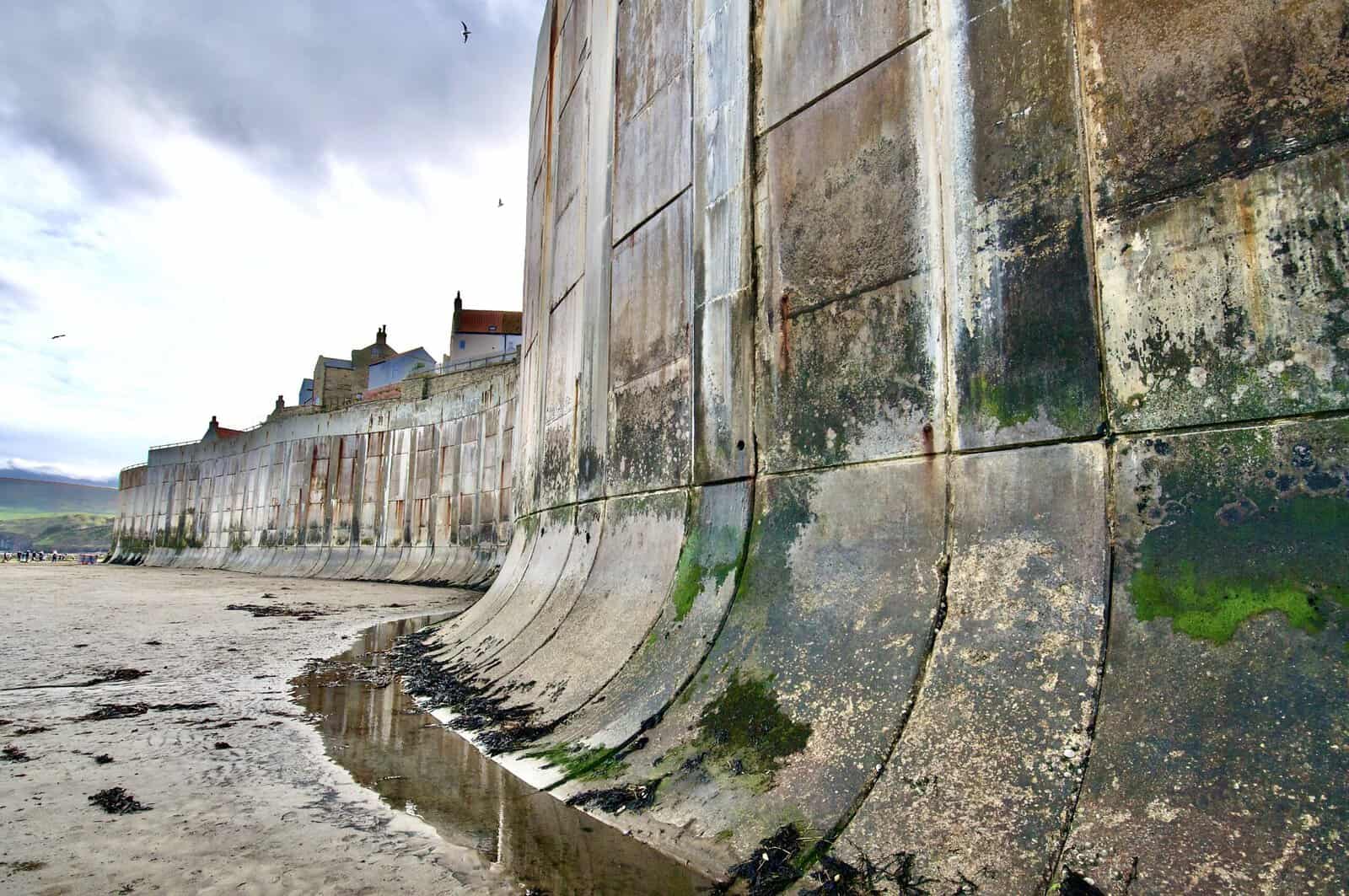
The largest allocations this year give a fair picture of what the programme actually funds. Unda has looked in detail at what a completed scheme changes on the ground, from Oxford to Skinningrove.
- Bridgwater Tidal Barrier, Somerset. £59.3 million towards a barrier intended to hold back tidal surge on the River Parrett.
- Derby, Derbyshire. £37.1 million for the next phase of the Our City Our River scheme along the Derwent.
- Kendal, Cumbria. £24.3 million, continuing the response to the 2015 Storm Desmond flooding.
- Upper Thurne, Norfolk. £20.3 million for integrated drainage improvements across the Broads.
- Blackpool, Lancashire. £17.7 million of beach nourishment, a coastal scheme rather than a wall.
- River Thames Scheme, Surrey. £17.0 million, a project that has already seen its delivery timetable slip.
- Preston and South Ribble, Lancashire. £15.2 million protecting around 5,000 homes and businesses.
Two things stand out. The list is dominated by fluvial and coastal engineering in towns with a long flood history, and several entries continue schemes that have been running for years. A programme this size is largely committed before the year begins, which is worth knowing if you are waiting on a scheme near your site. The money is not sitting in a pot waiting for a good argument.
What £7.9 billion does not buy
Maintenance. The £7.9 billion is capital, and the routine upkeep that keeps an existing wall or embankment performing as designed is resource spending, funded separately, on a much tighter horizon and with none of the ten-year certainty that made the headline announcement worth making. That distinction is the most useful thing to understand about the announcement. The condition of the estate that already exists is where the risk sits.
93.0% of assets in high-consequence systems met the required condition in 2025/26, up from 92.1%, against a long-term target of 98%.
Those condition figures come from the government's June 2026 statement on flood risk management in England, which also set a target of 70,000 properties benefiting from flood interventions by March 2027 and introduced a broader measure that counts resilience work as well as traditional defences.
Small in percentage terms. Large in properties. The National Audit Office's 2023 review of flood resilience, and the Public Accounts Committee report that followed it in January 2024, found the Environment Agency on course to better protect around 200,000 properties by 2027 against an original target of 336,000, while more than 200,000 properties sat behind defences the agency could not afford to keep in good condition. Unda has covered what the NAO found and what below-standard flood defences mean for the properties behind them in more detail.
The government's economic case rests on a benefit-cost ratio: every £1 invested is said to prevent around £8 of economic damage. It is a reasonable tool for choosing between schemes and a poor guarantee for anyone standing behind one. The ratio is an average across a national portfolio. It depends on the damages avoided being valued correctly, and it says nothing about whether a particular defence will hold on a particular night, which is the question residual flood risk exists to answer.
Surface water is the biggest risk and the smallest share of the engineering
Surface water flooding affects more properties in England than rivers and the sea combined, and it is also the source least suited to the kind of capital scheme this programme mainly funds, because the risk is spread thinly across millions of individual sites rather than concentrated behind a line you can defend. You cannot build a barrier against rainfall that has nowhere to drain.
4.6 million properties in England are at risk from surface water flooding, against 2.4 million from rivers and the sea.
The 2026 funding rules do now let sustainable drainage and property flood resilience compete for money on the same terms as hard defence, which is a genuine improvement. But the volume of surface water risk is far beyond what any public programme will retrofit, as the Environment Agency's own national report makes clear. Most of it will be managed development by development, through drainage design that holds water on site rather than passing it downstream. That is why a surface water drainage strategy is now the part of a planning submission most likely to attract an objection. In our experience it is also the part most likely to be objected to twice.
Does a new flood defence change your flood zone?
No. Flood Zones on the Flood Map for Planning are undefended extents: they show the land that would flood if the defences were not there. A new scheme changes the residual risk and the standard of protection, and it may place your site in an Area Benefiting from Defences, but the zone itself does not move. This catches people out often enough that we have written a separate piece on why a site stays in a flood zone after new defences are built.
For a planning application the consequence is direct. The Sequential Test is applied to the zone rather than to the defence, and the assessment still has to show what happens if that defence is overtopped or breached, which on a defended site is usually the part of the work that takes the longest and the part a case officer reads first. The Fowlea Brook scheme in Stoke-on-Trent is a good worked example of a defence unlocking development without moving a zone.
How the money reaches a scheme
Funding is allocated through Flood and Coastal Erosion Risk Management Grant in Aid, and the funding policy guidance changed on 1 April 2026. The route is now:
- A risk management authority develops a business case. That can be the Environment Agency, a lead local flood authority, an internal drainage board or a coastal group.
- The benefit area is mapped and the properties within it counted using national flood risk datasets.
- The scheme is scored on the economic benefit it delivers per pound of government funding requested.
- Funding follows the project type: refurbishment of an existing asset attracts 100%, while replacement and new assets are funded in full up to £3 million and at 90% above that.
- Remaining costs are met by partnership contributions, and the scheme enters the annual programme published each March.
Minimum proportions of the programme are now reserved for the most deprived areas and for natural flood management. The detail of the scoring, the optimism bias requirements and the benefits calculator is set out in our guide to the 2026 FCERM funding rules, and the year-by-year picture in our note on the £1.4bn allocation for 2026/27.
What this means if you are building, buying or holding land
The programme is good news at the national scale and close to irrelevant at the scale of a single site. Nothing in it changes the policy tests a development has to pass, the maps an assessment is run against, or the evidence a local planning authority expects to see.
A scheme in your town does not remove the need for a site-specific assessment. If anything the opposite: in a defended location the residual risk case usually carries more weight, not less, because the assessor has to show what happens when the defence is exceeded. A design standard of 1 in 100 is a standard, not a promise, and the condition figures above are a reminder that a defence still has to be maintained once it is built. Where the risk is surface water, the answer is almost always on your own site rather than in the capital programme.
Unda works with developers, landowners, councils and utilities across England and Wales on exactly these questions. If you need a flood risk assessment or a drainage strategy for planning, or advice on what a nearby scheme does and does not change for your site, get in touch.
Frequently asked questions
Is the £7.9 billion new money or a rebadging of existing commitments?
New, but not additional to everything that came before. The £7.9 billion covers 2026/27 to 2035/36 and succeeds the previous two-year settlement of £2.65 billion, which covered 2024/25 and 2025/26, so the £10.5 billion figure the government uses is simply the two added together and the apparent shortfall people spot when they compare £10.5 billion with £7.9 billion is a reporting artefact rather than a cut.
Does the programme cover Wales, Scotland and Northern Ireland?
No. Flood risk management is devolved, so the £7.9 billion applies to England only. Wales runs its own programme through Welsh Government and Natural Resources Wales, Scotland funds schemes through the Scottish Government and local authorities, and Northern Ireland through the Department for Infrastructure. A site in Wales is also assessed under TAN15 rather than the NPPF, which matters more for an application than the funding does.
Can a developer or landowner apply for money from the programme?
Not directly. Grant in Aid is allocated to risk management authorities, not to private applicants, and the flow usually runs the other way: where a scheme unlocks development value, a developer may be asked for a partnership contribution towards it, sometimes through a planning obligation attached to the permission. If a scheme near your site is short of its funding target, find that out before you negotiate.
Will the new defences change the Environment Agency's flood maps?
Not the Flood Map for Planning, which shows undefended extents by design. The National Assessment of Flood Risk products that show likelihood taking defences into account can change as schemes complete and as asset condition is updated. Those two things are often confused, and using the wrong one is a common reason a flood risk assessment is queried.
What happens to the £7.9 billion if construction costs rise faster than expected?
The figure is a cash commitment rather than an index-linked one, so construction inflation reduces what it delivers instead of triggering more money, which is partly why the 2026 funding rules require formal optimism bias percentages in early cost estimates so that schemes are appraised against realistic delivery costs. The adjustment then shows up as fewer or later schemes, not as a revised headline.
About the author. Jackie is a co-founder and Director of Unda with 30+ years in flood risk, and sits on CIWEM's South Eastern Branch committee. Unda has been trading since 2014, is a CIWEM Business Partner with CIWEM member and chartered (C.WEM MCIWEM) consultants, and has delivered 5,000+ flood risk assessments and drainage strategies across England and Wales.
Jackie Stone · MSci, BSc (Hons), DIC, CIWEM Environmental Partner
Latest news



One of our experienced Flood Risk Consultants will get back to you within 60 minutes