Leaky Dams and Flood Risk: What They Do, Where They Work, and What They Can’t Fix
Estimated reading time 13 minutes
Anyone who has watched the latest series of Clarkson's Farm will have seen Jeremy Clarkson wading into a stream at Diddly Squat to build what he gleefully describes, after a bit of reading on the government's website, as "large, leaky, wooden dams", partly because the government will help pay for them. It is played for laughs, as most things at Diddly Squat are. But behind the comedy sits a real, well-tested piece of flood management.
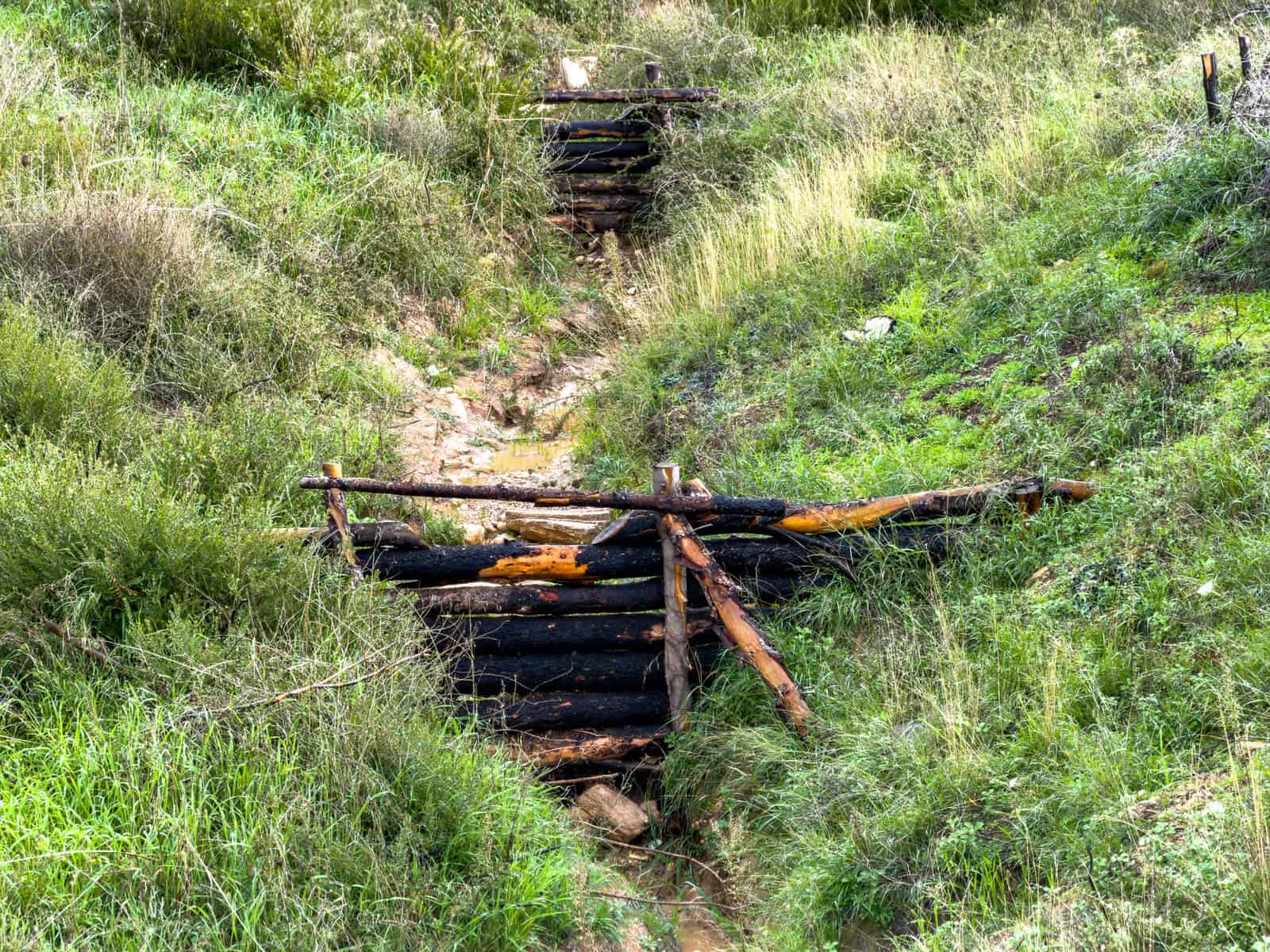
Leaky woody dams are permeable timber structures built in sequence across small streams to slow the flow, hold water back briefly and lower the flood peak downstream. In England they are a funded capital item under Countryside Stewardship, at £461.39 for a small dam and £764.42 for a large one, and the evidence behind them is real but bounded. They take the edge off the floods that happen often and do progressively less as events get more extreme.
Leaky dams are not a gimmick. They are one of the most widely trialled natural flood management techniques in the UK, they have a measurable effect on flood risk in the right setting, and they are being built at scale from the North York Moors to the Welsh valleys. They are also routinely misunderstood, including, occasionally, on television. Here is what a leaky woody dam actually does, where it works, what the grant pays and the limits worth being honest about.
At Pickering in North Yorkshire, 167 leaky woody dams and 187 heather bale dams helped cut the town's annual flood risk from around 25% to less than 4%.
What is a leaky woody dam?
A leaky woody dam, also called a leaky dam or a leaky barrier, is a partial obstruction placed across a small stream or ditch, usually built from logs, branches and woody material. Unlike a conventional dam, it is designed to leak. Water passes through and around it most of the time, so the channel keeps flowing and fish and sediment can move through. It only does its real work when flows rise.
The idea is to mimic what a fallen tree, or a beaver, would do naturally: hold the channel back a little, raise water levels behind the structure during heavy rain, and spill some of that water out sideways onto the surrounding land. Leaky dams are rarely built singly. They are installed in sequences of tens or even hundreds along a watercourse, so their individual effects add up across a catchment.
The split between a small and a large leaky woody dam is a funding distinction rather than a hydraulic one. Countryside Stewardship separates them by channel width: item RP32 covers streams between 1m and 2.99m wide, and RP33 covers channels between 3m and 5m. Anything wider sits outside both.
How leaky dams reduce flood risk
The principle behind every leaky dam is the same one that underpins almost all good drainage thinking: slow the water down. A flood happens when too much water arrives in one place too quickly. Anything that delays and spreads that arrival reduces the peak flow.
A leaky dam does this in a few ways. It provides temporary attenuation behind the structure during a storm, holding back volume that would otherwise rush downstream. It pushes higher flows out of the channel and onto the floodplain, where the water sits, soaks in and is released slowly over the following days. And across a whole series of barriers, it desynchronises the catchment, so water from different tributaries no longer arrives at the vulnerable town or junction all at once. That lowers and flattens the flood peak.
This is the same "slow the flow" logic that drives source control in sustainable drainage, sits at the top of the SuDS hierarchy, and underpins the broader idea of spongy landscapes that hold rainfall in the land rather than shedding it. A leaky dam is simply that principle applied to a stream channel. None of it changes what a developer has to prove about their own site, though: catchment work sits alongside a flood risk assessment for planning, never instead of one.
Do leaky woody dams actually work?
Yes, within limits, and the evidence is now reasonably good rather than merely hopeful.
The best-known UK example is Slowing the Flow at Pickering in North Yorkshire, a Defra-funded pilot led by Forest Research after the 2007 floods. The scheme placed 167 leaky woody dams and 187 heather bale dams in the streams above the town, alongside a flood storage bund and new woodland. Together these measures helped cut Pickering's annual flood risk from around a 25% chance in any given year to less than 4%. It remains the reference case for what coordinated natural flood management can achieve.
Controlled research backs this up. A study by Cardiff University and the University of Worcester monitoring leaky barriers on a small Shropshire river found the structures could store enough water during a major event like Storm Dennis to fill more than four Olympic swimming pools. Upland modelling studies typically find leaky dams shave around 10% off the flood peak for smaller, more frequent storm events.
Two more recent pieces of work sharpen the picture. A three-year before-and-after monitoring study on three streams in Coverdale, in the Yorkshire Dales, is one of the few UK assessments built on measured stage data rather than modelling alone. And in January 2026 researchers at Loughborough University reported that once sediment movement is written into the models, leaky dams can cut peak flows by up to a third in storm events, while stressing that the structures are dynamic, reshape as the river reshapes around them, and need monitoring rather than a one-off build.
| Study or scheme | Where | What it looked at | Headline finding |
|---|---|---|---|
| Slowing the Flow | Pickering, North Yorkshire | 167 leaky woody dams, 187 heather bale dams, a storage bund and new woodland | Annual flood risk cut from around 25% to under 4% |
| Cardiff University and University of Worcester | Shropshire | Monitored leaky barriers on a small river | Storage in a Storm Dennis-scale event equal to more than four Olympic swimming pools |
| Coverdale monitoring study | Yorkshire Dales | Three years of measured stage data across three streams | A rare UK dataset built on measurement rather than modelling alone |
| Loughborough University, January 2026 | Modelling study | Leaky dams simulated with sediment movement included | Peak flows reduced by up to a third in storm events |
| Typical upland modelling | UK uplands | Smaller, more frequent storms | Around 10% off the flood peak |
That last line matters. The honest reading of the evidence, set out in more detail in our look at the Environment Agency's natural flood management research and in the EA's own Working with Natural Processes evidence directory, is that leaky dams are most effective against the floods that happen often, and progressively less effective as events get more extreme. They take the edge off the regular soakings, not the once-in-a-generation deluge.
Where leaky dams work, and what they can't fix
Leaky dams are not a universal answer, and treating them as one is the quickest way to be disappointed.
They work best in small, steep, upland catchments with narrow channels, where there is room on the floodplain for water to spill into and a town or asset downstream worth protecting. They work poorly, or not at all, on large lowland rivers where fluvial flood risk is driven by a far bigger catchment, in deep engineered channels, or where there is simply nowhere for displaced water to go. In the wrong place a leaky barrier can move a problem rather than solve it. That is exactly why the work needs designing, not simply doing.
- Scale. A handful of dams on one farm makes little difference, and meaningful flood reduction needs many structures across a catchment, which means cooperation between landowners.
- Extreme events. As storms get rarer and larger, the proportional benefit falls away, so leaky dams should sit alongside engineered defences and property-level resilience, not replace them.
- Your own site. A leaky dam upstream does not remove the need for a site-specific flood risk assessment or a compliant drainage strategy.
Natural flood management reduces risk across a catchment. It does not exempt a site from demonstrating its own safety.
For a fuller view of where these techniques sit in the toolbox, and the genuine evidence gaps that remain, our article on nature-based flood and drought resilience is a useful companion, as is our overview of natural flood management schemes more broadly.
How much does the government pay for a leaky woody dam?
Countryside Stewardship pays £461.39 for each small leaky woody dam and £764.42 for each large one, under capital items RP32 and RP33. Both are available through Capital Grants 2026, which opened in July 2026 with £225 million behind it, and through Countryside Stewardship Higher Tier. Both also need written support from a Catchment Sensitive Farming adviser before you apply.
| Capital item | Channel width | Ephemeral streams and surface water pathways | Payment |
|---|---|---|---|
| RP32 small leaky woody dams | 1m to 2.99m wide | Overall dam length under 10m | £461.39 per dam |
| RP33 large leaky woody dams | 3m to 5m wide | Overall dam length under 15m | £764.42 per dam |
Clarkson was right about one thing: the government will contribute to the cost. What the television version leaves out is how much of the money is governed by conditions that have to be met before a single log goes in the water, as the GOV.UK guidance on RP32 and RP33 sets out.
- Catchment Sensitive Farming. RP32 and RP33 are among 24 capital items that need written support from a CSF adviser following an advisory consultation.
- A £25,000 ceiling. Natural flood management is one of six item groups in Capital Grants 2026, and that group is capped at £25,000 per application.
- One application a year. The Rural Payments Agency accepts one eligible Capital Grants application per calendar year for each Single Business Identifier you manage.
- Nothing paid retrospectively. The grant cannot pay for capital works done, or materials bought, before your agreement starts.
- No fixed deadline. The round closes when the available funding is allocated, with notice given on Defra's Farming blog.
- Targeting still applies. The items are aimed at catchments with permeable soils where groundwater recharge is the goal, or areas targeted for flood risk and water resource benefit.
One point of confusion is worth clearing up, because the schemes have moved around a good deal. The leaky dam grant is not a Sustainable Farming Incentive item. SFI26 reopened in 2026, with a first window running to the end of August and a second opening in September, but the money for leaky woody dams sits in Countryside Stewardship, not there. Funding is best treated as a helpful contribution toward a scheme that already makes sense, rather than a reason to build in the first place.
What consent do you need before building one?
Placing a structure in a watercourse usually requires consent before any work begins. On an ordinary watercourse that means ordinary watercourse consent from the lead local flood authority; on a main river it means an Environment Agency flood risk activity permit. Owning land next to a watercourse also carries riparian responsibilities that do not go away because the structure is well-intentioned.
The grant conditions say the same thing in their own words. Both RP32 and RP33 warn that you may need prior consent from the Environment Agency, your lead local flood authority or an internal drainage board, and the Catchment Sensitive Farming consultation is usually where that surfaces. As Clarkson also discovered, you generally cannot just start digging. Building first and asking later is how a well-intentioned project becomes an enforcement problem.
What it means for landowners and developers
For a farmer or estate, leaky dams are a low-cost way to hold water in the landscape, reduce downstream flooding, settle sediment and support biodiversity, provided they are placed where they will help and consented properly. For developers, the more important takeaway is the opposite of reassurance: upstream natural flood management is part of the catchment picture that assessments are expected to account for, but it never substitutes for getting your own site right. Headline reduction figures from a named scheme cannot be borrowed for an unrelated site, and climate change allowances still apply in full whatever is happening upstream.
If your scheme sits below a catchment where this kind of work is happening, or you need to demonstrate how surface water and river flows behave around your site, that is squarely a question for a flood risk assessment, a surface water drainage strategy and, where the data is coarse, site-specific flood modelling. Unda can help with all three.
Frequently asked questions
Are leaky dams the same as beaver dams?
They are designed to imitate them. Beavers build leaky structures instinctively, and reintroduced beavers have produced measurable flood and habitat benefits on rivers like the Otter. Engineered leaky dams replicate the effect in places where beavers are not present or not wanted.
Do leaky dams cause flooding upstream?
Deliberately, and in a controlled way, which is the point. They raise water levels and spill flow onto land that can tolerate temporary flooding, to keep it away from places that cannot. Problems only arise when they are placed without regard to what lies upstream, which is why design and consent matter.
Can a leaky dam replace a flood defence or an FRA?
No. Leaky dams reduce flood risk across a catchment, particularly for frequent events, but they do not remove the need for engineered defences in high-risk locations or for a site-specific flood risk assessment where planning policy requires one.
How long do leaky dams last?
Being made of natural material, individual structures degrade over years and need maintenance or replacement. This is a feature, not a flaw, but it does mean a leaky dam scheme is an ongoing commitment, not a one-off build.
Who is liable if a leaky woody dam causes damage downstream?
The riparian owner is. Common law duties on anyone owning land beside a watercourse include not obstructing flow to the detriment of others, and a consent from the lead local flood authority or the Environment Agency does not transfer that duty away. Keeping the design evidence, the consent correspondence and a maintenance record is the practical protection.
Can I build leaky woody dams without a Catchment Sensitive Farming adviser?
You can build them, but you cannot claim RP32 or RP33 for them. The adviser's written support is a condition of the grant, not of the work. Self-funded structures still need whatever watercourse consent applies, and still benefit from the catchment reasoning the adviser would have brought.
About the author. Charlotte is Unda's Marketing Manager, and is completing an MSc in Marketing at the London School of Economics. Unda has been trading since 2014, is a CIWEM Business Partner with CIWEM member and chartered (C.WEM MCIWEM) consultants, and has delivered 5,000+ flood risk assessments and drainage strategies across England and Wales.
Charlotte Stone · BSc (Hons)
Latest news



One of our experienced Flood Risk Consultants will get back to you within 60 minutes