Temporary and Demountable Flood Barriers: How They Work, and Why Warning Time Decides
Estimated reading time 21 minutes
Temporary flood barriers are free-standing units brought to a site and put up when a flood is forecast. Demountable flood barriers slot into foundations, sockets or channels that stay in the ground all year. Both are active defences, which means they protect nothing until a crew has erected and sealed them, so the warning time available decides whether they work at all. This guide sits alongside the overview of every type of flood defence and the guide to permanent flood walls and embankments, and covers how these barriers work, what they cost to own and how they fail. It also covers why a planning authority will not accept one as the protection for a new building, which is the question a flood risk assessment for planning has to answer.
The Environment Agency's standing advice says temporary or demountable barriers are not appropriate for new buildings, which rules them out as the protection for any new home or workplace.
Temporary or demountable: what is the difference?
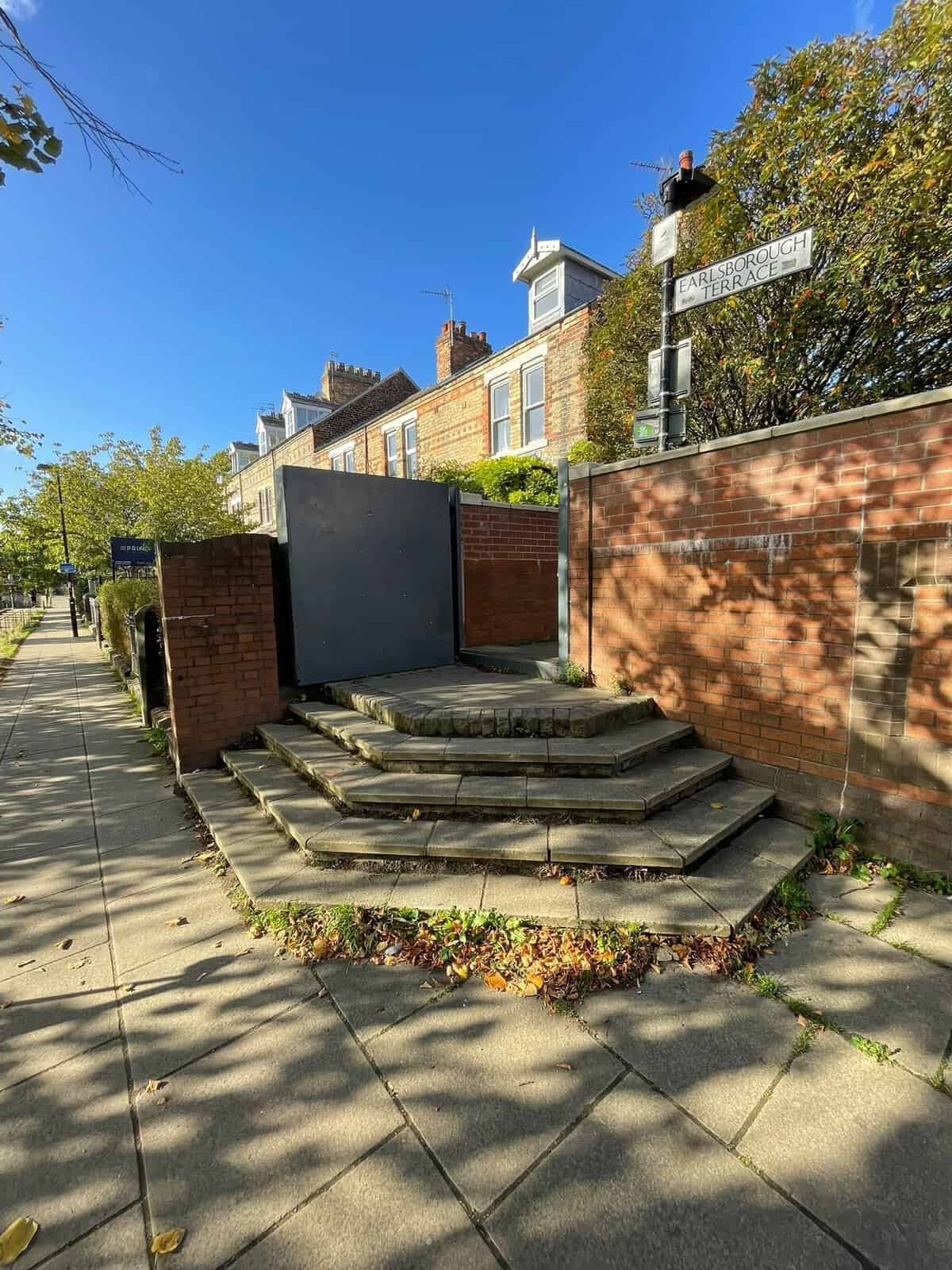
The difference is what stays in the ground. A temporary barrier is installed wholly during a flood and removed completely afterwards, so it sits on whatever surface is there. A demountable flood barrier is part-built in advance: the foundation, the sockets and the seals are permanent, and only the panels or beams are fitted when a flood is coming. The Environment Agency's Temporary and Demountable Flood Protection Guide draws the line in exactly that place.
That one difference drives everything else. A demountable line has a designed foundation and a seepage cut-off below it, so its performance is known before the flood. A temporary line relies on the ground it is placed on to stop water passing underneath, which is why ground conditions matter far more for temporary systems.
| Feature | Temporary flood barriers | Demountable flood barriers |
|---|---|---|
| What is permanent | Nothing; the whole barrier is brought in and taken away | Foundations, sockets, guides and seals, built into the ground or a wall |
| Where it can go | Anywhere with suitable ground, including places nobody planned for | Only the line the foundations were built for |
| Seepage control | Depends on the existing surface and subsoil | Designed into the foundation |
| Best suited to | Incident response, stop-gaps and lines too costly to defend permanently | Riverfronts where a fixed wall would block views or access |
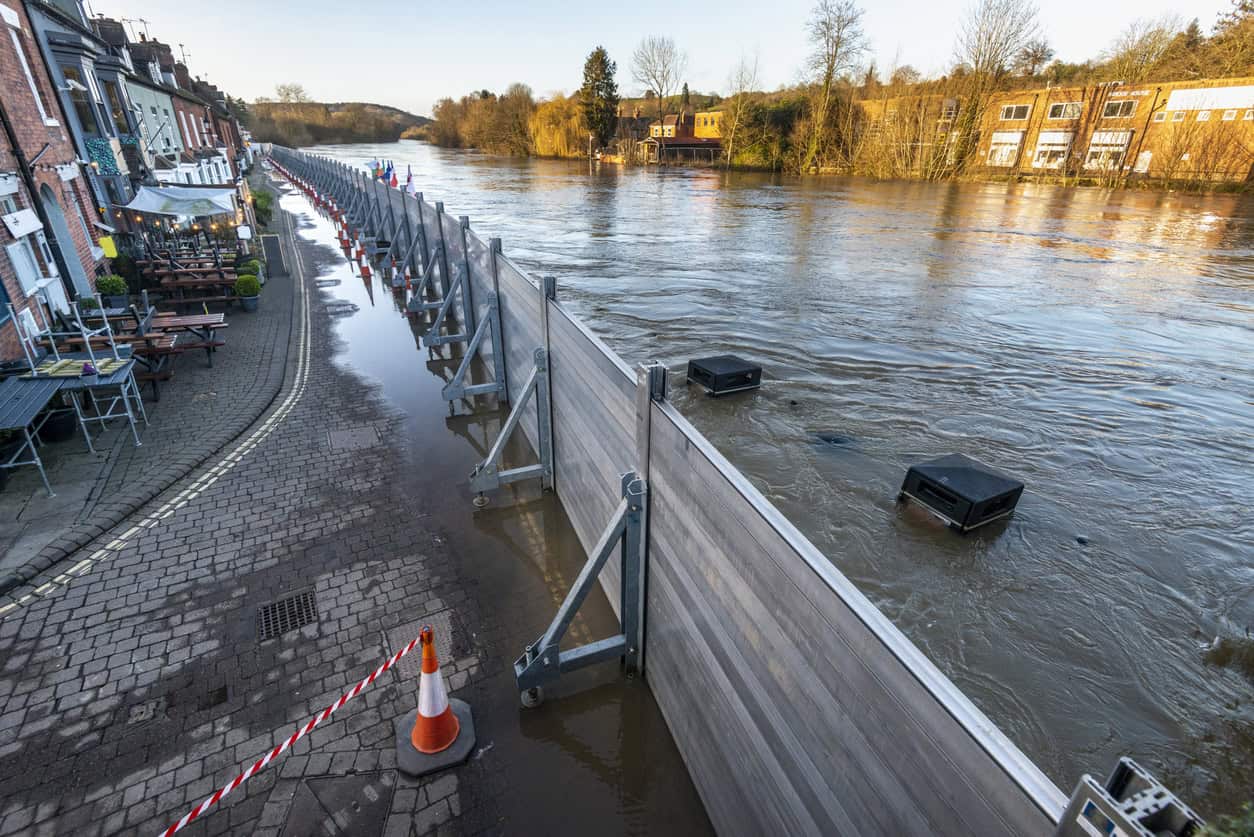
| Example | The Environment Agency's national fleet | Frankwell in Shrewsbury, completed in 2003 |
How do temporary flood barriers work?
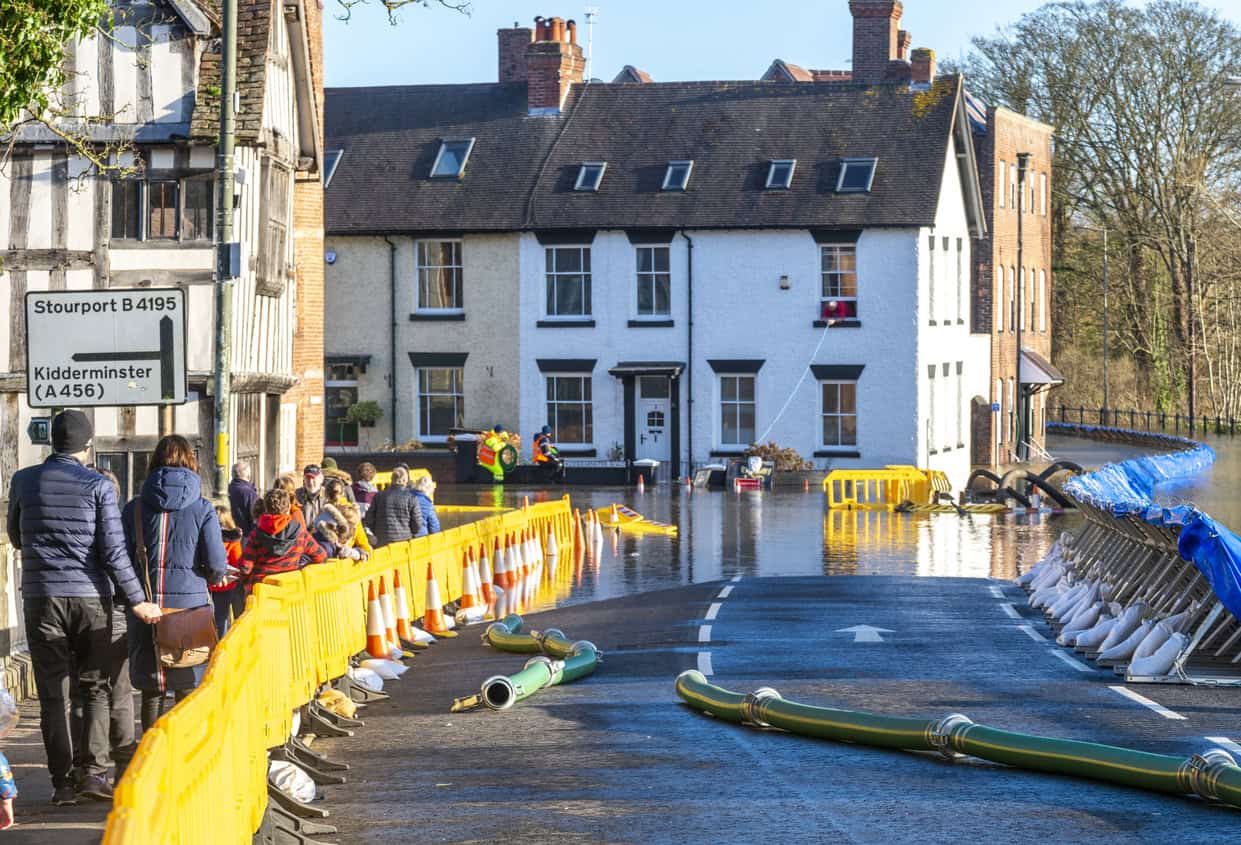
Every type does the same three jobs. It forms a watertight line between the floodwater and the land behind, it seals against the ground and against fixed structures at each end, and its own weight or shape resists the water pushing on it. Pumps then deal with whatever seeps through or falls as rain behind the line. The Environment Agency groups the products by how they hold back water:
- Tubes. Long plastic tubes filled with water or air. A water-filled tube relies on its own weight to stay put; an air-filled tube is lighter to carry and place.
- Filled containers. Boxes or bags filled on site with water, sand or gravel. Sandbags are the oldest and most common filled container.
- Freestanding and frame barriers. Rigid or flexible panels, often with a membrane draped over a frame, that the water itself presses down onto the ground to form the seal.
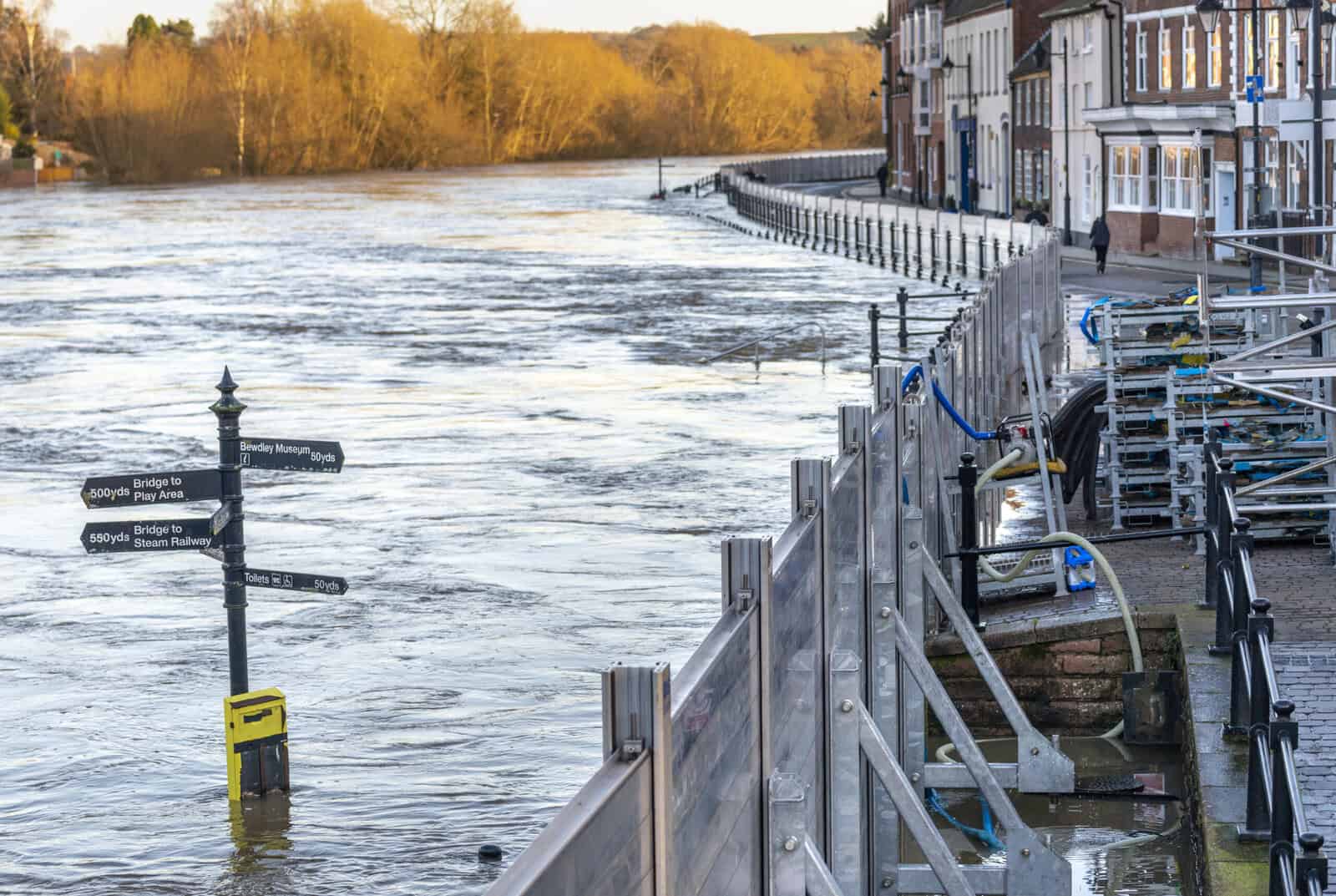
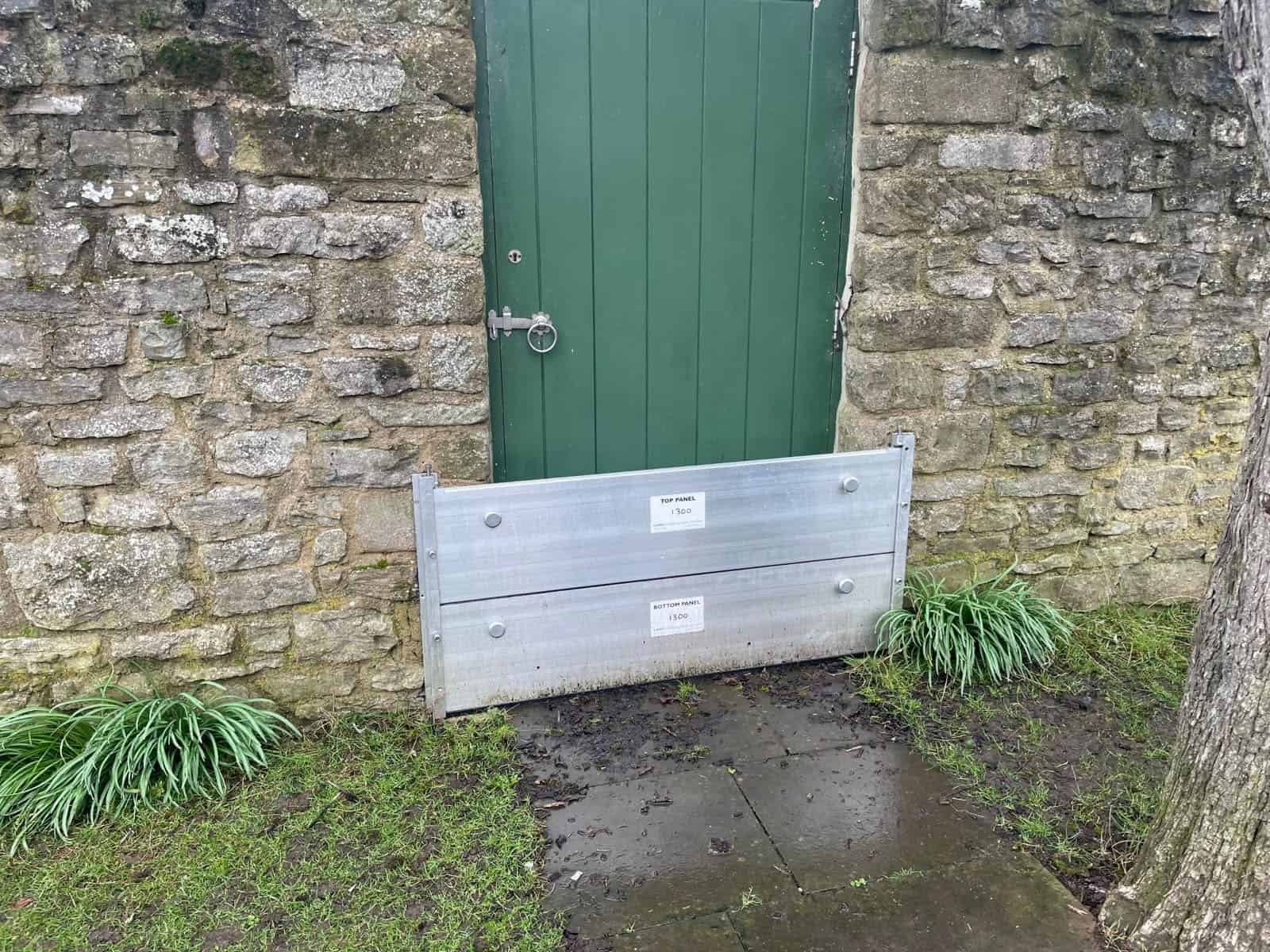
- Sectional barriers. Aluminium beams or stop logs dropped into pre-installed posts or channels. This is the commonest demountable system, and some can be fully installed ready to close.
- Self-closing and automatic barriers. Barriers that rise on a float or a level sensor as water arrives, with no crew needed. The 2011 guide notes they may be the only non-permanent option high in a catchment, where rivers rise too fast for a crew.
- Flood gates. Hinged or sliding gates in a permanent wall, closed by hand or automatically, to keep an access point open until it is needed.
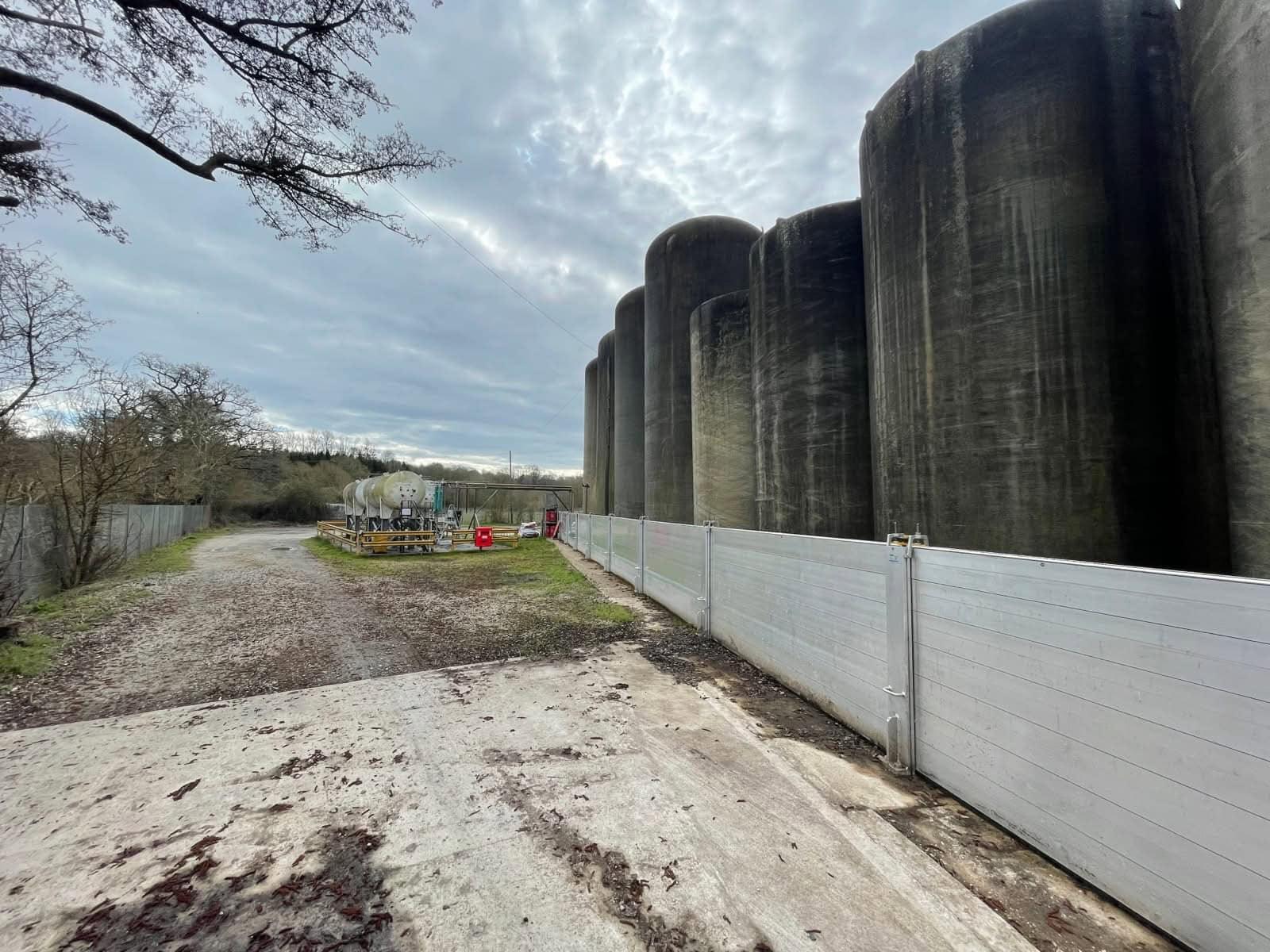
Seepage is normal. A barrier on tarmac or grass will pass some water underneath and through the joints, and products certified to the British Standard are tested for how much. That is why a deployment plan always includes pumps and the people to run them.
Why warning time decides whether a barrier works
An active barrier has two clocks running against each other. The Environment Agency's 2011 guide calls them the available lead time and the required lead time. Available lead time runs from the flood alert to the moment the river reaches the lowest point of the permanent defences; required lead time is everything a crew has to do inside that window. If the required time is the longer of the two, the river arrives first.
- Forecast and alert. A forecast or a gauge reading upstream triggers the plan. Many demountable schemes start at a fixed trigger level, so a forecast that comes in too low stops the plan before it begins.
- Mobilise. Staff are called out, and kit is loaded from a depot or store.
- Transport. Lorries and telehandlers reach the site, sometimes on roads that are already wet or closed.
- Erect and seal. Panels or tubes go up in sequence, ends are tied in, and joints are checked.
- Watch and pump. Crews stay on site to manage seepage, debris and anyone who moves the barrier.
The Environment Agency's guide describes a third way these systems fail, alongside structural collapse and water getting over or through: operational failure, where the barrier simply is not up before the water arrives.
Available lead time shrinks with steeper, smaller and wetter catchments, and the closer the site is to the top of a river. A large, slow river such as the Severn at Shrewsbury gives hours. A small, steep one gives far less, and on a river that rises through the night the crew may be setting out in the dark onto roads that are already flooding. During the Environment Agency's own 2004 barrier trials on the Severn, a complex flood with several peaks forced three severe flood warnings and brought the deployment plans forward.
Forecasting sets the outer limit. The Flood Forecasting Centre's strategic plan for 2025 to 2027 targets three days' notice of significant river and coastal flooding, and two days for significant surface water flooding, each more than 60% of the time. A national forecast of that kind tells a county to prepare; it does not tell a crew which street to defend. The article on who forecasts and who warns explains how that guidance turns into local warnings. For a development site, the same lead time sets what goes into a flood warning and evacuation plan: the trigger, who acts, and where people go if the warning comes too late.
How the Environment Agency uses temporary flood barriers
The Environment Agency keeps about 40,000 m of temporary barriers, with deployment plans for more than 100 high-risk locations and the ability to deliver anywhere in England within 12 hours, according to its 2020 explainer on temporary flood barriers. The fleet dates from the winter storms of 2015 and 2016, after which the Agency added 40 km of barriers and 250 high-volume pumps. The Agency uses them where a permanent defence is not possible or practical, and rules a location out if putting the barrier up would be unsafe for its staff or would push flooding onto a neighbouring community.
Demountable defences are the permanent end of the same idea. Shrewsbury's Frankwell scheme, finished in November 2003 for £3.5 million, combines 155 m of demountable barriers with 700 m of permanent walls. It raised 74 properties from no better than a 1 in 3 year standard of protection to 1 in 100, and at the peak of the flood on 6 February 2004 it was holding back about 1.9 m of water, according to the Environment Agency's scheme leaflet.
Over the 2025 to 2026 reporting year, Environment Agency defences protected nearly 60,000 properties while about 540 flooded across England.
Those figures come from the Environment Agency's flood and coastal erosion risk management report for April 2025 to March 2026. During Storm Chandra and the February 2026 flooding alone, defences better protected around 24,600 properties, and about 400 flooded, mostly in Cornwall, Devon, Dorset and Somerset. The report does not split out how much of that protection came from temporary barriers, so the national figures say nothing about how the barriers themselves performed.
What do temporary flood barriers really cost?
The purchase price is usually the smaller part of what a temporary flood barrier costs over its life. The Environment Agency's evidence summary on cost estimation for temporary and demountable defences (report SC080039/R10, March 2015) found that buying the barrier can be anything from 10% to 45% of its whole-life cost. Storage, training, inspection, replacement parts and every deployment make up the rest.
| Barrier type | Category | Indicative cost | What the figure covers |
|---|---|---|---|
| Water-filled tube | Temporary | £290 per m | Based on a single product |
| Air-filled tube | Temporary | £318 per m | Training costs included |
| Rigid freestanding barrier | Temporary | £145 to £470 per m | Range across several products |
| Rigid frame barrier | Temporary | £200 to £520 per m | Training costs included |
| Manual sectional barrier, fully pre-installed | Demountable | £600 to £1,900 per m | Range across several products |
| Automatic sectional barrier, fully pre-installed | Demountable | £2,100 per m | Range across several products |
| Flood gate, 5 m by 1 m | Demountable | £5,500 manual, £17,000 automatic | Training costs included |
Five barrier sites on the River Severn studied in 2006 averaged £570 per metre to buy, from £330 at Coton in Shrewsbury to £900 for a water-filled mobile dam at Coleham. Running costs on those schemes came to between 4% and 20% of the capital cost every year (11% on average), and each event added roughly £42 per metre at 2004 prices for a flood lasting about 48 hours.
In the report's worked example, a 300 m barrier bought at £400 a metre costs £120,000. Over a 50-year life with a deployment every three years, the deployments add about £113,000 and the yearly storage, inspection, training and membrane replacement add about £317,000, both at present value. The running costs alone come to more than two and a half times the purchase price. At Upton-upon-Severn, the Environment Agency costed one deployment of a 750 m barrier in September 2008 at £23,876, including a week of round-the-clock site security.
A barrier that sits in a store for two winters out of three still costs money in every one of them.
These figures are old. Today's prices will be higher. The report itself warns that event costs on past projects were "grossly under-estimated", and it tells anyone pricing a scheme to get current figures from manufacturers.
How do temporary and demountable barriers fail?
Temporary flood barriers work when they are up in time, on ground that can hold them, below their design height. Lose any one of those and the line fails. The Environment Agency's guide sorts the failures into three kinds, and all three have happened on the Severn:
- Operational failure. The barrier is not finished before the water reaches the lowest permanent level. In October 2023 the Severn at Bewdley rose about 2 m in ten hours, teams stopped installing barriers because it was no longer safe to carry on, and two properties at Beales Corner flooded, according to CIWEM.
- Structural failure. The barrier moves, slides or breaks under the load. At Ironbridge in February 2020, sections were pushed back where the road surface could not hold them, a story told in full in the 25-year review of the Severn defences.
- Functional failure. Water goes over the top or through the joints and underneath faster than pumps can cope. In January 2021 the Environment Agency reported that the temporary barriers at Beales Corner had been breached overnight, and homes and businesses behind them flooded.
Bewdley shows where repeated failure leads, and where it does not. The demountable barriers on Severnside, on the west bank, have gone up 29 times since 2006 and are still in use. Beales Corner, on the other side of the river, relied on a temporary system of 2,000 parts whose protection was limited by its height, and it has now been replaced by a permanent scheme of walls, gates and demountable barriers, opened on 12 September 2025 at a cost of about £10 million for 300 m of defences protecting 50 properties.
All three failures happened on the Severn, a large, slow river that gives hours of warning. On a smaller, faster river the margin for error is smaller still.
Every one of these failures leaves people behind the line exposed to the depth the barrier was meant to stop. That exposure is residual flood risk, and it is why being behind a barrier does not change the flood zone a site sits in.
When the decision to deploy goes wrong
Each of those three failures starts after someone has decided to put the barrier up. On many fixed schemes that decision is made by rule: staff go out when a forecast or gauge passes one level, and the barrier closes when it passes a second. The rule is only as good as the forecast feeding it. When the forecast is wrong, a barrier in full working order stays open while the water arrives.
Renfrew, on the Clyde just west of Glasgow, showed how during Storm Boelo in October 2026. The North Renfrew Flood Prevention Scheme, built in 2016 for £10 million, combines a 1 km embankment, a pumping station on the Mill Burn and two flood barriers set into Ferry Road and Fishers Road. Renfrewshire Council's procedure set two trigger levels for the barriers, and the forecast for the evening tide came in well below both, according to the BBC's report on the council's review.
| Level | Height |
|---|---|
| Forecast evening tide | 2.2 m to 2.42 m |
| Trigger to send staff to the barrier | 3.6 m |
| Trigger to raise the barriers | 3.9 m |
| Tide recorded | 4.49 m, the highest since digital records began there in 1998 |
The Scottish Environment Protection Agency, which runs the flood warning service in Scotland, put out no warning for Renfrew, and no partner agency raised concerns about the tide. The barriers stayed down and 13 businesses took in water. The council's report found that officers had followed the established procedure correctly. The procedure did what it was written to do. STV News reported that the area had seen 45 amber or red weather alerts since 2016 without the trigger once being met, so the barriers had never been closed against a real tide.
Eight of the 13 businesses sat on the river side of the Ferry Road barrier, and the council says they would have flooded even with it raised.
Three lessons carry over to any barrier closed by rule. Forecast error goes straight into the decision. A trigger that is never reached leaves a barrier that has never been closed for a real flood, so the first real closure is also the first test of the procedure. Lowering the trigger means closing more often, which closes the roads the barriers sit in and disrupts the local community each time, and the council's review will weigh that cost against the risk of another miss; in the meantime it has lowered the level at which staff are sent out.
The same weakness sits in any site plan that waits for an official warning. A flood warning and evacuation plan usually hangs its actions on an Environment Agency flood warning, and Renfrew had no warning at all. A sound plan adds a trigger the occupier can see for themselves, such as water reaching a marked level on a post or wall, and says what happens if neither trigger comes in time. For a new building the barrier question does not arise, because the standing advice quoted in the next section rules out relying on one.
Can a temporary flood barrier protect a new development?
No. National guidance rules it out for new buildings, and planning authorities apply that guidance. A scheme that depends on someone putting up a barrier in time is relying on a warning, a crew and a product that all have to work on the same night, and where that is the only thing keeping water out of homes, an Environment Agency objection and a refusal are the likely outcome.
Temporary or demountable flood barriers are not appropriate for new buildings.
Environment Agency, Flood risk assessment: standing advice (updated 28 May 2026)
Passive measures should be prioritised over active measures as they are likely to be more effective and more reliable.
Planning Practice Guidance, Flood risk and coastal change, paragraph 004
The standing advice allows these barriers only on existing buildings, and only where there is clear evidence that raising floor levels and fitting passive flood resistance measures would be inappropriate and an appropriate flood warning or other trigger exists. The Planning Practice Guidance puts resistance measures last in line, after avoiding the risk through site layout and floor levels and controlling it with defences or drainage. The article on planning with the Environment Agency's standing advice sets out the 600 mm floor level rule that does the job instead.
Policy F7 of the August 2026 NPPF says development in an area at risk should be refused unless the flood risk assessment shows, among other things, that residual risk can be safely managed and that safe access and escape routes are included. A layout that only works with a barrier up fails both tests on the night the barrier is late, and a case officer will treat it that way. The fix is to design the risk out: set finished floor levels above the design flood level with freeboard, put the most vulnerable uses on the highest ground, and plan safe access that does not depend on anyone turning up.
If the flood risk assessment cannot show the building is safe with the barrier left in the store, the barrier is not part of the case.
Active measures can still sit on a new site as an extra layer on top of a design that is already safe. A business might keep demountable boards for a loading bay to protect stock, for instance, with a flood warning and evacuation plan setting out who fits them and when. The NPPF guidance hub explains where that layer sits in the wider policy.
Relying on a barrier to get permission?
A planning authority needs to see a site that is safe without one. Unda's consultants write flood risk assessments that show it through floor levels, layout and safe access.
Get a quote in 60 minutesWhat are the alternatives to sandbags?
Sandbags are cheap and easy to find, and they are among the least effective options available. The Environment Agency's guide on using sandbags properly calls them relatively ineffective against purpose-made flood products. They seep even when well laid, two people take about an hour to fill twelve, and once floodwater reaches them they hold sewage and other contaminants and need careful disposal. The alternatives fall into five groups:
- Water-filled barriers. Tubes or boxes filled from a hose on site, then emptied and rolled up afterwards.
- Absorbent gel bags. Sandless bags that swell when they touch water. They are light to store but single-use, and they need water to activate before they offer any protection.
- Modular and freestanding barriers. Interlocking units or panels that the water itself presses down and holds in place.
- Demountable boards. Aluminium beams or boards that slot into fixed channels at doors, gates and loading bays.
- Self-closing barriers. Units that lift on their own as water arrives, for entrances where nobody can be relied on to act in time.
For any perimeter product, ask for evidence that it has been tested to BS 851188-2, the British Standard for perimeter barrier systems using temporary and demountable products. Independent comparative testing of the newer sandbag alternatives is scarce, so treat a performance claim with no test certificate behind it as unverified. Products for a single home are a separate choice from perimeter barriers, and the guide to property flood resilience covers how they are chosen and fitted.
Getting advice on a site
Unda assesses temporary and demountable barriers as part of the evidence for a site, never as the answer to its flood risk. For a planning application that means a flood risk assessment for planning built on levels, layout and safe access, with a flood warning and evacuation plan where an emergency response forms part of making the site safe. For an existing warehouse, shop or depot, a flood risk assessment for business continuity tests whether a barrier would go up in the warning the site actually gets, and what to do where it would not.
Frequently asked questions
How long does it take to put up a demountable flood barrier?
Anything from a few hours to most of a day, depending on the length of the line and the size of the crew. Bewdley's old temporary system at Beales Corner took up to 12 hours to assemble. In Shrewsbury the Environment Agency can usually give six to twelve hours' notice, enough to raise the Frankwell barriers in a planned sequence. The Agency's costed examples assume six operatives for six hours on a 250 m temporary line, and twelve staff for nine hours at Upton-upon-Severn.
Who pays for temporary flood barriers in a town?
The Environment Agency funds its national fleet from government grant and deploys it to locations in its plans. A permanent demountable scheme is a capital project, paid for through the flood defence funding rules with contributions from councils and others where the rules require them; the guide to flood funding reform in 2026 sets out how that now works. A business or homeowner buying barriers pays for them, and for their storage, out of their own pocket.
Can temporary flood barriers be hired?
Yes. Specialist suppliers hire them, sometimes with a crew to install them. Hiring removes the purchase cost but not the lead time: the barrier still has to reach the site, the ground still has to suit it, and someone still has to be there to fit it and watch it. Ask whether the hired product has been tested to BS 851188-2 before relying on it.
Do temporary flood barriers work against surface water flooding?
Rarely. Surface water flooding arrives with the rain itself, its routes are hard to predict street by street, and the Environment Agency's flood warning service does not cover it. By the time water is running across a site there is no time to build a line. Passive design, raised thresholds and drainage do the work instead, as the guide to surface water flooding and planning explains.
Can a temporary flood barrier protect a single house?
A perimeter barrier around one house needs space, a level surface, a crew and warning, and most homes have little of any. Products fitted to the building itself, known as property flood resilience, suit a single home better: door boards, self-closing airbricks and non-return valves. Keeping water out is generally treated as safe up to about 600 mm of depth; beyond that, the pressure on the walls usually makes letting water in and recovering quickly the safer approach.
Who decides when a flood barrier goes up?
Whoever owns and runs it. The Environment Agency decides for its national fleet and for the demountable defences it operates, working from its forecasts and river gauges. Councils and private owners decide for the schemes they run, normally by following a written procedure with fixed trigger levels. A business with its own boards or gates has to make the call itself, so the trigger, and the person who acts on it, should be written down before a flood arrives.
About the author. Jesy is a Flood Risk Consultant specialising in property purchase, insurance and due diligence. Unda has been trading since 2014, is a CIWEM Business Partner with CIWEM member and chartered (C.WEM MCIWEM) consultants, and has delivered 5,000+ flood risk assessments and drainage strategies across England and Wales.
Jesy Ferry · MSc, BSc (Hons), GradCIWEM
Latest news


One of our experienced Flood Risk Consultants will get back to you within 60 minutes
