When Is Infiltration Testing Required for Planning?
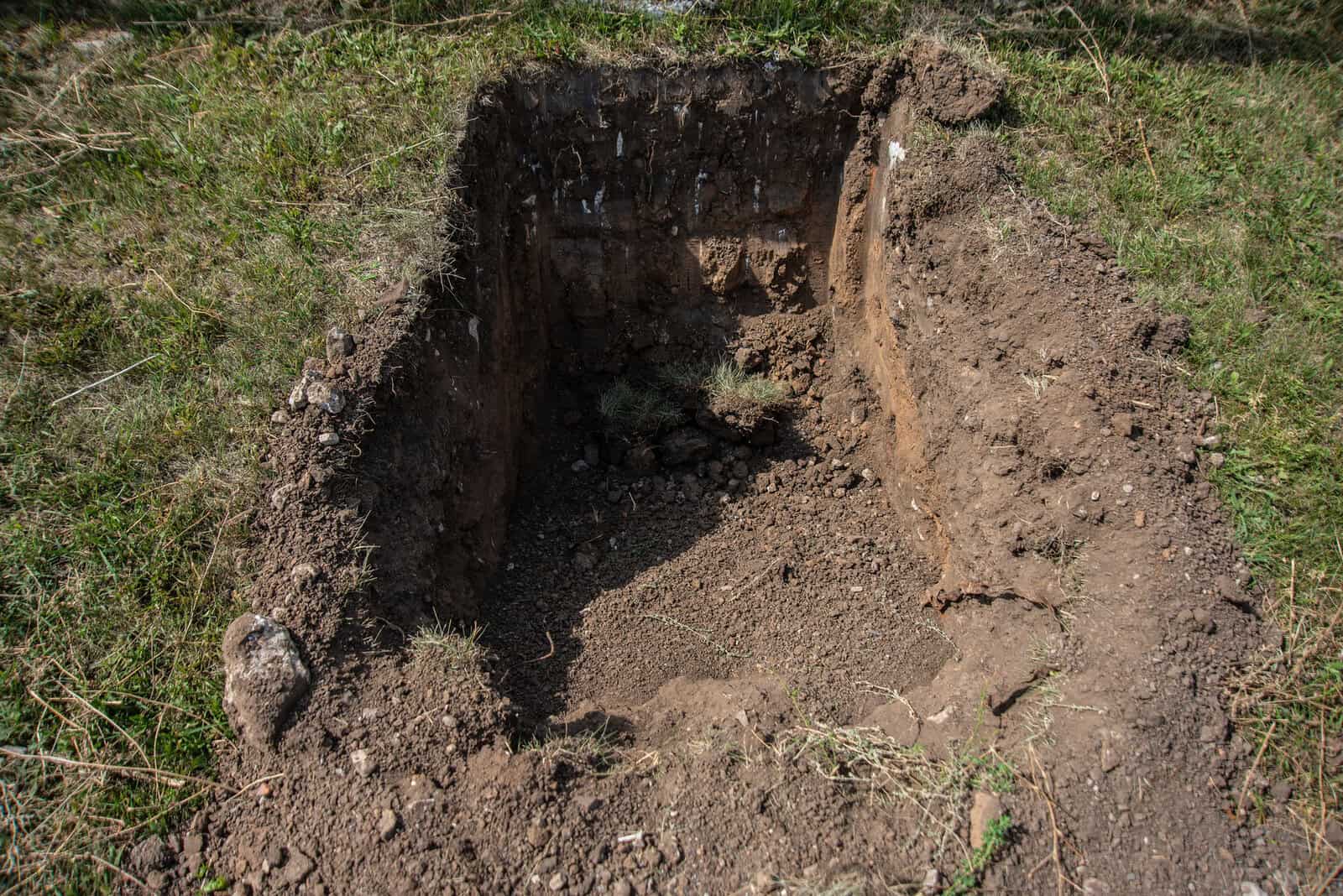
Estimated reading time 21 minutes
Infiltration testing is required when your drainage design relies on getting surface water into the ground and the planning authority wants evidence the ground will take it. In practice that means soakaways, infiltration trenches or permeable paving over an infiltrating sub-base, at the point your application moves past outline. What changed this month is how firmly that expectation now bites.
Until August the national drainage standards were guidance that lead local flood authorities leaned on where their own policies allowed, which meant the weight they carried varied by county and sometimes by case officer. The National Planning Policy Framework published on 17 August 2026 settles that by requiring sustainable drainage to be designed in accordance with those standards and asking for a statement showing you have done it. The evidence behind that statement is usually a test result. Not always, but usually.
The useful question is rarely whether a test is needed at all. It is which stage of your application needs it, and whether your ground stands any chance of passing.
When is infiltration testing required for planning?
You need a test when three things are true at once: your strategy proposes infiltration, your application has passed the stage where an indicative approach is enough, and the ground is a plausible candidate. Fail any one and testing is either premature or pointless. Meet all three and your lead local flood authority will expect measured data rather than an assumption, because an assumption is precisely the thing a drainage officer has no way of checking and every reason to challenge.
- Are you proposing infiltration drainage? Soakaways, infiltration trenches, or permeable paving draining to an infiltrating sub-base. If not, no test is needed. Design to the next destination in the hierarchy and evidence why infiltration was ruled out.
- What stage has the application reached? At outline, a desk-based assessment usually carries the strategy. At full application or on a pre-commencement condition, measured rates are the norm.
- Is the ground a realistic candidate? Check the geology and the likely groundwater level before booking a contractor. Heavy clay, a high water table or known contamination can rule infiltration out on paper.
That third question is the one most often skipped, and it is by some distance the cheapest to answer. A desk-based infiltration assessment, built from published geology and groundwater data, costs a fraction of a trial pit and will tell you whether the trial pit is worth digging at all. On a small enough scheme that assessment may be all the authority asks for. Our ground conditions for a soakaway checker gives a first read on the geology beneath a postcode, and the standards themselves invite this: Requirement 1.14.1 lets an approving body treat industry mapping, including British Geological Survey infiltration and groundwater datasets, as an initial evidence base on whether further ground investigation is warranted at all.
Booking a contractor before you have checked the geology is the commonest way to pay for a test that was only ever going to fail.
Where the answer to all three is yes, the test result stops being a box to tick and becomes the number your whole scheme is sized around. It decides how much storage you need, how much land that storage consumes, and whether the layout you have drawn still works. That is why it belongs in a compliant surface water drainage strategy from the outset rather than arriving as a separate report months later.
What the rules actually say in 2026
Two documents govern this. Policy F8 of the August 2026 NPPF sets the planning requirement; Defra's National Standards for Sustainable Drainage Systems set the technical one. Policy F8 imports the standards by reference, which is what turned a decade of local practice into a national expectation.
Policy F8 applies to proposals "which could affect drainage on or around the development site", proportionate to scale, and requires that sustainable drainage systems "be designed in accordance with the National Standards for Sustainable Drainage Systems". Annex C then asks for a statement outlining how those standards have been achieved. Only the requirement to take account of lead local flood authority advice is limited to major development. The design duty itself is not. We cover the wider picture in our summary of the August 2026 NPPF changes to flood risk and drainage.
- Requirement 1.14. Infiltration drainage "shall be dependent on the ground conditions being suitable", with adequate rates identified using the assessment methods in Standard 3.
- Requirement 3.14. Geotechnical investigations "shall be undertaken" to confirm the ground can accept the runoff, and the standards name BRE Digest 365, CIRIA Report 156 and BS EN ISO 22282-2 as the recognised testing methods, alongside BS 5930 and Eurocode 7 for the ground investigation itself.
- Requirement 1.15. The base of an infiltration feature "shall not be within 1m of the maximum likely groundwater level on the site". Requirement 4.16.1 repeats the metre from a water quality angle, as unsaturated ground protecting groundwater from pollution.
- Requirement 1.18. Deep-bore infiltration "is not considered to follow a 'SuDS Approach'" and is permitted only by exception, with an agreement in principle from the relevant risk management authority.
Policy F8 does not ask whether your scheme is major. It asks whether it could affect drainage on or around the site.
That last one catches people out. Deep-bore or borehole soakaways were a familiar fallback on tight urban sites with unhelpful shallow ground; under the 2025 National Standards they are an exception to be argued rather than a design choice to be made. The Environment Agency's groundwater position statements take the same line from the other direction, holding that an infiltration system should be no deeper than the soakage requires so that attenuation in the unsaturated zone is maximised.
The standards also close the obvious escape route. Infiltration sits second in the five-tier discharge hierarchy, so moving to a watercourse or a sewer means proving the higher tiers were pursued first.
To utilise a lesser priority final destination, appropriate evidence shall be provided… Higher cost alone shall not be a reason to utilise lower priority final destinations.
Requirement 1.3, National Standards for Sustainable Drainage Systems, Defra
One point of law worth keeping straight: none of this is statute. Schedule 3 of the Flood and Water Management Act 2010 remains uncommenced in England. Answering a written question on 29 January 2026, the Parliamentary Under-Secretary at Defra said better delivery "may be achieved by continuing to improve the current planning policy-based approach" rather than commencing Schedule 3, and that a final decision "will be made in due course". The Commons Library briefing on sustainable drainage systems confirms the position. Wales commenced Schedule 3 in 2019 and runs drainage approval through a statutory SuDS Approving Body instead.
Which stage of your application needs the test?
Stage is what most applicants get wrong, and they get it wrong in both directions — testing too early on a scheme whose layout is still moving, so the results describe ground the soakaway will never occupy, or promising a rate at full application that nobody has actually measured. The pattern across lead local flood authority guidance is consistent even where the wording differs.
| Stage | What is normally expected | Examples from published guidance |
|---|---|---|
| Outline | Desk study of geology and groundwater, an indicative strategy, and a workable fallback if infiltration later fails | Hertfordshire lists infiltration evidence at outline but accepts a worst-case assumed rate with an alternative scheme; Somerset asks for proof of concept for an alternative |
| Full application | Measured rates from site testing at the proposed location and depth | Devon requires site-specific testing for any application proposing infiltration; Somerset requires it at full application stage |
| Discharge of conditions | Test results plus groundwater levels, feeding the detailed design | Surrey's standard pre-commencement condition requires soakage testing to BRE Digest 365 or a similar approved method |
| Deferred by condition | Accepted where an attenuated alternative with a feasible outfall is already submitted | Devon allows testing to be conditioned on that basis |
Surrey's drainage guidance, applying to applications received from 6 October 2025, asks for full justification whenever infiltration is proposed without test results attached.
Local variation is real, it is not going away, and it is the reason a strategy written to satisfy one county can arrive at the next authority looking underdone. Some authorities gate the requirement on how much impermeable area you are creating; others tie it to whether the site sits in a critical drainage area; several run a SuDS proforma that asks the question directly. Checking the local validation list before you book a contractor is worth an hour of anyone's time, not least because a missing drainage document can invalidate the application before it reaches a case officer, and our guide to what drainage information is needed for planning permission sets out the wider submission picture.
Will your ground pass? The rate that decides it
A test produces one number, the design infiltration rate, or soil infiltration rate, expressed in metres per second. Where that number lands decides whether infiltration carries the whole scheme, part of it, or none of it. The standards set a floor: Requirement 3.15 says point infiltration features "shall not be fully relied on to discharge all runoff" where rates fall below 1×10⁻⁶ m/s.
The word "point" matters there. The standards treat a point feature, such as a soakaway or a borehole, differently from blanket infiltration spread across an area, which is why permeable paving over an infiltrating sub-base and other diffuse systems are handled under their own proximity rules rather than the 3.15 floor. Ground infiltration behaves differently at the two scales, and a strategy that applies the point threshold to a blanket system is being harder on itself than the standards require.
Two further tests apply above that floor. Requirement 3.16 asks that a feature designed for events up to the 3.3% annual exceedance probability half-empties within 24 hours, which is what stops a technically passing rate producing a soakaway that never recovers between storms. Requirement 3.17 then applies a factor of safety to the sizing, scaled to the consequence of the feature underperforming.
| Ground condition | What it usually means | Likely next step |
|---|---|---|
| Sand or gravel | Drains freely | Test to confirm the rate and size the feature |
| Clay or glacial till | Drains slowly or not at all | Often fails; evidence it and plan an alternative |
| High or seasonal water table | The base cannot sit 1m clear of the maximum likely groundwater level | Can rule infiltration out; seasonal monitoring may be required |
| Made ground or contaminated land | Infiltration can mobilise pollutants | Restricted regardless of how well it drains; a permit may be needed |
| Close to buildings or embankments | Saturating the ground risks instability | Requirement 7.27 asks the risk to be assessed within 5m |
Contamination deserves particular care. Requirement 4.17 allows infiltration through land identified as contaminated only where there is no risk of mobilising pollutants, and the Environment Agency's position is that surface water discharges to ground on such sites are likely to need an environmental permit. Source protection zones bring their own constraints, with a default 50 metre inner zone around an abstraction used for human consumption.
What BRE Digest 365 does and does not say
BRE Digest 365 does not contain the one metre groundwater rule that thousands of drainage strategies attribute to it.
One correction worth making, because it is repeated widely. BRE Digest 365, revised in 2016, is the soakaway design guide the standards point to for the test method. It does not set the one metre rule. Its own wording is that groundwater should not rise to the level of the base of the soakaway during annual variations in the water table. The metre of unsaturated ground comes from Requirements 1.15 and 4.16.1, from the CIRIA SuDS Manual and from lead local flood authority guidance, not from the Digest. If a drainage strategy attributes the figure to BRE 365, a technically literate reviewer will notice. For the method itself, our explainer on BRE365 infiltration testing and soakaway design works through the trial pit, the three fillings and how the rate is derived, and our free BRE 365 infiltration rate calculator turns raw timings into a design rate.
When in the year should you test?
Timing is the most underrated part of this, and the one most likely to cost you a season rather than a fortnight. Infiltration tests measure a moving target: performance and groundwater level both vary through the year, and a test run in a dry August can produce a rate the site will not repeat in February. Where groundwater is the deciding constraint, several lead local flood authorities specify a winter window, and those windows are long enough to derail a programme that ignored them.
- East Sussex. Groundwater monitoring over a six-month winter period, October to March preferred, November to April also accepted.
- Devon. Monitoring between the start of November and the end of May, with results showing a peak followed by two consecutive months of decline.
- Somerset. Daily monitoring for at least a week between mid-November and mid-April, with the highest value taken.
- Arun. Testing itself expected in winter or spring, December to February preferred, following its tightened drainage checklists.
- North Yorkshire. Monitoring ideally spanning twelve months to capture the full seasonal range.
A six-month monitoring window is not a fortnight's delay. Discover it in September and you may have a scheme; discover it in April and you have lost a year.
The standards frame this as design guidance rather than a hard rule. Requirement 4.16.2 says a design should accommodate wet winter conditions and that groundwater records at or near the site should demonstrate the maximum likely levels, with enough data to show the seasonal picture. In practice the lead local flood authority decides what "enough" means, which is why groundwater monitoring for planning is worth establishing at the earliest possible moment. It is also the single most common reason drainage planning conditions sit unresolved through a construction season.
What if the test fails or the rate is too low?
A failed test is evidence, not a setback. Lead local flood authorities accept a poor result readily, because a documented failure is exactly the thing that justifies dropping to the next destination and is far easier to sign off than an optimistic claim nobody can verify. What they do not accept is a scheme that quietly skipped the higher tiers. Requirement 1.2 sets the order of destinations and Requirement 1.3 sets the evidential test for departing from it.
- Collected for non-potable use. Rainwater harvesting, where there is a genuine year-round demand for the water.
- Infiltrated to ground. Soakaways and other infiltration features, evidenced by a test.
- Discharged to a surface water body. A river, stream, ditch or pond, at a controlled rate.
- Discharged to a surface water sewer. Or another piped surface water system, again rate-limited.
- Discharged to a combined sewer. A last resort, only where nothing above is available.
Partial success is common and entirely legitimate. A granular lens or a pocket of permeable ground can take some of the runoff where the surrounding clay will not, giving a hybrid scheme that infiltrates part of its volume and attenuates the rest. Our overview of foul, surface and combined sewers explains how the lower-tier destinations differ.
Getting this wrong has a predictable shape. Skipping infiltration testing leaves an assumed rate in the design, that assumption proves optimistic, the design fails at detailed design, and the result is an LLFA objection, a request for the data that should have come first, and weeks added to the programme. Poorly executed testing does the same damage: wrong location, wrong depth, or frozen or parched ground produces a number that does not represent the site.
Test in the right place, at the right depth, more than once, and let the lowest rate drive the design. North Yorkshire's guidance is explicit that rates should not be averaged.
Test failed? There is still a compliant strategy
A poor infiltration rate closes one route, not the application. Our experienced consultants build the evidence trail that gets a hierarchy departure accepted first time.
Talk to a drainage consultantWhat infiltration testing costs and how long it takes
There is no published benchmark for what a BRE 365 test costs in the UK. No trade body, regulator or industry survey collects the figure, and the numbers that circulate online are individual suppliers' list prices rather than anything resembling market data, so quoting a range here would be dressing one company's price list up as research. What can be said usefully is what moves the cost, because most of those variables are still within your control at design stage.
- Number of trial locations. The largest single driver. One pit answers one point; a site with variable geology, or a scheme relying on partial infiltration, needs several.
- Depth and excavation method. A hand-dug pit is cheap. Anything requiring a machine, shoring or a deeper hole brings plant, an operator and access requirements with it.
- Site access and water supply. Each filling needs a substantial volume of water. Where there is no supply, tankering it in is a real line item.
- Ground conditions and repeat visits. A pit that will not drain still has to be attended until the run is complete, and a slow site takes longer per test.
- Whether groundwater monitoring is also required. This dominates the programme rather than the invoice, and it is measured in months.
On timing, the on-site work itself is typically a day or two, because the method needs three separate test runs and those are best done on the same day or on consecutive days while ground conditions are comparable. Allowing for mobilising a contractor and writing up results, a fortnight is a fairer expectation than a same-week turnaround. Where the authority also wants winter groundwater monitoring, the season sets the programme, not the contractor.
BRE 365 or BS 6297: which test do you need?
These two get confused constantly. Confusing them is a straightforward way to have an application returned for further information, because the reviewer can tell at a glance that the wrong standard has been applied and has no basis on which to accept the result. It is a wasted month for the sake of a heading. They test different things, to different standards, with different pass criteria.
| BRE Digest 365 | BS 6297 | |
|---|---|---|
| What it tests | Surface water infiltration for soakaways and SuDS | Whether ground can absorb and treat effluent in a drainage field |
| Result | Design infiltration rate in m/s | Percolation value (Vp) in seconds per mm |
| Who asks for it | The lead local flood authority, through planning | Building control and the Environment Agency, through the general binding rules |
| A very fast result is | Good news | A problem — effluent can reach groundwater untreated |
If your project is an off-mains foul drainage field serving a septic tank or treatment plant, the test you need is the percolation test in our BS 6297 infiltration testing guide, and the design work sits in a foul drainage strategy. One further trap: the government's guidance page on infiltration systems and groundwater risk assessments, which ranks well for infiltration searches, is about treated effluent discharges under an environmental permit. It is not guidance on surface water soakaways and does not mention BRE 365 at all.
How to find out whether your site needs it
The quickest route is to ask before you commit to a drainage method. Send us the site location and what you are proposing, and we will tell you whether infiltration testing is likely to be required, whether the ground is a realistic candidate, and what the lead local flood authority will expect to see. We arrange BRE 365 testing through our network of geotechnical contractors and fold the results straight into the design, so the data and the strategy arrive together rather than in two rounds.
Where a scheme already has permission and a drainage condition attached, the same evidence supports the discharge of drainage planning conditions. Where you are still shaping the layout, it belongs in the drainage strategy for your planning application from the first sketch, because the storage the test implies has to fit somewhere, and on a constrained site that question is settled by levels rather than by area, which is where a topographical survey earns its cost.
Frequently asked questions
Is infiltration testing a legal requirement?
Not in the sense of a duty you can be prosecuted for breaching. Nobody will fine you for skipping a test. The enforcement is quieter and more effective than that: the lead local flood authority is a statutory consultee, its response carries real weight, and an unevidenced infiltration rate is one of the easiest things for a drainage officer to object to. The practical consequence is not a penalty but a refusal, an objection, or a pre-commencement condition you cannot discharge — which stops the site just as firmly.
Can I use a published or assumed infiltration rate instead of testing?
Sometimes, and only with justification. A minority of authorities will accept a conservative assumed rate where testing is genuinely impractical. The Royal Borough of Windsor and Maidenhead, for instance, names 1×10⁻⁶ m/s or another appropriate rate with full justification. Most take Devon's line and require site-specific testing before permission or before a condition is discharged. The safe planning assumption is that an assumed rate buys you time at outline, not approval at detailed design.
How many holes and tests does BRE 365 need?
At least three test runs, ideally on the same or consecutive days, with more than one trial location on a larger site. The lowest rate is used as the design value, because a first filling often drains faster before fines wash in and clays swell. The full method is in our BRE365 infiltration testing explainer.
Does a householder extension or a new driveway need infiltration testing?
Usually not a formal BRE 365 test, but the question is no longer automatically ignored. Policy F8 applies to any proposal that could affect drainage on or around the site, proportionate to its nature and scale, so a small scheme is expected to think about where water goes even though the evidence burden is far lighter. Some authorities set a threshold based on the impermeable area created. A local validation checklist will tell you where the line sits.
Why doesn't a deep-bore soakaway count as SuDS any more?
Because the soil is the treatment, and a deep bore skips most of it. Runoff carries hydrocarbons, sediment and whatever else washes off a road surface; the unsaturated ground above the water table is what filters that out. Drill through it and you deliver the pollutants closer to the aquifer with less soil to intercept them. That is the reasoning behind the exception route, and it is why the argument you have to make is a groundwater risk argument, not a drainage one. Sites over a principal aquifer or inside a source protection zone should expect the hardest ride.
Who carries out the test?
A geotechnical or drainage contractor with the right equipment. We arrange testing as part of a drainage strategy so the results feed straight into the design, rather than arriving as a standalone report that someone then has to interpret against the scheme.
Can part of a site pass while the rest fails?
Yes, and the design question that follows is how you evidence it. A split result is only useful if the testing pattern actually maps the variation, which means trial locations chosen against the geology rather than against site access. Two pits in the same corner prove nothing about the far end of the site. Where a scheme relies on partial infiltration, expect the lead local flood authority to look at where the pits were dug before it looks at the rates they produced, and expect to justify the design rate applied to each drainage catchment separately.
About the author. Antony is a Senior Flood Risk and Drainage Consultant leading Unda's drainage and SuDS team. Unda has been trading since 2014, is a CIWEM Business Partner with CIWEM member and chartered (C.WEM MCIWEM) consultants, and has delivered 5,000+ flood risk assessments and drainage strategies across England and Wales.
Antony Rousou · BSc (Hons), C.WEM MCIWEM
Latest news

One of our experienced Flood Risk Consultants will get back to you within 60 minutes